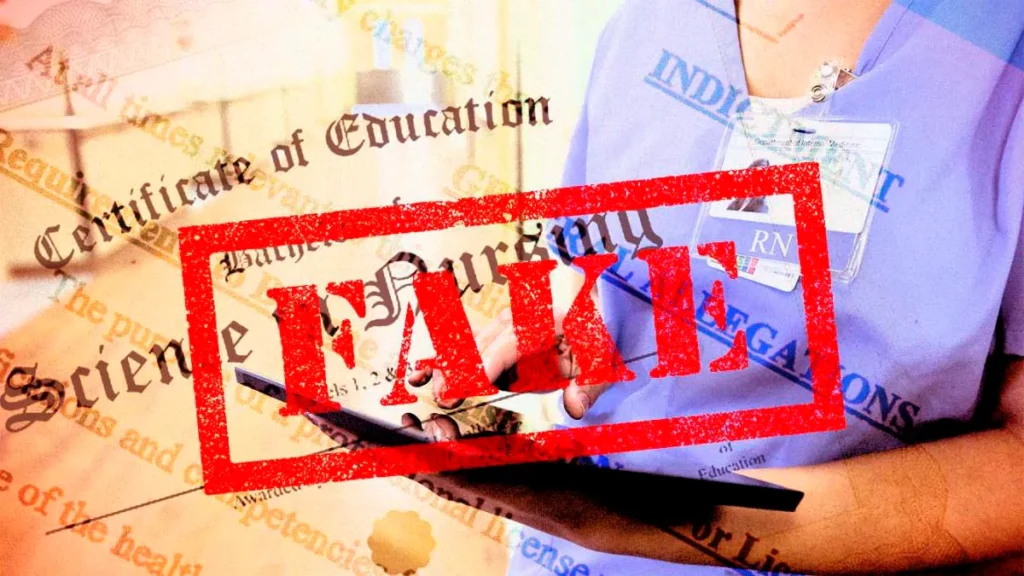
A large-scale fraud operation involving more than 100,000 counterfeit university degrees has infiltrated the United States H-1B visa system, raising serious concerns about immigration oversight and public safety, according to an investigation by Insider Wire.
Fake degrees used to secure US work visas
The investigation found that forged academic certificates in medical, nursing, and engineering disciplines were sold for as little as $1,400 each. These fake degrees were then submitted to US immigration authorities to secure H-1B work visas for individuals who lacked the required qualifications.
Authorities say the scheme enabled thousands of unqualified foreign workers to enter the United States under a programme designed to attract skilled professionals.
Network spans 28 Indian universities
Investigators described the operation as an organised criminal enterprise involving at least 28 universities in India. According to law enforcement findings, one institution alone produced more than 36,000 fake degrees.
Fraudsters allegedly forged official university seals and documents to make the certificates appear legitimate before submitting them as part of visa applications.
Authorities seize over 100,000 fake degree certificates in Indian H-1B fraud bust. https://t.co/fDOILFNmp6
— Insider Wire (@InsiderWire) June 6, 2026
Risks for employers and public safety
Officials warned that the scam has serious implications, particularly in sensitive sectors such as healthcare and engineering. Employers unknowingly hired individuals without proper training, increasing safety risks and undermining professional standards.
The fraud also displaced legitimately qualified workers, both in the US and abroad, who lost job opportunities to applicants using forged credentials.
Crackdown by US and Indian authorities
Indian police have carried out raids on multiple campuses, seizing fake degree certificates, printing machines, and forged seals used in the operation.
In the United States, immigration authorities are reviewing thousands of visa applications suspected of being supported by fraudulent academic records. The US Citizenship and Immigration Services has expanded scrutiny of H-1B petitions as a result.
Separately, Texas Attorney General Ken Paxton launched an investigation in January 2026 into dozens of so-called “ghost office” companies accused of sponsoring foreign workers using fake business addresses.
The United States Department of Labor has also intensified enforcement through its “Project Firewall” initiative, opening more than 175 H-1B-related investigations since late 2025.
Severe penalties for visa fraud
Authorities warned that those found guilty of H-1B fraud face strict penalties, including civil fines ranging from $1,000 to $35,000 per violation, bans from the visa programme for up to three years, and criminal charges carrying potential prison sentences of up to 10 years.
What happens next
US officials are expected to tighten verification procedures, including more rigorous degree authentication and employer background checks. Analysts say the ongoing crackdown could significantly reshape H-1B hiring practices, particularly in the technology and healthcare sectors.
For now, the revelations have cast a spotlight on vulnerabilities in the global education and immigration systems, prompting calls for stronger international cooperation to prevent similar fraud in the future.
