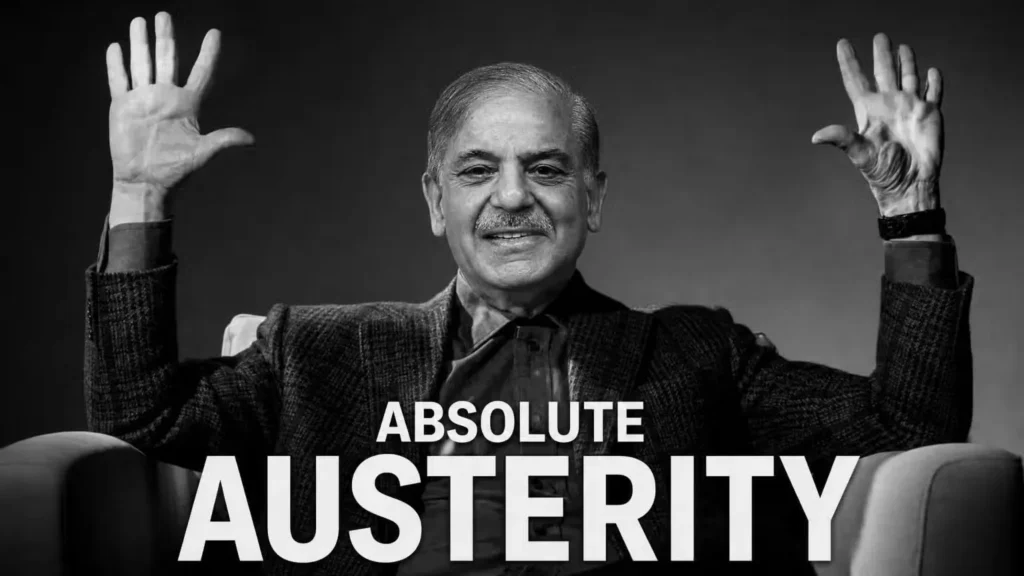
The federal government’s latest austerity measures in Pakistan are expected to generate savings of only Rs. 16.8 billion, Finance Secretary Imdad Ullah Bosal told lawmakers during a briefing on the implementation of the country’s International Monetary Fund (IMF) program.
Bosal, who is also the government’s chief negotiator with the IMF, said the savings would mainly come from reduced fuel allocations for official vehicles and cuts in non-salary government expenditure.
Fuel and Non-Salary Spending Cuts
A 50 percent reduction in fuel allocations for official vehicles is expected to save the government around Rs. 700 million over three months.
Meanwhile, a 5 percent cut in non-salary expenses is projected to generate Rs. 16.1 billion in savings over one year.
Together, the two measures account for the estimated Rs. 16.8 billion in savings under the latest government austerity drive.
Prime Minister Shehbaz Sharif announced the measures following public criticism of the government’s decision to pass the financial impact of the Middle East war on to consumers.
The government’s monthly petroleum levy collection is estimated at Rs. 139 billion.
Pakistan Yet to Meet Several IMF Conditions
The Finance Ministry also informed the National Assembly Standing Committee on Finance that Pakistan had not fully met several conditions under its IMF program.
These include commitments relating to sugar sector liberalization, health and education spending, the Sovereign Wealth Fund Act, statutory state-owned enterprises and tax collection from retailers and the agricultural sector.
Bosal said the government was moving ahead with plans to fully liberalize the sugar sector and had shared draft recommendations for a national policy with the provinces.
Three provinces have agreed to the proposal, while one province has expressed reservations. Committee members identified the province as Sindh.
Health and Education Spending Falls Short
Pakistan also missed its IMF health and education spending target during the last fiscal year.
Against the IMF target of Rs. 3.47 trillion, the five governments spent around Rs. 3.1 trillion.
Bosal said lower federal tax collection had also led the government to ask the provinces to reduce their spending.
Other pending IMF requirements include amendments to the Sovereign Wealth Fund Act, changes to legislation governing nine statutory state-owned enterprises, amendments to the Securities and Exchange Commission of Pakistan Act and steps to strengthen the anti-corruption framework.
IMF Program Implementation Remains Underway
The finance secretary said overall implementation of Pakistan’s IMF program remained strong and had helped the government reach staff-level agreements without major difficulties during previous reviews.
However, several issues remain under discussion with the IMF, including the agricultural income tax framework and the proposed fixed tax scheme for traders.
The government is continuing work on these outstanding measures as it seeks to meet the remaining conditions under its IMF commitments.
