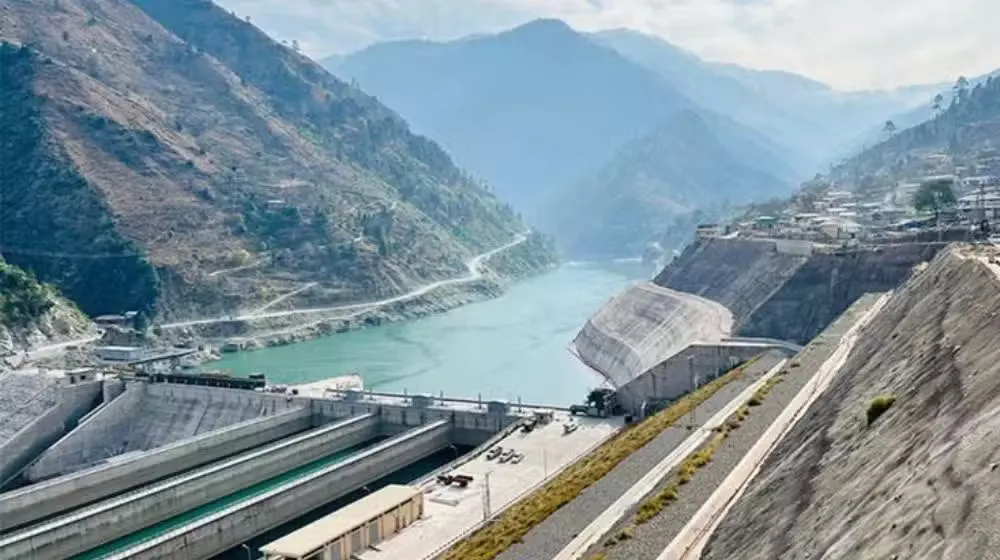
The Auditor General of Pakistan has reported that the Neelum Jhelum Hydropower Project incurred losses exceeding Rs 128 billion during the 2024–25 fiscal year, raising serious concerns about governance, risk management, and the long-term financial viability of one of Pakistan’s largest hydropower investments.
According to the audit findings, the 969-megawatt Neelum Jhelum Hydropower Project recorded net operating losses of Rs 29.41 billion during the year. In addition, business interruption losses climbed to Rs 99.18 billion after prolonged shutdowns caused by major tunnel collapses.
The audit report noted that the powerhouse has remained non-operational since the collapse of the tailrace tunnel in 2022, followed by the failure of the headrace tunnel in May 2024. Despite the scale of the damage, enquiries into both incidents remain incomplete, with no clear accountability fixed for the structural failures.
Auditors found that project management failed to address known technical defects, did not renew critical insurance coverage, and did not pursue compensation for losses resulting from the collapses. As a result, assets valued at Rs 267 billion remained uninsured during the audit period, exposing the project to severe financial risk.
The report also highlighted chronic underperformance in power generation. Since its commissioning, the project has never achieved its annual electricity generation target of 5,150 gigawatt-hours, even during periods when it was fully operational. This persistent shortfall has further undermined expected revenue flows.
Compounding these challenges, the absence of an approved reference tariff from the National Electric Power Regulatory Authority resulted in an estimated regulatory revenue loss of Rs 77.35 billion. The delay in tariff determination significantly weakened the project’s ability to service its debt and stabilize its finances.
The audit revealed a sharply deteriorating financial position. As of June 30, 2025, current liabilities exceeded current assets by Rs 307.89 billion, largely due to repayment defaults and the reclassification of long-term loans as short-term obligations. This imbalance reflects severe liquidity stress and mounting pressure from creditors.
The report further noted that the project has failed to recover its investment within the planned payback period. By the end of FY2024–25, recoveries stood at Rs 180.17 billion against an approved project cost of Rs 418.89 billion.
Nearly 69 percent of receivables were overdue by more than 120 days, pointing to weak financial controls and ineffective cash flow management.
The Auditor General concluded that persistent generation shortfalls, extended outages, unresolved technical failures, delayed tariff approvals, rising debt, and inadequate risk mitigation have prevented the Neelum Jhelum Hydropower Project from meeting its financial and operational objectives.
The findings underscore the need for stronger oversight, timely regulatory decisions, and clearer accountability to safeguard public investment in critical energy infrastructure.
About Hamna Ghias Sheikh

The writer has been covering politics, lifestyle and finance since 2023.
