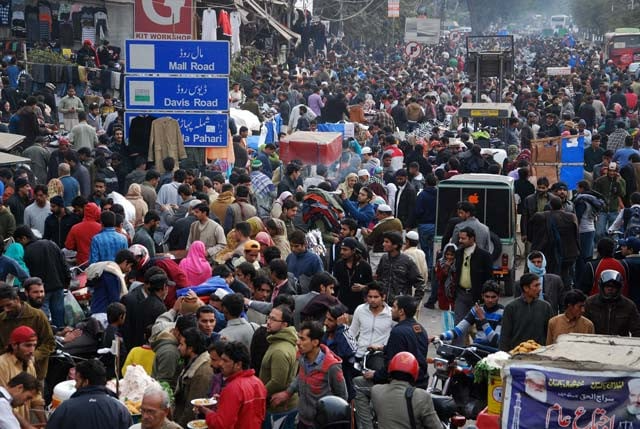
Pakistan is heading toward a major demographic shift, with the Planning Commission population projection report warning that the country’s population could rise from around 250 million today to nearly 400 million by 2050.
Even under a faster fertility decline scenario, numbers are still expected to reach around 371.9 million, which shows how strong the upward momentum remains.
This is not just a statistic. It directly reshapes planning for jobs, water, food security, housing, health care and education systems across the country.
What the numbers actually mean on the ground
Population growth at this scale creates pressure that compounds over time. Even if growth slows, the base is already very large.
Key projections include
- Punjab population rising from 127.7 million to about 200 million
- Sindh reaching 91.1 million
- Khyber Pakhtunkhwa growing to 67.6 million
- Balochistan increasing to 25 million
- Islamabad expanding from 2.4 million to 6.5 million
A simple way to understand this is demand versus capacity. If water supply, schools, and hospitals do not expand at the same pace, shortages become structural rather than temporary.
Fertility decline alone will not ease pressure
The report also shows that the birth rate may fall from 28.3 in 2023 to 16.8 by 2050. That looks like a strong decline on paper, but population momentum continues due to a large youth base entering reproductive age.
A useful comparison
Even if each family has fewer children, the total number of families is still growing because the current population is already so large.
At the same time, the death rate is expected to rise slightly due to an aging population, which adds new pressure on health systems rather than reducing it.
Why this matters for cities and infrastructure
Urban centers like Karachi, Lahore, Faisalabad and Peshawar are likely to absorb a large share of this growth.
This creates three immediate pressure points
- Housing demand increases faster than supply leading to informal settlements
- Water systems struggle as groundwater depletion accelerates
- Transport networks become overloaded as urban density rises
For example, even a 1 percent annual increase in urban population can require thousands of new housing units every year just to avoid shortages.
Pro tip for understanding population pressure
A simple way policymakers and students can interpret this report is through the dependency load concept.
If a country adds millions of people without proportional expansion in productivity, each citizen effectively gets a smaller share of
- public health services
- education capacity
- water availability
- employment opportunities
This is why population planning is not only about numbers but about economic absorption capacity per capita.
The real challenge ahead
The Planning Commission warning is not only about size. It is about speed and imbalance.
Population growth is outpacing
- infrastructure expansion
- job creation capacity
- climate resilience planning
- urban governance systems
Without synchronized planning, the gap between demand and supply will widen significantly over the next two decades.
The Pakistan population projection 2050 is a long-term signal, not a short-term headline. It shows a country moving toward a much larger demographic scale, where policy decisions made today will determine whether growth becomes an opportunity or a structural strain.
About Tamoor Ahmed

Tamoor Ahmad has been covering politics since 2022.
