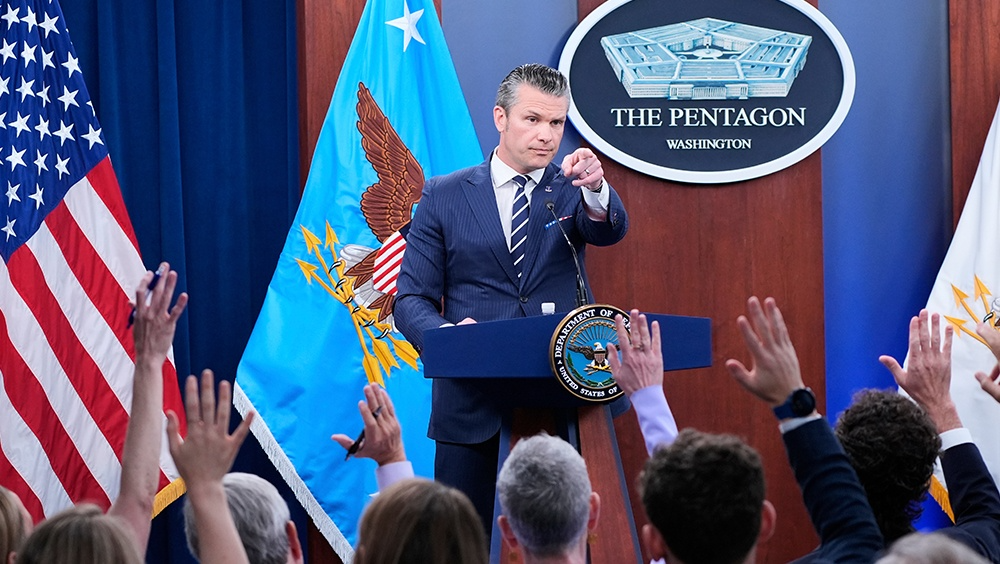
US President Donald Trump has proposed a record-breaking $1.5 trillion defense budget for fiscal year 2027, marking the largest annual increase in US military spending since World War II and intensifying debate over its economic and political implications.
According to details released by the United States Department of Defense, the proposed budget includes $1.15 trillion in base funding and a $350 billion supplemental request, pushing total military expenditure to an unprecedented level.
Officials say the proposal reflects a strategic shift toward advanced warfare capabilities, artificial intelligence, and large-scale modernization of the US armed forces.
Major expansion in advanced defense systems
The Pentagon outlined several new “presidential priorities,” including missile defense systems under the Golden Dome initiative, expanded drone warfare capabilities, AI-driven military infrastructure, and strengthening the defense industrial base.
A major focus of the budget is naval expansion, with over $65 billion allocated for shipbuilding. The plan includes procurement of 18 warships and 16 support vessels under the “Golden Fleet” programme — the largest such request since 1962.
In aviation, the budget proposes increasing production of F-35 Lightning II fighter jets to 85 aircraft per year, alongside $102 billion in aircraft procurement and research spending. Additional funding includes $6.1 billion for the B-21 Raider stealth bomber and continued development of the next-generation F-47 fighter jet.
Largest-ever investment in drone warfare
Officials described the proposal as the most significant investment in autonomous warfare systems in US history.
Key allocations include:
- $53.6 billion for autonomous drone platforms and battlefield logistics
- $21 billion for munitions, counter-drone systems, and advanced weapons technology
- A major expansion of the Defense Autonomous Warfare Group, increasing funding from $225 million to approximately $54 billion
The strategy emphasizes rapid deployment of existing technologies rather than long-term experimental research.
Military expansion and pay increases
The budget also proposes expanding the US military by 44,000 personnel in 2027, following a prior increase of more than 20,000 troops.
Pay raises are included across all ranks:
- 7% for junior enlisted personnel
- 6% for mid-level ranks
- 5% for senior ranks
Domestic spending cuts spark controversy

The proposal has triggered strong criticism due to its plan to reduce discretionary domestic spending by 10%, affecting healthcare, education, housing assistance, and environmental programmes.
Critics argue that the shift prioritizes military expansion at the expense of public welfare. A coalition of 289 advocacy groups described the proposal as “grossly irresponsible,” pointing out that the US already spends more on defense than the next nine countries combined.
Analysts estimate the proposed increase could add up to $5.8 trillion to federal debt over the next decade, according to the Committee for a Responsible Federal Budget, further raising concerns about inflation and long-term fiscal stability.
Political backlash intensifies
Democratic lawmakers, including Senator Patty Murray, criticized the plan, arguing that it diverts resources from healthcare and social programs toward military operations abroad.
Concerns have also been raised over Pentagon accountability, as the department has failed annual audits since 2018, raising questions about how effectively such a large budget increase would be managed.
Iran-related funding excluded
Notably, the budget does not include funding for ongoing operations linked to the conflict with Iran. Officials indicated that a separate supplemental request would likely be required to cover operational and replenishment costs.
Supporters defend military buildup
Supporters of the proposal argue that increased funding is necessary to replenish weapons stockpiles, including Patriot missile interceptors and Tomahawk cruise missiles, and to maintain US global military dominance.
However, critics warn that the proposed $4.5 trillion increase over the next decade could strain the economy and divert funding from urgent domestic priorities such as healthcare, housing, and education.
