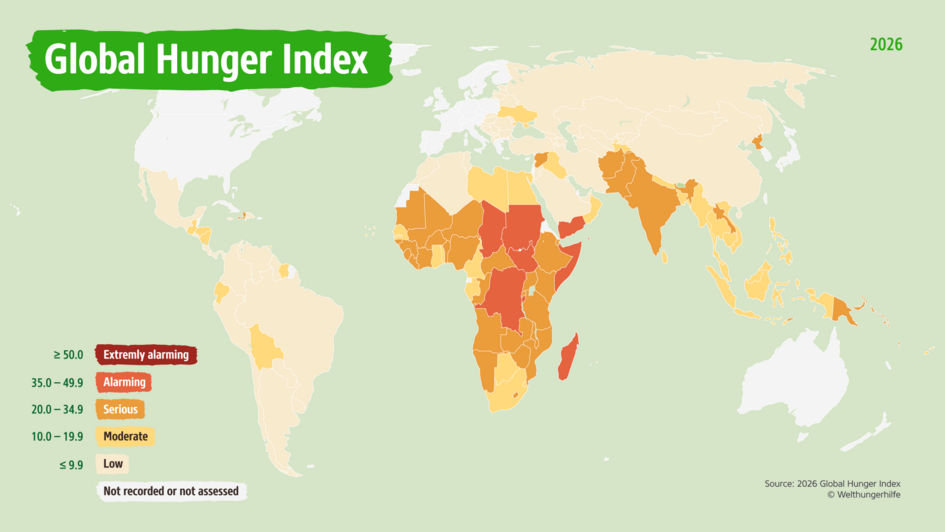
Pakistan has recorded the second-highest hunger score in South Asia in the 2026 Global Hunger Index (GHI), scoring 25.5 out of 100 and ranking 106th among 122 countries with sufficient data.
The report classifies hunger in Pakistan as serious, highlighting persistent food insecurity and child malnutrition.
The 2026 report shows that Pakistan has made progress since 2000, when its hunger score stood at 36.2. However, the score increased from 24.0 in 2018 to 25.5 in 2026, indicating that some of the country’s earlier gains have been reversed.
The official GHI ranking data also identifies Pakistan among the countries where hunger has worsened since 2018.
The findings are significant because the index measures several dimensions of hunger, including inadequate calorie intake, child growth and child mortality.
Pakistan’s results point to continuing challenges in ensuring that households can access sufficient food and that children receive adequate nutrition.
Pakistan’s Child Malnutrition Figures Remain High
According to the 2026 Global Hunger Index country data, 16.1 percent of Pakistan’s population is undernourished. The report also estimates that 33.6 percent of children under five are stunted and 9.8 percent experience wasting.
The under-five mortality indicator stands at 5.6 percent.
Stunting reflects impaired growth associated with chronic undernutrition, while wasting indicates acute undernutrition and can signal a heightened risk of serious health complications.
These indicators measure different aspects of hunger. Taken together, they help explain why the GHI score cannot be understood through food availability alone.
Diet quality, household income, healthcare, sanitation and access to essential nutrition services also influence children’s health.
The figures underline the importance of monitoring child nutrition alongside broader measures of food security and poverty.
Economic Pressure and Climate Shocks Add to Food Insecurity
The supplied report summary identifies economic instability, the effects of sharp food price increases and climate-related shocks as factors contributing to Pakistan’s food security challenges.
When food prices rise and household purchasing power weakens, families may find it harder to maintain balanced diets. Lower-income households can be particularly vulnerable because a larger share of their budgets may already be committed to essential expenses.
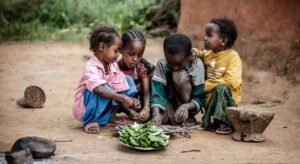
Flooding and other extreme weather events can add further pressure by damaging farmland, disrupting transport routes and affecting agricultural livelihoods. Such disruptions can reduce access to food even when supplies remain available elsewhere.
These factors provide important context for Pakistan’s hunger indicators. However, the GHI score alone does not establish how much each factor contributed to the change since 2018.
Pakistan Trails Afghanistan in South Asia
Pakistan recorded a hunger score of 25.5, compared with 28.6 for Afghanistan. India scored 24.1, Bangladesh 19.2, Nepal 14.5 and Sri Lanka 10.2 in the 2026 index. These figures place Pakistan second-highest in South Asia by hunger score, behind Afghanistan.
The report places South Asia among the regions with the highest levels of hunger globally. Its regional assessment also points to persistent undernourishment and child nutrition challenges despite longer-term improvements.
Comparisons between countries should be interpreted in the context of the index’s methodology and the underlying data used for each indicator. A country’s overall score combines several measures rather than relying on a single estimate of food insecurity.
How the Global Hunger Index Measures Hunger
The Global Hunger Index is a peer-reviewed annual report jointly published by Concern Worldwide, Welthungerhilfe and the Institute for International Law of Peace and Armed Conflict (IFHV). It is designed to track hunger at global, regional and country levels.
The index combines four indicators: undernourishment, child stunting, child wasting and under-five mortality. Its scoring system provides a broader assessment of hunger than food supply or calorie intake alone.
Pakistan’s 2026 score of 25.5 falls within the index’s serious hunger category. Although the country has improved substantially since 2000, the rise since 2018 shows that progress has not been consistent.
The findings point to the need for sustained attention to affordable food, household resilience, agricultural recovery and child nutrition. They also provide a basis for tracking whether future improvements in food security translate into better nutritional outcomes.
