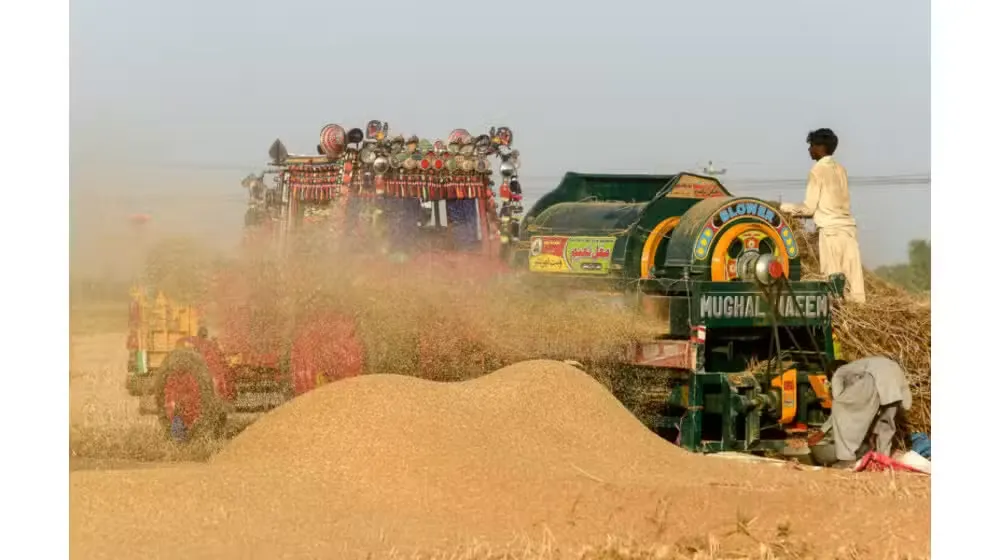
The federal government has not yet decided whether it or the provinces will import one million tons of wheat, as authorities continue assessing grain stocks across the country before making a final decision.
The outcome is important for Pakistan’s food security, wheat prices, and farmers, especially ahead of the next procurement cycle.
The update came during a meeting of the National Assembly Standing Committee on National Food Security and Research, where officials also faced questions over whether wheat imports are necessary if domestic supplies are sufficient.
Key Details
- The government is considering importing 1 million tons of wheat.
- Imported wheat is expected to cost Rs4,200–Rs4,300 per maund.
- Provinces have been asked to provide updated wheat stock data.
- The federal government currently holds around 1 million tons of wheat in reserve.
- A summary has been sent to the Economic Coordination Committee (ECC) for approval.
- A steering committee has been formed to supervise the import process.
Government Reviewing Wheat Stocks Before Final Decision
Speaking to the parliamentary committee, Federal Minister for National Food Security and Research Rana Tanveer Hussain said the federal government would prefer provincial governments to handle wheat imports, while the Centre would provide the necessary approvals.
He said his ministry has requested updated information from all provinces regarding their available wheat stocks before any final decision is taken.
According to the minister, the federal government still has approximately one million tons of wheat in its reserves after supplying Azad Jammu and Kashmir (AJK) and Gilgit-Baltistan (GB).
He confirmed that a summary seeking approval to import another one million tons has already been submitted to the Economic Coordination Committee (ECC), while a steering committee has been established to oversee the process.
Wheat Procurement Policy Also Discussed
The committee also reviewed this year’s wheat procurement strategy.
Rana Tanveer said Prime Minister Shehbaz Sharif supports introducing a wheat support price to protect farmers.
He explained that Sindh procured wheat directly from farmers, while Punjab adopted a public-private partnership model, purchasing wheat at approximately Rs3,200 per maund.
The minister added that his ministry had advised provinces to consider increasing procurement prices to Rs3,800 per maund if wheat shortages emerged, but no province had responded to the proposal.
Lawmakers Question Need for Imports
Several members of the parliamentary committee questioned why Pakistan should import wheat if domestic stocks are sufficient.
Lawmakers urged the government to prioritize local wheat growers and ensure that domestic production is fully utilized before spending foreign exchange on imports.
The discussion reflects ongoing concerns about balancing food security with farmer support, particularly after recent changes in wheat procurement policies.
Background
Pakistan has faced repeated debates over wheat procurement and imports in recent years due to fluctuating production, climate-related challenges, and changing government procurement policies.
Last year, wheat imports and procurement decisions drew criticism from farmers, who argued that imported grain affected local prices and reduced incentives for domestic cultivation.
The government is now reviewing stock availability before deciding whether additional imports are necessary.
What This Means
The government’s decision will influence wheat prices, food inflation, and farmer incomes in the coming months.
If domestic stocks prove sufficient, Pakistan could avoid costly imports and conserve foreign exchange reserves. However, if shortages emerge, imports may be required to stabilize supplies and prevent price spikes.
Agriculture experts say the final decision should strike a balance between protecting consumers and ensuring fair returns for local wheat farmers.
What’s Next?
The government is expected to review stock reports submitted by provincial authorities before the ECC decides whether to approve the proposed import of one million tons of wheat.
Officials will also continue consultations with provincial governments regarding procurement policies and reserve management ahead of the next wheat season.
Frequently Asked Questions (FAQs)
Why is Pakistan considering importing wheat?
The government is reviewing national wheat stocks to determine whether additional imports are needed to maintain adequate food supplies.
How much will imported wheat cost?
According to the government, imported wheat is expected to cost between Rs4,200 and Rs4,300 per maund.
Has the government approved the wheat import?
No. A summary has been submitted to the Economic Coordination Committee (ECC), but a final decision has not yet been made.
