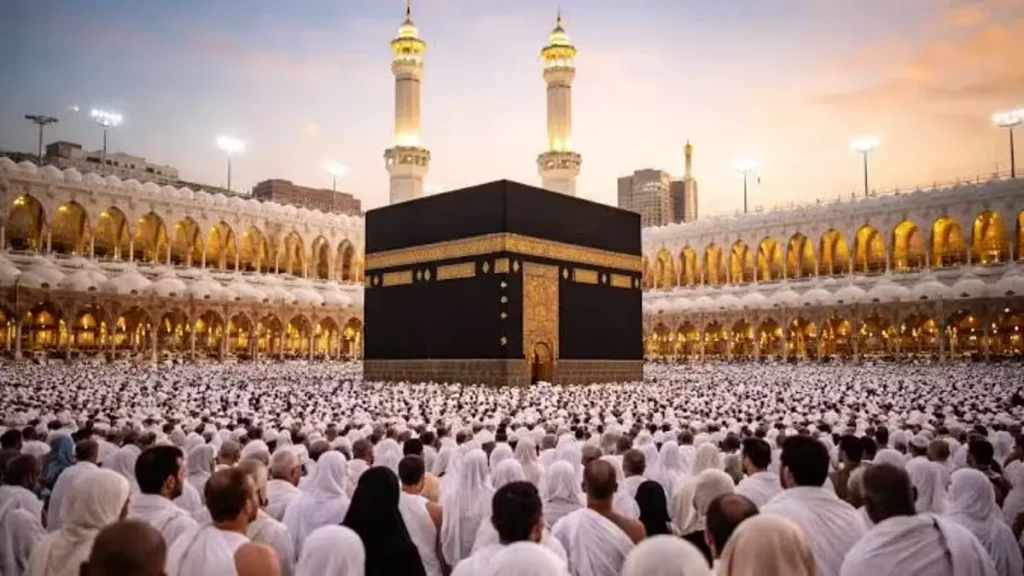
Pakistan’s federal cabinet has approved the country’s first-ever four-year Hajj policy and plan for 2027-2030, introducing major reforms designed to simplify registration, improve planning, and modernize services for pilgrims.
The decision, announced after a federal cabinet meeting on Tuesday, replaces the previous practice of issuing a new Hajj policy every year. Officials say the long-term framework will provide greater certainty for intending pilgrims while improving administrative efficiency.
One-Time Registration Introduced
One of the biggest changes under the new policy is the introduction of a one-time Hajj registration system.
Instead of registering annually, aspiring pilgrims will now register only once and choose their preferred Hajj year between 2027 and 2030.
The government will maintain a priority-based waiting list using these registrations, reducing paperwork and making the application process more convenient.
Four-Year Policy to Improve Planning
According to the Prime Minister’s Office, the long-term policy is intended to strengthen operational planning, improve service delivery, and ensure better facilities for Pakistani pilgrims.
Authorities will develop detailed standard operating procedures (SOPs) and implementation guidelines to support the new framework.
The government also clarified that the policy may be revised whenever necessary to remain consistent with Saudi Arabia’s Hajj regulations and evolving operational requirements.
Shariah-Compliant Hajj Savings Scheme
The cabinet also approved plans for a Shariah-compliant Hajj savings scheme.
The initiative will allow prospective pilgrims to save gradually for their pilgrimage and access Islamic financing options to manage future Hajj expenses more easily.
Officials believe the scheme will help make Hajj financially accessible for a larger number of Pakistanis.
Hajj System to Go Fully Digital
As part of broader reforms, the government is digitizing Pakistan’s Hajj management system.
The digital platform will include:
- Online payment facilities
- Electronic monitoring systems
- Digital complaint management
- Improved administrative oversight
The move is expected to increase transparency, reduce delays, and enhance services for pilgrims throughout the Hajj process.
Government and Private Hajj Schemes Continue
The four-year policy retains separate quotas for the government and private Hajj schemes.
It also introduces both long-duration and short-duration Hajj packages, allowing pilgrims greater flexibility based on their preferences and budgets.
Additional features of the policy include:
- Mandatory pre-Hajj training
- Takaful (Islamic insurance) arrangements
- Emergency response mechanisms
- Merit-based and transparent appointment of Hajj assistants
These measures are intended to improve the overall pilgrimage experience while ensuring better safety and support for Pakistani pilgrims.
Preparations for Hajj 2027 Underway
Pakistan has already begun preparations for Hajj 2027 following the conclusion of Hajj 2026 in Saudi Arabia.
During Hajj 2026, Saudi Arabia allocated Pakistan a quota of 179,210 pilgrims under both government and private schemes.
Last month, authorities launched mandatory registration for intending pilgrims. According to official figures, approximately 250,000 people completed registration within the first 15 days, reflecting strong public interest in next year’s pilgrimage.
The approval of the first long-term Hajj policy marks a significant shift in Pakistan’s management of the annual pilgrimage, with the government aiming to deliver a more transparent, efficient, and digitally integrated system for pilgrims over the next four years.
