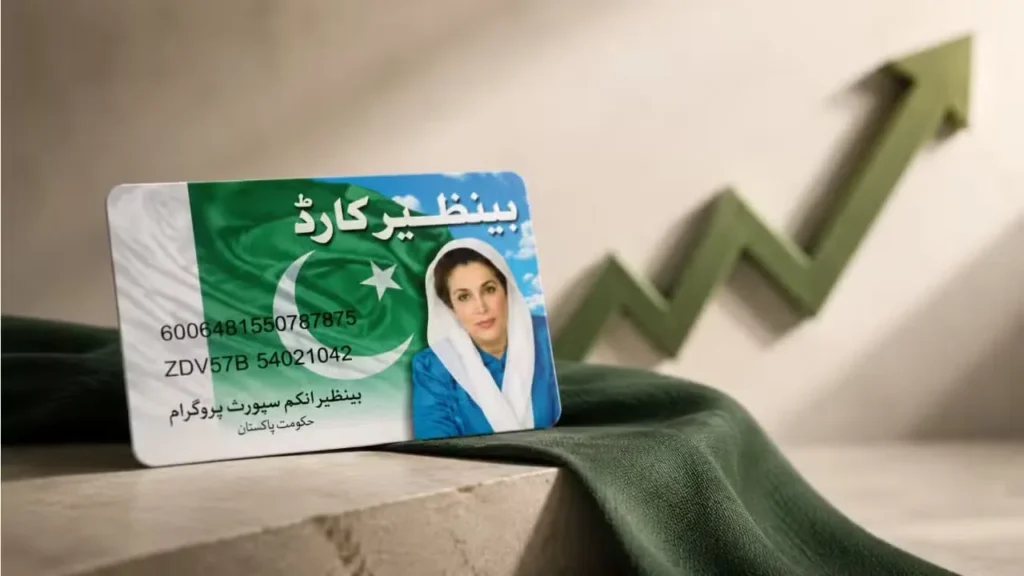
The Benazir Income Support Programme is facing renewed scrutiny after a government audit for fiscal year 2024–25 revealed widespread irregular payments, weak oversight, and serious failures in beneficiary data management involving hundreds of thousands of records.
According to the audit findings, more than 600,000 beneficiary cases showed significant documentation gaps and verification issues, exposing public funds worth over Rs 25 billion to potential misuse.
Government Employees Illegally Received Welfare Payments
One of the most serious findings relates to payments made to ineligible recipients. Despite a 2019 federal cabinet decision barring civil servants and their families from receiving BISP assistance, the programme disbursed Rs 515.7 million in unconditional cash transfers to 12,078 government employees, pensioners, and their spouses during FY25.
Auditors noted that these payments directly violated eligibility rules and reflected a failure of internal screening and cross-verification mechanisms.
Vehicle Ownership Rules Widely Ignored
The audit also found that 1,719 beneficiaries who owned vehicles exceeding the permitted threshold continued receiving financial support, resulting in Rs 69.7 million in irregular payments.
Officials cautioned that the actual scale of this issue may be much larger, as the audit reviewed vehicle registrations only in Islamabad, leaving ownership data from other regions unchecked.
Duplicate Education Stipends Raise Red Flags
Significant irregularities were also uncovered in education-linked assistance programmes. A total of 165 schools fully funded by Pakistan Bait-ul-Mal were simultaneously enrolled under the Benazir Taleemi Wazaif scheme, leading to duplicate stipend payments amounting to Rs 17.7 million.
In another anomaly, 278 government employees were registered as higher secondary students and received Rs 2.5 million in education stipends, despite being clearly ineligible.
Serious Data Gaps in Beneficiary Records
Auditors highlighted alarming weaknesses in beneficiary profiling and data validation. In 5,558 cases, a single spouse’s CNIC was linked to multiple female beneficiaries, in some instances as many as seven. Even more concerning, 596,252 beneficiaries had no spouse’s CNIC recorded at all, yet continued to receive payments totaling Rs 25.46 billion.
These gaps, the report noted, severely undermine the credibility of eligibility assessments and increase the risk of fraud.
Poverty Score Manipulation Detected
The audit further identified nearly 97,200 instances where multiple poverty scores were assigned to the same household head. This resulted in the irregular enrollment of almost 19,000 beneficiaries and the misallocation of approximately Rs 533.5 million.
Auditors said such inconsistencies suggest systemic flaws in the poverty scorecard system used to determine eligibility.
Authorities Order Recovery and Reforms
In response to the findings, the Departmental Accounts Committee has directed BISP to recover irregular payments, tighten internal controls, and overhaul its verification framework.
The committee also instructed the programme to strengthen data sharing with NADRA and Pakistan Bait-ul-Mal and to conduct physical verification of high-risk households.
Officials stressed that improving transparency and accountability is essential to restoring public trust and ensuring that welfare funds reach only those genuinely entitled to assistance.
About Tamoor Ahmed

Tamoor Ahmad has been covering politics since 2022.
