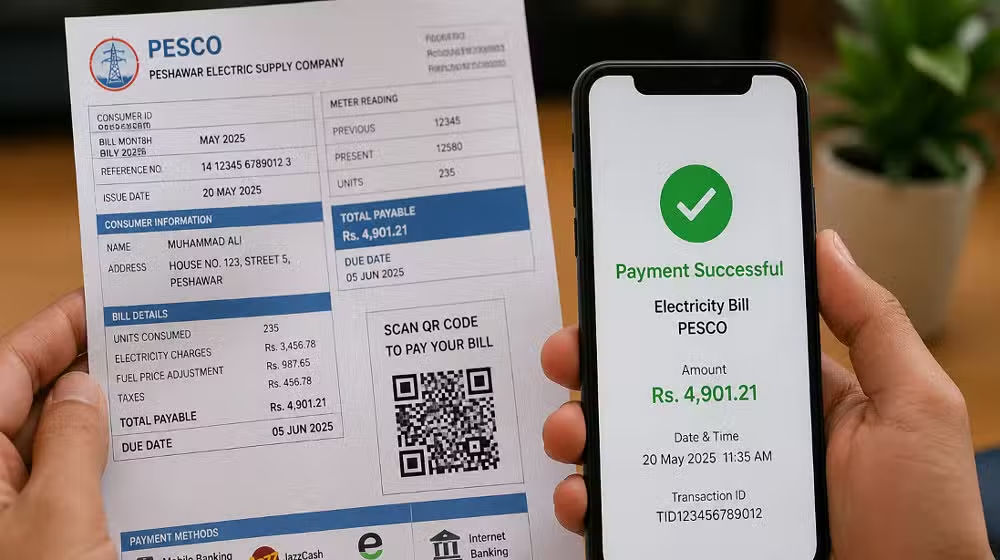
The Peshawar Electric Supply Company has introduced a QR code-based payment system for electricity bills, allowing consumers to pay dues directly through mobile phones without visiting banks or physical payment centres.
The new system places QR codes on printed electricity bills. Consumers can scan the code using any smartphone and complete transactions instantly through digital channels.
The utility says the step is designed to reduce waiting times at banks and make payments more accessible across both urban and rural areas.
Officials explained that the QR codes are compatible with mobile banking applications and widely used digital wallets. These include JazzCash and Easypaisa, along with several commercial banking apps operating in Pakistan.
The system does not require additional registration, making it easier for first-time users.
Consumers have been instructed to carefully verify bill details before scanning the code. This includes checking the consumer name, reference number, and address printed on the bill. The company warned that incorrect or outdated bills may lead to payment errors if not properly reviewed.
Once payment is completed, users receive an instant confirmation message from their banking application or wallet service. This message acts as official proof of payment and can be used for record-keeping or dispute resolution if needed.
“That instant confirmation is more than a receipt — it’s a legal instrument,” said a fintech compliance advisor. “Under SBP’s digital banking framework, the SMS or app notification is admissible as proof of payment. Consumers should save it, because in disputes, this timestamped record often decides the case.”
The introduction of the system comes at a time when power distribution companies are increasingly shifting towards digital solutions to improve efficiency. Officials say the QR-based model is part of a broader effort to modernise billing systems and reduce reliance on manual processes.
According to preliminary estimates, PESCO manages electricity distribution for millions of consumers across Peshawar and surrounding districts. Handling such a large customer base has historically created pressure on physical payment infrastructure, particularly during peak billing cycles.
Energy sector experts believe that the move could significantly reduce cash handling and improve transparency in revenue collection. However, they also note that digital literacy remains uneven across different regions, which may slow adoption in some areas.
The QR code electricity bill payment system in Pakistan is expected to gradually shift consumer behaviour towards online payments, especially among younger users who already rely heavily on mobile banking. At the same time, traditional payment methods will remain available for those who prefer in-person transactions.
PESCO officials said customer service teams have been instructed to assist users facing difficulties in scanning QR codes or completing payments. Awareness campaigns may also be launched to guide consumers on how to use the system correctly.
While the initiative does not change electricity pricing or billing structure, it is aimed at simplifying the payment process. Authorities believe that over time, wider adoption of the QR code electricity bill payment system could reduce operational costs and improve overall service delivery.
