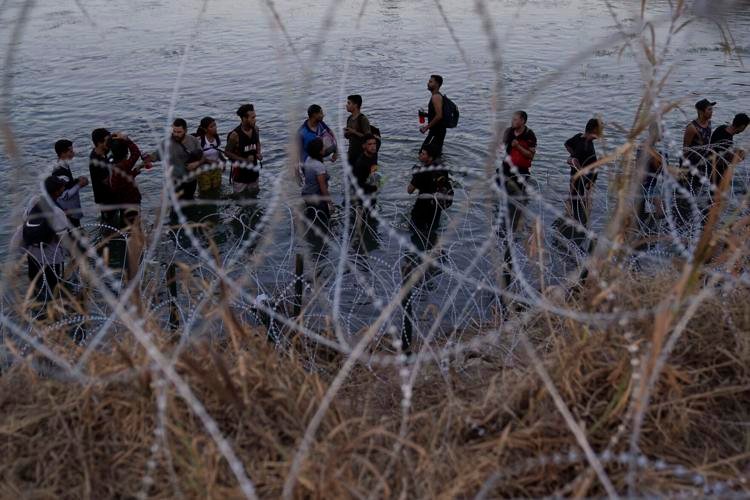
Mexico refuses to accept any migrants deported by Texas under new state law. Texas implemented Senate Bill 4 (SB4), widely considered one of the toughest immigration laws in modern US history.
Texas new state law about migrants
SB4 grants Texas law enforcement the authority to arrest individuals suspected of crossing the US-Mexico border illegally, with penalties for such offenses potentially reaching up to 20 years in prison.
Legal Challenges and Federal vs. State Authority
The Biden administration swiftly challenged SB4 on constitutional grounds, arguing that immigration enforcement falls solely within the purview of the federal government.
Past legal precedents have affirmed that only federal authorities possess the mandate to enforce immigration laws, relegating states to a supporting role.
Mexico’s Rejection and Concerns
Mexico, a key stakeholder in US immigration policy due to its shared border with Texas, issued a resolute rejection of SB4.
Also read: Murder of Pakistani-American doctor in Texas sparks controversy
The Mexican government refused to accept repatriations of migrants deported by Texas under the law, citing concerns over human rights violations and potential discrimination against the millions of individuals of Mexican origin residing in Texas.
US Supreme Court Decision
Despite objections from both the Biden administration and Mexico, the US Supreme Court permitted SB4 to take effect pending an appeal.
This decision further heightened tensions surrounding immigration policy and the balance of power between federal and state authorities.
Political Responses and Public Opinion
Texas Governor Greg Abbott, a Republican, lauded the Supreme Court’s ruling as a positive development.
However, the Biden administration criticized the decision, emphasizing the potential negative consequences of SB4 on public safety and international relations.
Immigration remains a pressing concern for many Americans, as evidenced by recent polls ranking it among the top national issues.
Ongoing Legal Proceedings
With the case now returning to the US Court of Appeals for the Fifth Circuit, the stage is set for further legal deliberations.
Both sides await the outcome of oral arguments, knowing that the losing party may opt to escalate the dispute back to the highest court in the land.
SB4 has ignited a legal and political firestorm, exposing deep divisions over immigration policy and the respective roles of federal and state governments.
As the legal battle unfolds, the implications of SB4 extend far beyond Texas, reverberating across national borders and shaping the broader discourse on immigration in the United States.
