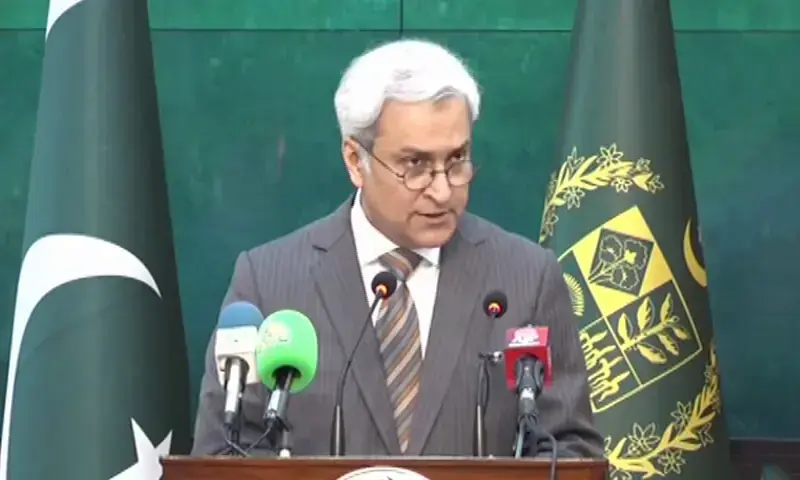
ISLAMABAD: Foreign Office Spokesperson Tahir Andrabi has said that Pakistan is currently playing a mediatory role between Iran and the United States, while also continuing diplomatic engagement on a range of regional issues involving India, Afghanistan, and Somalia.
Speaking at his weekly media briefing in Islamabad on May 7, 2026, the spokesperson said Pakistan remains actively engaged in diplomatic communication aimed at reducing regional tensions. And he stressed that dialogue, not confrontation, remains the cornerstone of Pakistan’s foreign policy approach.
He also said it is too early to confirm whether any potential Iran-US agreement signing ceremony would take place in Islamabad or elsewhere.
Diplomatic engagement with multiple countries
Tahir Andrabi said Pakistan is maintaining contact with Somalia over the issue of Pakistani nationals reportedly affected by piracy-related incidents. He added that the matter is being handled through formal diplomatic channels.
So, according to the Foreign Office, Pakistan is simultaneously engaged on multiple diplomatic fronts, reflecting an active foreign policy posture.
And he said Pakistan’s engagement with relevant authorities is ongoing, particularly in cases involving overseas Pakistanis requiring consular or legal support.
Also read: JD Vance, Steve Witkoff Reportedly Expected in Islamabad for High-Stakes US Deal Talks
Iran-US mediation and regional stability
On Iran and the United States, Andrabi said Pakistan is acting as a mediator between the two countries. He emphasized that diplomatic efforts are ongoing but at a sensitive stage.
“It is premature to say whether any signing ceremony will take place in Islamabad or elsewhere,” he said during the briefing.
The statement reflects cautious optimism but also uncertainty around the timing and location of any possible agreement.
Diplomatic observers note that Pakistan has historically positioned itself as a facilitator in regional negotiations, particularly where direct communication channels between major powers are limited.
India, Indus Waters Treaty and legal approach
Addressing questions on relations with India, the spokesperson said Pakistan has consistently supported dialogue as the preferred method of dispute resolution.
And he reiterated that Pakistan prefers diplomatic and legal mechanisms over military escalation in addressing bilateral issues.
He specifically referred to the Indus Waters Treaty, stating that Pakistan will continue to pursue all matters through legal and institutional channels.
According to him, the Indus Waters Commissioner and related institutions are actively working on technical and legal aspects of water-sharing concerns.
Afghanistan border concerns and security issues
Discussing Pakistan-Afghanistan relations, Andrabi said that border communities on both sides desire peace and stability. He noted that ordinary citizens living along the border do not support conflict and instead seek normal economic and social interaction.
A shopkeeper in Peshawar’s Karkhano Market, speaking informally on May 6, 2026, said cross-border disruptions often affect trade and daily supplies, especially during periods of heightened tension.
Andrabi, however, expressed concern over terrorism originating from Afghan territory, stating that such activity continues to affect peace efforts.
He said the Kabul administration has not fully addressed the issue of militant groups operating across the border, which he described as a key obstacle to long-term stability.
Pakistan’s broader diplomatic posture
So, Pakistan’s foreign policy, as outlined in the briefing, continues to focus on mediation, legal frameworks, and institutional diplomacy.
The spokesperson’s remarks suggest a multi-layered approach involving both regional conflict management and protection of national interests through international legal mechanisms.
While challenges remain across multiple fronts, the Foreign Office maintained that diplomatic engagement remains ongoing and active across all key regional relationships.
About Tamoor Ahmed

Tamoor Ahmad has been covering politics since 2022.
