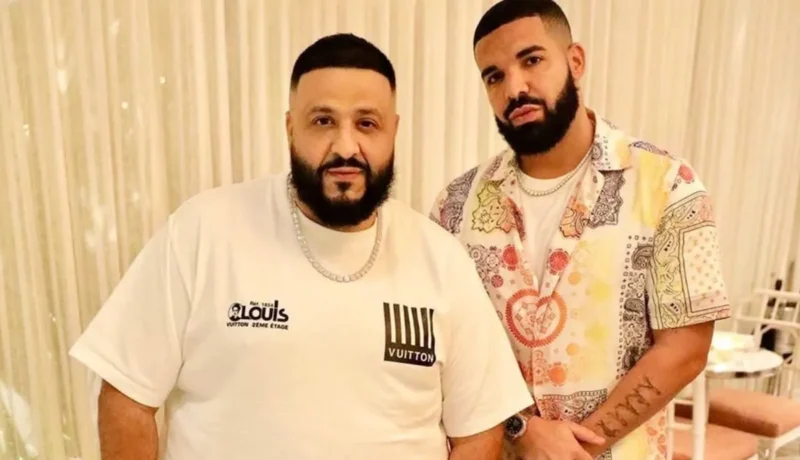
Canadian rapper Drake has ignited fresh controversy after taking a pointed lyrical jab at DJ Khaled in one of his newly released tracks, directly referencing Khaled’s silence on Gaza at a time when civilian suffering continues to dominate global headlines.
The line appears in “Make Them Pay,” a song featured on Iceman, one of three albums Drake released simultaneously on Friday, alongside Habibti and Maid of Honour.
The lyric stands out not only for its blunt tone but also for its political weight, calling attention to what many listeners see as a moral contradiction from one of hip-hop’s most visible Palestinian-American figures.
In the verse, Drake suggests that Khaled chose comfort and caution while his community continued to wait for justice, referencing Palestinian colors and faith symbolism in a way that leaves little room for ambiguity.
The message landed amid a devastating war in Gaza, where more than 72,500 people have reportedly been killed, intensifying scrutiny of public figures with influence in the region.
As the humanitarian crisis escalated, many celebrities began using their platforms to publicly support Palestinian civilians and call for an end to the violence.
Also read: DJ Khaled becomes 2nd rapper to receive mysterious coffin at home
Khaled, however, continued posting routine promotional and lifestyle content, a decision that triggered backlash from fans who expected vocal solidarity from an artist with direct familial and cultural ties to Palestine.
Drake, by contrast, aligned himself with calls for peace earlier in the conflict. He was among several high-profile figures, including Zendaya, Ben Affleck, and Zayn Malik, who signed an open letter urging an end to the violence and protection for civilians.
His lyrical callout now places him among artists increasingly willing to weave global politics into mainstream hip hop narratives.
The criticism of Khaled’s silence has not been confined to social media. In 2024, his cousin Fadie Musallet spoke candidly to The National, expressing frustration on behalf of their family.
He said Khaled’s lack of public support deeply hurt relatives and Palestinians who once saw him as a symbol of pride and representation.
Musallet suggested that Khaled’s long-held desire to visit Palestine may no longer be welcomed due to what many perceive as abandonment during a time of crisis.
The disappointment has been amplified by Khaled’s past activism. He previously used his platform to speak out during the Black Lives Matter movement, a contrast that has made his current silence harder for supporters to reconcile.
Musallet questioned whether financial considerations now outweigh moral responsibility, asking what, if anything, has changed.
Drake’s lyrics have since fueled debate across music and political circles, raising broader questions about celebrity accountability, selective activism, and the cost of speaking out.
Whether Khaled chooses to respond remains to be seen, but the verse has already ensured that silence itself has become part of the conversation.
About Hamna Ghias Sheikh

The writer has been covering politics, lifestyle and finance since 2023.
