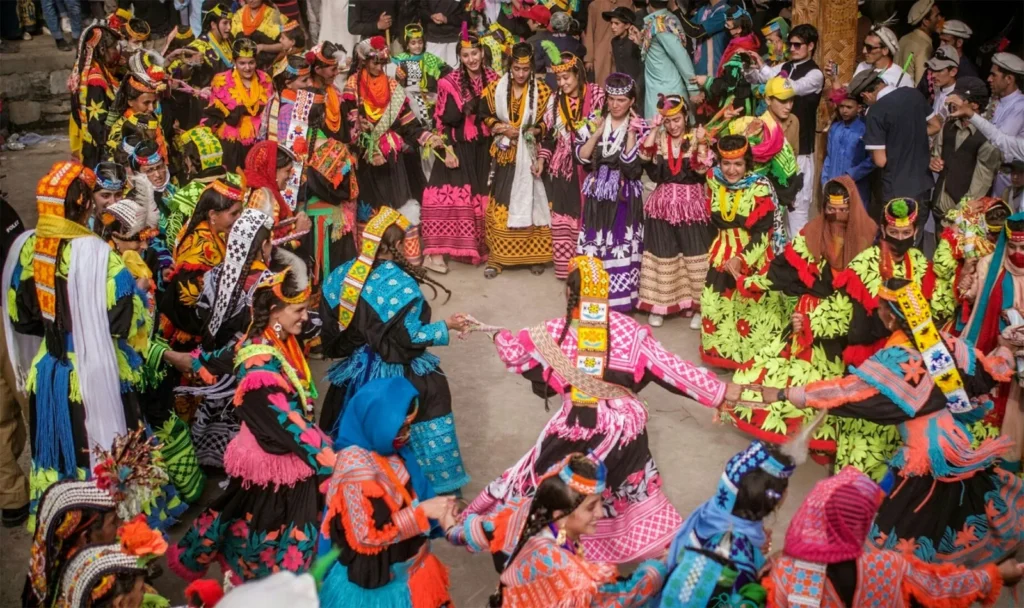
In a major legislative development in Khyber Pakhtunkhwa (KP), the provincial government has introduced a groundbreaking Kalash marriage law 2026, marking the first formal legal framework dedicated to regulating marriage, divorce, and family rights in the Kalash community of Chitral.
The bill, presented in the provincial assembly by Local Government Minister Meena Khan Afridi, is being described as a historic step for minority rights in Pakistan, as it officially brings the Kalash family system under state legal protection for the first time.
Officials say the new law aims to strengthen Kalash marriage registration rules, inheritance protections, and women’s legal rights, while ensuring that traditional customs are preserved within a regulated legal structure.
Chief Minister’s Focal Person for Minority Affairs, Wazirzada, called the initiative a positive and long-overdue reform for the Kalash community’s legal recognition, highlighting its importance for social protection and cultural preservation.
Under the proposed framework, the minimum legal marriage age in Kalash community marriages has been set at 18 years for both men and women, aligning with broader child protection standards in Pakistan. The law also introduces mandatory marriage registration in Kalash Valley unions, aimed at preventing unregistered and informal marriages.
A key feature of the legislation is the requirement of free and informed consent in Kalash marriages, ensuring protection against forced unions. The bill also formally recognizes divorce and khula under Kalash customary family practices, creating a legal bridge between traditional systems and modern provincial law.
Another major component focuses on Kalash women’s inheritance rights in Pakistan, including legal protection for property ownership after the death of a spouse. Officials say this provision is designed to enhance women empowerment in minority communities of KP and reduce long-standing legal gaps in family inheritance cases.
The bill also introduces penalties for providing false information during marriage registration or official documentation, reinforcing legal accountability in Kalash marriage records and family law compliance.
Government authorities believe the law will help reduce underage marriages, unregistered unions, and legal disputes in Kalash community family matters while improving administrative oversight in remote tribal regions.
At the same time, the legislation attempts to balance Kalash cultural traditions with modern legal reforms in Pakistan, allowing customary practices to continue under a structured legal framework.
The development has sparked wider discussion among policymakers and social observers regarding minority protection laws in Pakistan, cultural preservation vs legal modernisation, and the future of indigenous legal systems in KP.
While many have welcomed the move as a progressive step toward Kalash community rights protection and legal recognition, experts stress that effective implementation will be crucial to ensure the law achieves its intended social and legal impact without disrupting traditional identity.
