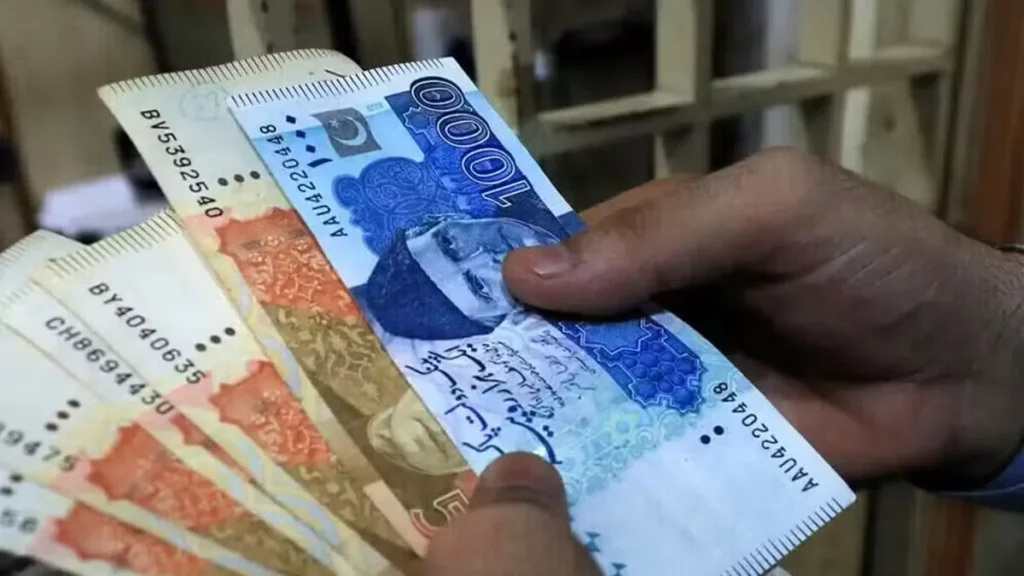
Pakistan’s external debt reached $135.1 billion in 2025, with China retaining its position as the country’s largest individual creditor, according to the World Bank’s International Debt Report 2026.
The latest figures highlight Pakistan’s continued dependence on external financing and the challenges associated with managing repayment obligations, borrowing costs and foreign exchange requirements.
Of the total, approximately $107.1 billion consisted of public and publicly guaranteed (PPG) external debt, covering obligations contracted directly by the government or guaranteed by public-sector entities. Readers can consult the World Bank’s International Debt Statistics database for detailed country-level external debt information.
Multilateral Creditors Hold the Largest Share
According to the World Bank’s creditor breakdown, multilateral institutions held $56.8 billion in Pakistan’s public and publicly guaranteed external debt in 2025. Bilateral creditors accounted for $42.4 billion, while private creditors held approximately $7.8 billion.
These figures demonstrate the importance of international development institutions and bilateral financing partners in Pakistan’s external borrowing structure.
China Remains Pakistan’s Largest Individual Creditor
The World Bank’s reported figures identify China as Pakistan’s largest individual creditor, with $22.4 billion in outstanding loans.
The World Bank itself ranked second among individual creditors, holding $19.2 billion, followed by the Asian Development Bank (ADB), with $16.8 billion.
China’s position reflects its significant role in Pakistan’s external financing arrangements, alongside the country’s longstanding reliance on multilateral development institutions.
Private External Borrowing Carries Higher Interest Rates
The World Bank’s debt statistics also highlight significant differences between official and private borrowing conditions.
According to the reported figures, official creditors offered an average interest rate of 3.6%, an average maturity of 16 years and a four-year grace period.
Private creditors, meanwhile, charged an average interest rate of 8.6%, with an average maturity of three years and a one-year grace period.
The difference highlights the financial advantages of concessional borrowing compared with commercial financing. Higher interest rates and shorter repayment periods can increase refinancing requirements and put additional pressure on Pakistan’s foreign exchange position.
Regional External Debt-to-GNI Ratio Increases
The World Bank’s regional debt assessment shows that the external debt-to-gross national income (GNI) ratio for the Middle East, North Africa, Afghanistan and Pakistan region increased from 26.7% to 29.4% in 2025.
A rising debt-to-GNI ratio indicates that external obligations are increasing relative to national income, potentially making debt management more challenging.
China Extends $2 Billion in Loans to Pakistan
Pakistan also received some repayment relief during 2025 when China extended the maturities of $2 billion in loans, according to the reported figures.
Separately, the International Monetary Fund (IMF) provided approximately $2.3 billion under Pakistan’s Extended Fund Facility (EFF) and Resilience and Sustainability Facility (RSF).
The IMF’s official Pakistan country page provides access to programme announcements, economic assessments and financial assistance information.
The support is intended to strengthen macroeconomic stability, improve economic resilience and address structural weaknesses.
However, additional financing and maturity extensions provide repayment flexibility rather than eliminating existing debt obligations.
What Pakistan’s External Debt Means for the Economy
Pakistan’s growing external debt has important implications for government finances and economic stability.
The State Bank of Pakistan publishes external sector statistics, including information on foreign exchange reserves, external debt and balance-of-payments developments.
Meanwhile, the Ministry of Finance provides official debt policy statements, fiscal reports and government financial information.
As government debt servicing costs increase, a larger share of public revenue may be directed towards interest payments and principal repayments, leaving less fiscal space for development spending.
This can create additional pressure on public services, including healthcare, education, infrastructure and energy-sector investment.
External repayments also require foreign currency. Consequently, Pakistan’s ability to maintain adequate foreign exchange reserves and generate sufficient dollar inflows through exports, remittances and investment remains essential for managing its external obligations.
Global Developing-Country Debt Reaches $9.4 Trillion
The World Bank’s International Debt Report 2026 also highlights the wider increase in borrowing across developing economies.
According to the report, external debt among low- and middle-income countries reached a record $9.4 trillion in 2025, representing annual growth of 5.5%.
The increase reflects broader financing challenges facing developing countries, particularly those exposed to higher borrowing costs and substantial foreign currency repayment requirements.
For Pakistan, the priority will be ensuring that external borrowing supports productive investment, strengthens export capacity and generates sufficient economic returns.
Ultimately, the country’s ability to manage its external debt will depend on stronger economic growth, improved revenue collection, export diversification and disciplined public financial management.
