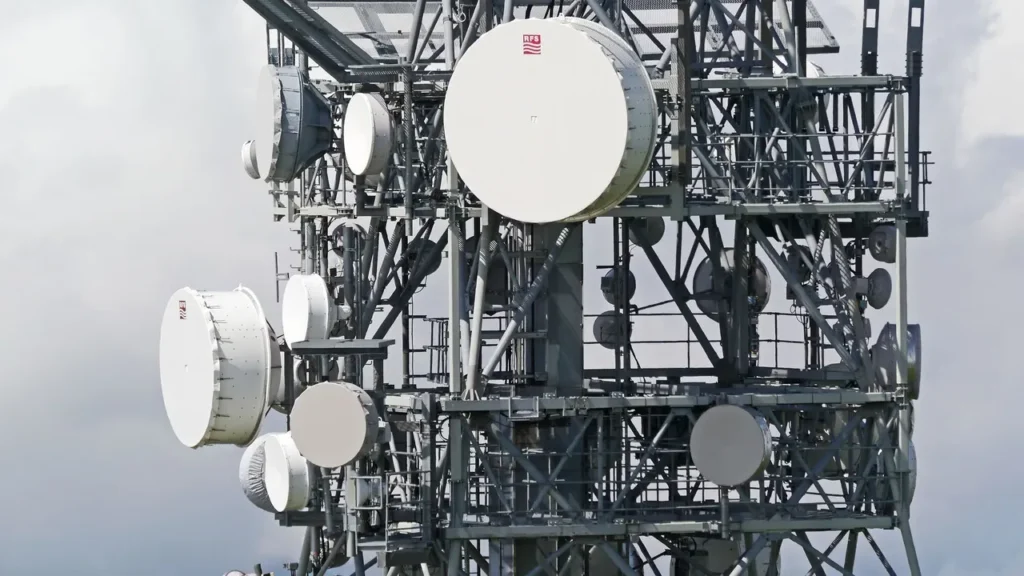
Pakistan’s internet service quality has come under fresh scrutiny in the National Assembly, where lawmakers questioned the expansion of 5G services while consumers continue to report slow connections and unreliable mobile internet.
Parliamentary Secretary for Information Technology Sabeen Ghoury told the House that 5G services had been launched in 24 cities, with further expansion planned after network performance stabilizes in the initial locations.
The response came amid complaints from lawmakers, including presiding officer Abdul Qadir Patel, who questioned why the country was moving towards next-generation connectivity when many users were still dissatisfied with existing services.
Lawmakers Raise Concerns Over 4G and 5G Services
Patel challenged the rollout strategy with a pointed question: “Has 4G passed away that 5G has been introduced?”
The remark reflected concerns that the introduction of a newer mobile technology would have limited value for consumers who continue to experience weak or inconsistent connectivity on existing networks.
During the proceedings, Ghoury was also questioned about the meaning of 5G. According to the account of the session, Aseefa Bhutto Zardari offered to explain the technology and raised concerns about connectivity in different parts of the country.
Aseefa specifically highlighted Nawabshah, saying that neither 4G nor 5G services were working there. The complaint underscored the concern that access to newer technology may remain uneven across locations.
Government Says Network Stability Is a Priority
Ghoury said the government intended to expand 5G coverage after services became stable in the cities where the initial rollout had taken place.
She also cited security challenges, including unrest and terrorism in certain areas, as factors affecting 3G and 2G services.
The government’s position suggests that expanding coverage will require more than launching services in additional cities. Reliable performance also depends on network infrastructure, electricity supply, coverage quality and the ability of operators to maintain service during disruptions.
Official Records Show Internet Quality Has Been a Concern
Concerns over Pakistan’s internet services have also appeared in earlier parliamentary discussions.
In a July 14, 2026, meeting, the National Assembly Standing Committee on Information Technology and Telecommunication expressed concern about slow internet speeds and repeated call connection failures in both remote areas and major cities, including Karachi.
The National Assembly’s official account said the Pakistan Telecommunication Authority had reported an increase in available spectrum from 274 MHz to 754 MHz following the 5G spectrum auction. The authority expected service quality to improve gradually as the rollout progressed.
The committee also identified electricity shortages affecting telecom infrastructure as a factor behind poor connectivity. Officials said prolonged power outages could disrupt mobile towers and reduce network availability.
The official committee update is available on the National Assembly of Pakistan website.
More recently, the Associated Press of Pakistan reported that Information Technology Minister Shaza Fatima Khawaja had cited 5G deployment at more than 1,700 sites across 24 cities. The government has also highlighted wider fibre-optic infrastructure and additional spectrum as part of its digital connectivity plans.
Reliable Internet Remains the Key Test
For consumers, the central issue is not simply whether 5G has arrived, but whether mobile and broadband services are dependable where they live, work and study.
Slow internet can disrupt online businesses, digital payments, remote work, education and access to public services. In areas with inconsistent coverage, the benefits of faster technology may remain out of reach.
The latest parliamentary criticism places renewed attention on the gap between infrastructure expansion and everyday user experience. The government and telecom regulator will face pressure to demonstrate that the 5G rollout can progress alongside improvements in existing networks.
The measure of success will ultimately be whether people across Pakistan receive faster, more stable and more widely available connectivity, rather than whether a new generation of mobile technology has been launched in a growing number of cities.
