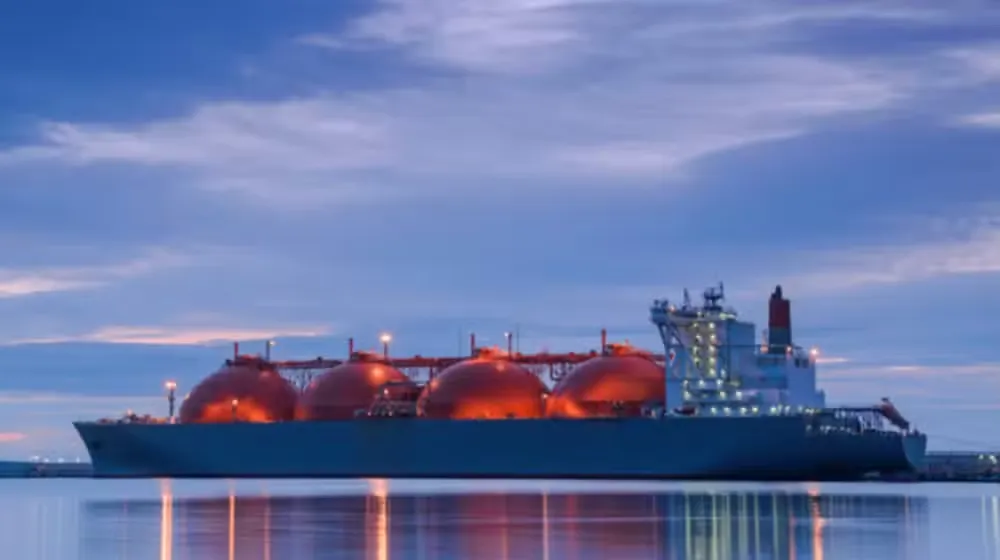
Pakistan’s winter LNG import bill is projected to reach $1.29 billion between November 2026 and February 2027, as higher seasonal gas demand and disruptions to Qatari supplies push the country towards more expensive purchases from the international spot market.
The projected expenditure covers 22 liquefied natural gas (LNG) cargoes, including supplies under existing long-term contracts and additional purchases at prevailing market prices. The estimate remains subject to actual cargo availability, contractual quantities and spot market rates.
According to the procurement plan discussed by the government’s energy task force, spot purchases are expected to account for $863 million of the total bill, highlighting the financial implications of relying on short-term supplies during the winter months.
Spot Market Purchases to Cost $863 Million
Pakistan plans to secure 10 LNG cargoes from the spot market at an estimated $86.3 million per cargo. These purchases are expected to cost substantially more than supplies covered by the country’s long-term agreement with Qatar.
The remaining expenditure is projected at $429.83 million under long-term contracts. This includes 11 cargoes from Qatar valued at $351.41 million and one cargo from Eni worth $78.42 million, scheduled for January.
The figures indicate that spot purchases will account for roughly two-thirds of the projected winter LNG import bill. That exposes Pakistan’s energy budget to changes in international gas prices and the availability of cargoes during periods of strong seasonal demand.
The projected average expenditure is approximately $322.5 million per month across the four-month period, although the actual bill is expected to vary considerably.
January Expected to Record Highest LNG Costs
January 2027 is projected to be the most expensive month of the winter procurement period, with eight LNG cargoes expected to push the monthly import bill to $437.32 million.
December’s projected expenditure stands at $369 million, reflecting the expected cost of spot market purchases and the seasonal requirement for additional gas supplies.
The procurement plan was discussed at a meeting of the government’s energy task force, where officials assessed the LNG required to meet winter demand between November and February.
Public-sector entities are expected to meet part of the requirement through existing long-term contracts, while the remaining cargoes will be purchased from the spot market.
The final cost will depend on when cargoes are procured, the prices secured and whether the planned supplies arrive as scheduled.
Pakistan’s Long-Term LNG Agreements With Qatar
Pakistan State Oil (PSO) has two LNG supply agreements with QatarEnergy. The first runs from 2016 to 2031, while the second covers the period from 2021 to 2031. Both were signed under government-to-government arrangements.
Under the agreements, PSO receives 6.75 million tonnes of LNG annually, equivalent to approximately 108 cargoes.
However, lower domestic demand previously prompted PSO and QatarEnergy to agree to divert 24 cargoes scheduled for 2026 to other destinations. The arrangement reflected the difficulty of matching contracted supplies with Pakistan’s changing gas requirements.
The second agreement, signed during the Pakistan Tehreek-e-Insaf government, also attracted criticism because Pakistan did not require additional LNG at the time, contributing to a supply surplus.
PSO and QatarEnergy have recently issued notices concerning reviews of their LNG contracts. PSO has also sought federal government consent to review its agreement with QatarEnergy.
Both contracts are due to expire in 2031. Any changes to their terms could affect Pakistan’s future supply commitments, procurement flexibility and exposure to international gas prices.
Higher LNG Costs Add Pressure to Energy Planning
Pakistan’s projected winter import bill illustrates the challenge of securing reliable gas supplies while controlling external payments.
Long-term contracts can provide greater predictability in supply and pricing, but they may also create difficulties when domestic demand falls below contracted volumes. Spot purchases offer flexibility, although their cost can rise sharply when demand increases or supplies become constrained.
The government therefore faces a balancing task. It must secure enough gas to meet winter requirements without repeating earlier problems involving surplus contracted supplies, unused cargoes or expensive emergency purchases.
Greater coordination between procurement schedules, domestic gas availability and seasonal demand forecasts could help reduce avoidable costs. Clear disclosure of contract terms, cargo pricing and revisions to procurement plans would also allow consumers and market participants to better assess the financial implications.
For now, the projected $1.29 billion winter LNG bill remains an estimate rather than a final expenditure figure. The actual cost will depend on supply availability, long-term contractual obligations and the prices Pakistan secures for spot cargoes over the coming months.
