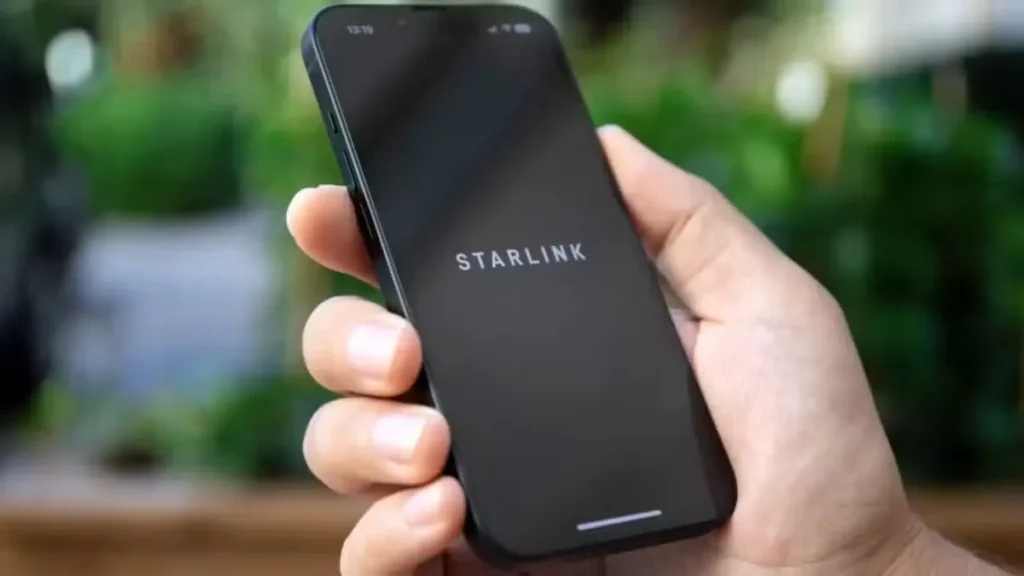
Satellite connectivity is becoming an increasingly important feature for modern smartphones, offering a lifeline when traditional cellular networks are unavailable.
However, a recent hands-on test by Tom’s Guide suggests the technology remains best suited as an emergency backup rather than a replacement for 4G or 5G.
The publication tested O2 Satellite in the UK using the Samsung Galaxy S26 Ultra, finding that while satellite connections can keep users online in mobile dead zones, they still come with slower speeds, limited app support and weaker indoor performance.
O2 Satellite Automatically Takes Over Without Mobile Coverage
O2’s satellite service, powered by Starlink, operates alongside the carrier’s regular mobile network and activates automatically when both cellular service and Wi-Fi are unavailable.
Available as a £3 monthly add-on for eligible customers—and included with select plans—the service does not require any additional hardware or a dedicated satellite application. O2 says compatible smartphones connect automatically, provided users have a clear view of the sky.
To test the service, Tom’s Guide had to travel about 30 minutes from southeast England to find an area without O2 cellular coverage. By the time the vehicle reached the dead zone, the Galaxy S26 Ultra had already switched to the Starlink satellite network.
Satellite Signal Worked Even Inside a Car
One of the more impressive findings was that the smartphone maintained a satellite connection while inside a car without a sunroof.
Initially, the device displayed one signal bar out of three. After moving the phone outside for a clearer view of the sky, the signal improved to two bars after roughly a minute, although it never reached full strength.
Indoor performance proved far less reliable. Entering a centuries-old pub with a thick thatched roof caused the satellite connection to disappear entirely, highlighting the importance of an unobstructed view of the sky.
Google Maps Worked, But Performance Was Slower
Navigation remained functional over the satellite connection, though noticeably slower than conventional mobile networks.
According to Tom’s Guide, Google Maps displayed a warning that content might load more slowly when using satellite data. Maps typically required 30 to 60 seconds to load completely while inside the vehicle.
Performance improved outdoors but still lagged behind standard 4G and 5G connections.
Only Certain Apps Currently Support Satellite Data
The biggest limitation observed during testing was that satellite connectivity does not provide unrestricted internet access.
According to O2, supported services currently include:
- Messages
- Messenger
- Google Maps
- Location sharing
- Weather apps
During the test, applications such as Google Maps, Google Find Hub, messaging services and weather apps functioned as expected.
However, web browsers, streaming platforms, social media apps and several third-party applications behaved as though the phone had no internet connection.
While GPS continues to function without mobile data, users may still need to download maps or other essential information before traveling to remote areas.
Reliable Backup, But Not Yet a Cellular Replacement
Tom’s Guide concluded that direct-to-phone satellite connectivity is highly valuable when users lose conventional network coverage, particularly for navigation and emergency communication.
However, slower speeds, inconsistent indoor reception and limited compatibility with everyday apps mean the technology cannot yet replace traditional mobile networks.
O2 similarly describes the service as an extension of its terrestrial coverage rather than an alternative to its primary cellular network.
Meanwhile, direct-to-cell satellite services continue expanding globally. T-Mobile has launched Starlink-powered satellite connectivity in the United States, while Amazon is pursuing plans to build a satellite network capable of delivering voice, messaging and data services directly to smartphones.
For now, satellite connectivity is proving most valuable in situations where the alternative is having no connection at all.
