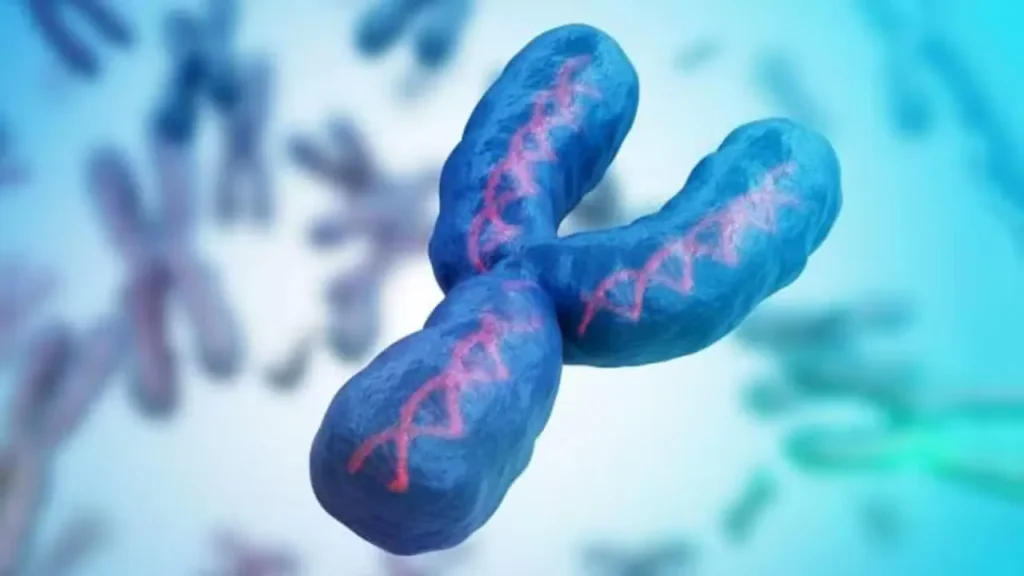
A study led by Dr. Dan Theodorescu at the University of Arizona Cancer Center has found that the loss of the Y chromosome in men’s normal body tissue may create conditions that allow cancer to develop.
Published in JCI Insights, the research suggests that age-related Y chromosome loss can produce a hidden genetic vulnerability in otherwise normal-looking tissue.
Researchers found signs of this loss in tissue surrounding tumours, raising the possibility that it could occur during the early stages of cancer formation.
Y Chromosome Loss Found Near Tumours
Male cells typically carry one X chromosome and one Y chromosome. As men age, some cells can lose the Y chromosome, a phenomenon known as mosaic loss of chromosome Y.
The researchers found that this genetic change was not limited to cancerous tissue. Y chromosome loss was also detected in tissue that appeared normal under conventional examination but was located close to tumours.
The findings suggest that increasing Y chromosome loss may be associated with the progression from apparently normal tissue to abnormal cells and eventually cancer.
Researchers Examine More Than 4.3 Million Cells
The research team analysed 1,000 tissue samples from 405 men, covering 11 major organs.
Using automated fluorescent imaging, scientists examined more than 4.3 million cell nuclei and measured the ratio of Y chromosomes to X chromosomes in the samples.
Bladder tissue collected during cancer surgery provided particularly notable evidence. Researchers observed that Y chromosome loss increased as tissue changed from normal to early abnormal cells and then to established cancer.
The pattern was also observed across several other types of cancer.
Y chromosome loss was especially common in cancers affecting the colon, rectum, esophagus, pancreas and lungs. Researchers reported that the degree of chromosome loss generally increased as the sampled tissue was located closer to a tumour.
Could the Finding Help Detect Cancer Earlier?
The researchers believe the discovery could eventually have implications for cancer diagnosis.
Theodorescu said the findings may one day help doctors identify warning signs in biopsy samples that fail to capture small or nearby tumours.
This could be particularly relevant when a biopsy appears normal but the surrounding tissue contains early genetic changes associated with cancer development.
The study also offers a possible explanation for why Y chromosome loss has been associated with higher mortality from some types of carcinoma.
However, the findings do not mean that losing the Y chromosome directly causes cancer in every man. Instead, the research points to a possible relationship between Y chromosome loss and changes in surrounding tissue that may make cancer development more likely.
Further research will be needed to determine how the chromosome loss contributes to tumour formation and whether it can eventually be used as a reliable clinical marker for cancer risk or early detection.
