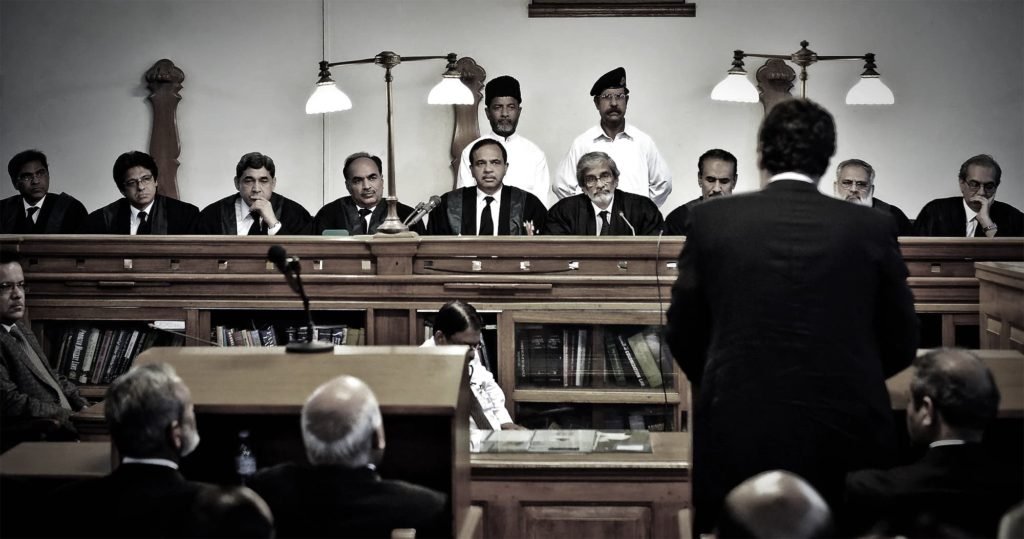
In a world where wealth and power often dictate the rule of law, Pakistan stands as a stark example of how money can sometimes overpower morality, and how influence can overshadow integrity. The phrase “a safe haven for wealthy murderers” isn’t just a sensational headline; it captures a disturbing trend in the country’s justice system, where affluence and connections have too often shielded individuals from facing the consequences of their heinous crimes.
Pakistan’s legal system, like those in many other countries, is intended to be impartial and blind to wealth and status. However, the reality on the ground is often starkly different. Over the years, there have been numerous cases where individuals from wealthy and influential backgrounds have been accused of murder, only to escape justice through a combination of legal loopholes, bribery, and social influence.
One of the most glaring examples of this was the case of Shahzeb Khan, a young man murdered in Karachi in 2012. The culprits, Shahrukh Jatoi and his accomplices, hailed from powerful feudal families. Despite overwhelming evidence and initial convictions, the case took a dramatic turn when the victim’s family was reportedly pressured into accepting a financial settlement, known as “diyat” under Islamic law. This legal provision allows for a murder charge to be dropped if the victim’s family forgives the perpetrator in exchange for compensation. Consequently, Jatoi and his accomplices were released, sparking outrage across the nation.

This case is not an isolated incident. The use of “diyat” and other legal provisions intended for reconciliation has been manipulated in Pakistan to serve the interests of the wealthy. These provisions, while rooted in Islamic principles of forgiveness and reconciliation, have been distorted into tools for the rich to buy their way out of accountability. When combined with the pervasive corruption in the police and judiciary, the result is a justice system that frequently fails to serve its primary purpose: delivering justice.
The tragic death of Amina Arif on Karsaz Road in Karachi on August 19, 2024, has reignited public discourse on the impunity enjoyed by the wealthy in Pakistan. The incident is a poignant reminder of how justice can be distorted by power and influence, reinforcing the notion that Pakistan remains a safe haven for wealthy individuals who commit heinous acts.
Amina Arif’s case is a stark illustration of how wealth and power can corrupt the course of justice in Pakistan. Despite the clear circumstances of the accident, the driver was treated with undue leniency, largely due to his family’s influential status.
This incident is emblematic of a broader pattern in the country, where those with resources can evade the consequences of their actions, often with the complicity of law enforcement.
The ability of the wealthy to manipulate legal outcomes is not a new phenomenon in Pakistan. In this case, the initial response from the police was slow and ineffective, likely influenced by the driver’s family connections.
While, Corruption within the judicial system is a critical factor in why Pakistan has become a “safe haven” for wealthy murderers. From the initial investigation to the courtroom, every stage of the legal process can be influenced by money. Police officers can be bribed to tamper with evidence or to not investigate cases thoroughly. Prosecutors can be influenced to weaken their cases, and judges can be swayed to pass lenient sentences or dismiss charges altogether.
The problem is not merely the existence of corruption but its pervasiveness. Transparency International’s Corruption Perceptions Index consistently ranks Pakistan among the most corrupt countries in the world. This widespread corruption creates an environment where the wealthy can operate with near impunity, knowing that the legal consequences of their actions can often be circumvented.
The manipulation of the legal system by the affluent is also facilitated by the deep-seated social inequalities in Pakistan. The gap between the rich and the poor is vast, and the power dynamics heavily favour the wealthy elite. In a country where millions live below the poverty line, the wealthy few have access to resources, connections, and networks that they can leverage to avoid accountability. The ability to hire top lawyers, bribe officials, and exert social pressure on victims’ families means that justice is often out of reach for ordinary man.
In such a system, the law becomes a tool of the powerful, rather than a shield for the vulnerable. Victims and their families often find themselves facing threats, harassment, and immense pressure to drop charges or accept settlements. The fear of retribution, coupled with the knowledge that the legal system is stacked against them, forces many to abandon their pursuit of justice.
Furthermore, the media’s role in these cases cannot be overlooked. While the press in Pakistan has occasionally highlighted instances of injustice, media coverage is often influenced by the same factors that corrupt the legal system: money and power. Media outlets, owned or influenced by powerful individuals, can shape public perception, downplay certain cases, or even smear the victims, making it harder for justice to be served.
Pakistan’s reputation as a safe haven for wealthy murderers is a deeply troubling reality that reflects broader issues of inequality, corruption, and power dynamics within the country. While the challenges are significant, they are not insurmountable. By implementing reforms that ensure the rule of law is applied equally to all, and by fostering a culture that values justice over wealth, Pakistan can begin to dismantle the systems that allow the rich to evade accountability for their crimes. Only then can the country hope to restore public trust in its legal system and ensure that justice is truly served for all its citizens.
