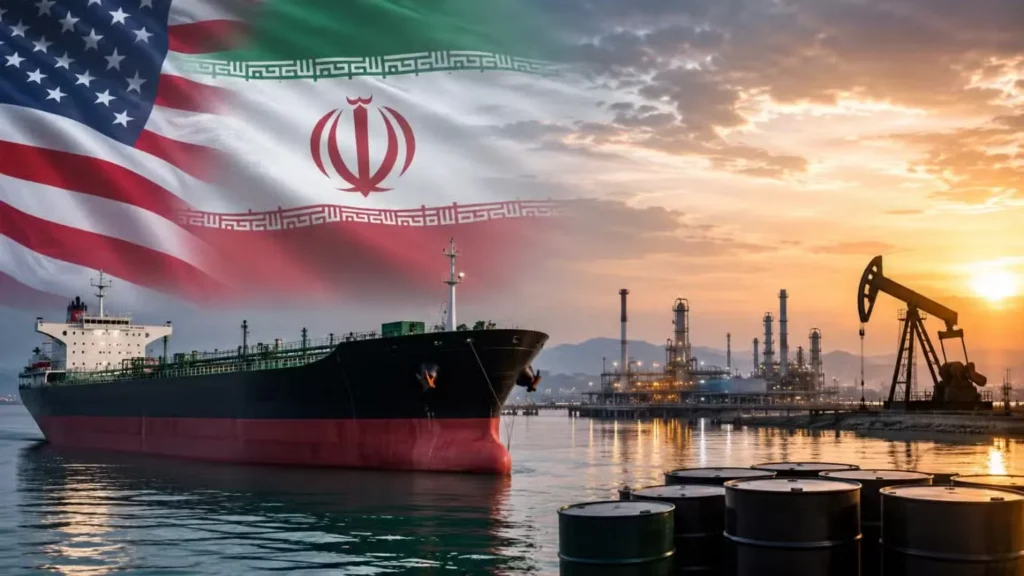
The United States has issued a temporary general license allowing the production, sale and export of Iranian-origin crude oil petrochemical products and petroleum products through August 21, marking the most significant easing of US oil sanctions on Iran in nearly eight years.
The authorization was granted by the US Treasury Department through its sanctions enforcement arm, the Office of Foreign Assets Control. The license permits not only oil transactions but also the financial insurance, shipping and commercial services required to support Iranian energy exports during the 60-day window.
Iranian oil returns to formal markets
The decision effectively allows Iranian oil to re-enter formal global markets for the first time since 2018, when Washington withdrew from the nuclear agreement and reinstated sweeping sanctions on Iran. Since then, Iranian crude exports have continued largely through informal channels, with China remaining the dominant buyer.
Under the new authorization transactions may be conducted in US dollars, removing one of the most restrictive barriers to Iranian oil trade. Market participants say the move opens the door for regional buyers to rapidly increase imports during the license period.
Diplomatic framework behind the move
US officials describe the license as part of an interim diplomatic framework tied to broader negotiations with Tehran.
As part of the arrangement Iran has committed to restoring access for international nuclear inspectors and ensuring uninterrupted commercial shipping through the Strait of Hormuz, one of the world’s most critical oil transit routes.
Also read: 14-Point US-Iran Deal As Released By US
Officials indicated that the license could be extended if negotiations progress toward a permanent agreement and if regional hostilities ease, particularly those linked to the Gulf conflict.
Immediate impact on oil prices
Global crude markets reacted swiftly to the announcement. Oil prices came under pressure, with benchmarks trading in the low to mid-seventy-dollar range as traders priced in the possibility of additional Iranian supply entering the market within weeks.
Energy analysts say even the expectation of higher exports from Iran can significantly influence price sentiment given current concerns about oversupply and slowing global demand growth.
Strategic significance of sanctions relief
Before sanctions were reimposed in 2018 Iran exported millions of barrels of oil per day to customers including China, India, Japan, South Korea and several European nations. The temporary license signals a major shift in the US sanctions posture and underscores the role of energy policy as a diplomatic tool.
While the authorization is time-limited, its issuance highlights Washington’s willingness to use sanctions relief as leverage in nuclear and regional security negotiations.
What happens next
The general license remains valid until August 21 while talks continue on a longer-term framework. Analysts warn that the arrangement remains fragile and could be reversed if negotiations collapse or if security conditions in the region deteriorate.
For now the decision represents a rare opening for Iranian oil to flow openly into global markets, reshaping short-term supply dynamics and adding a new variable to an already volatile energy landscape.
