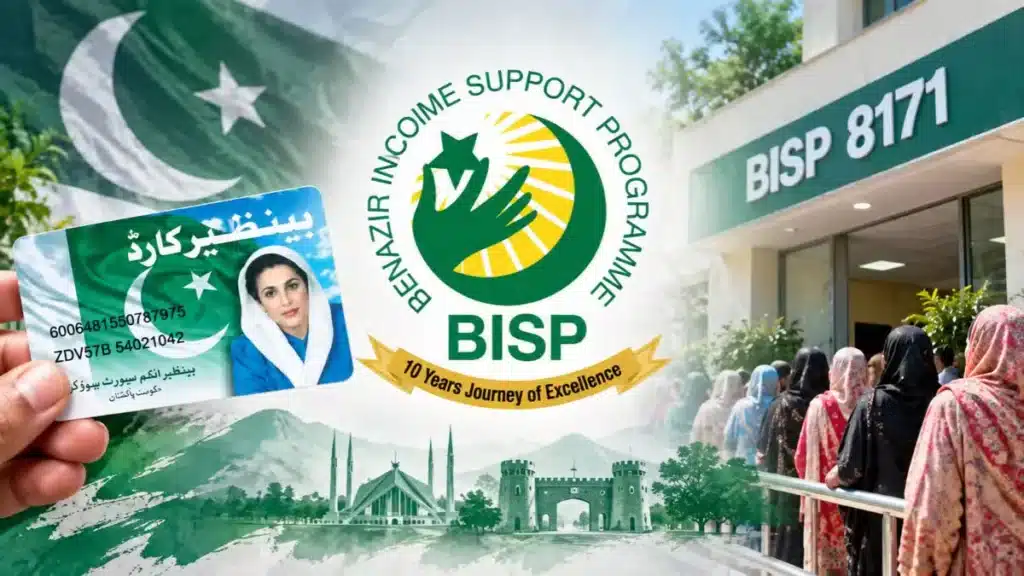
The Benazir Income Support Programme (BISP) has approved the inclusion of never-married women aged 45 and above in its financial assistance programme, expanding social protection for women who meet the prescribed eligibility requirements.
BISP Chairperson Senator Rubina Khalid announced the decision while addressing a press conference in Lahore. She said the BISP Board had approved the inclusion of unmarried women aged 45 or older, allowing eligible applicants to receive financial assistance under the programme.
She clarified that applicants would still need to fulfil the established eligibility criteria before qualifying for financial support.
The decision is expected to expand access to financial assistance for a group of women who may face economic challenges without the support of a spouse or immediate family.
During the press conference, Rubina Khalid also highlighted the nationwide reach of BISP, describing it as one of Pakistan’s major social protection initiatives.
According to the chairperson, more than 10 million families across the country currently benefit from the programme, including approximately five million families in Punjab.
She said these figures demonstrated that BISP operates as a national welfare initiative, providing financial assistance to eligible households regardless of their political affiliations.
BISP Introduces Digital Wallets and New Payment System
Discussing improvements to the programme’s payment mechanism, Rubina Khalid said BISP had introduced digital mobile wallets and an interoperable payment system to make financial assistance more accessible, transparent and convenient for beneficiary women.
She said the initiative had been developed under the guidance of President Asif Ali Zardari and Prime Minister Shehbaz Sharif.
Through the 1LINK payment network, six partner institutions have been connected to the new system. These include JazzCash, Easypaisa, Habib Bank Limited, HBL Microfinance Bank, Bank of Punjab and Bank Alfalah.
Under the new arrangement, beneficiary women will no longer have to depend on a specific payment centre to collect their assistance.
Instead, they will be able to withdraw their money through authorised agents and retailers associated with participating banks across the country.
The move is intended to reduce inconvenience for beneficiaries, improve access to payments and minimise problems associated with overcrowded payment centres.
Free SIMs and SMS Alerts to Protect Beneficiaries
The BISP chairperson also explained that free SIM cards were being provided to beneficiary women, alongside the activation of digital wallet accounts in their names.
These accounts will allow women to receive SMS notifications whenever financial assistance is deposited or withdrawn.
The notification system is designed to help beneficiaries monitor transactions and identify any unauthorised activity involving their accounts.
Rubina Khalid advised women to keep their mobile phones, SIM cards and banking messages secure to protect themselves against fraud.
She further instructed beneficiaries to report any unauthorised deductions or suspicious transactions to the relevant bank or their nearest BISP office.
BISP Warns Banks Against Unauthorised Deductions
Emphasising accountability, Rubina Khalid said the financial assistance received by beneficiary women was their rightful entitlement and that no individual or institution had the authority to deduct money unlawfully.
She warned that strict action would be taken against people involved in corruption, fraud or unauthorised deductions from beneficiaries’ payments.
The chairperson also made it clear that banks would be held responsible for unlawful deductions under the new payment arrangements.
She thanked the State Bank of Pakistan, particularly its governor, for providing guidance and support in developing the digital payment system.
The initiative is expected to strengthen financial transparency and give beneficiary women greater control over the money they receive through BISP.
Rubina Khalid Meets BISP Beneficiaries in Lahore
Following the press conference, the BISP chairperson met women receiving assistance under the programme and listened to their complaints and concerns.
She directed the relevant officials to address the issues raised by beneficiaries and ensure their prompt resolution.
Rubina Khalid also held a meeting with women representatives from civil society and doctors, during which she provided information about different BISP initiatives.
Particular attention was given to the Benazir Nashonuma Programme, which focuses on improving maternal and child health and nutrition among vulnerable families.
The latest decision to include never-married women aged 45 and above, alongside the introduction of digital payment facilities, represents another expansion of BISP’s social protection measures.
However, women interested in receiving assistance should note that reaching the specified age and marital status does not automatically guarantee registration or payment. Applicants must meet the programme’s eligibility requirements and complete the prescribed verification process.
