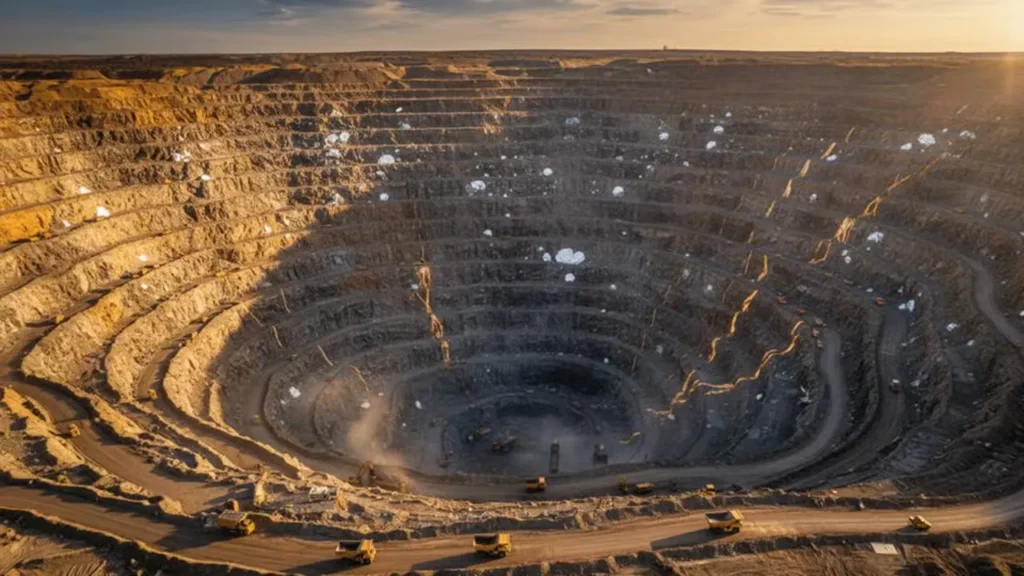
Pakistan’s much-anticipated Reko Diq mining project is facing higher development costs and potential delays, with its estimated investment requirement increasing by 30 percent to $9.1 billion from the earlier projection of $7 billion.
The project’s initial copper and gold production could also be postponed by approximately two years, shifting the expected start from the end of 2028 to 2030, according to a report published by the Institute of Cost and Management Accountants of Pakistan (ICMA).
The rising financial requirements have raised concerns about the exposure of three Pakistani state-owned enterprises (SOEs) that have collectively committed approximately $1.88 billion to the project.
These companies include Oil and Gas Development Company Limited (OGDCL), Pakistan Petroleum Limited (PPL) and Government Holdings (Private) Limited (GHPL), which together hold a 25 percent ownership stake in Reko Diq.
International mining company Barrick owns 50 percent of the project, while the Government of Balochistan holds the remaining 25 percent.
According to the ICMA report, the increase in development costs has affected both phases of the mining project. Phase I investment requirements have increased from $4 billion to $5.6 billion, while the estimated cost of Phase II has risen from $3 billion to $3.5 billion.
The revised estimates bring the project’s total development cost to approximately $9.1 billion, reflecting the growing financial challenges associated with bringing one of the world’s significant undeveloped copper and gold deposits into production.
Reko Diq is planned as a two-phase mining development with an estimated operating life of 37 years.
Under the original development plan, Phase I is designed to process approximately 45 million tonnes of ore annually. Once Phase II becomes operational, processing capacity is expected to increase to 90 million tonnes per year.
However, the latest cost revisions and uncertainty surrounding the construction schedule have created additional financial considerations for the project’s Pakistani shareholders.
Security conditions in Balochistan have emerged as another major concern affecting the project’s development timeline.
Barrick began reviewing the Reko Diq project in February 2026 and announced a slowdown in development activities in April as it reassessed security conditions, financing arrangements, capital requirements and construction schedules.
The review was subsequently extended until mid-2027, creating further uncertainty about the project’s original production targets.
Although initial production was previously expected by the end of 2028, the latest assessment suggests that commercial operations could be delayed until 2030.
Barrick has not formally confirmed the revised production date and has cautioned that previously announced capital expenditure estimates and development schedules remain subject to change.
For Pakistan’s participating state-owned companies, the potential delay could have significant financial consequences.
A later production start would postpone the possibility of dividend income and extend the period during which shareholders’ capital remains committed to the project.
Higher development costs could also increase financing requirements and expose the participating companies to additional financial risks.
These developments have strengthened calls for improved cost monitoring, transparent financial reporting and independent oversight of the project’s investment commitments.
Despite the increasing costs and development uncertainty, Reko Diq continues to offer substantial long-term economic potential for Pakistan.
According to the ICMA report, the project could generate approximately $74 billion in free cash flow over its projected 37-year mine life.
The development is also expected to create significant employment opportunities during construction and commercial operations.
At peak construction, the project could employ approximately 7,500 workers, while around 4,000 permanent jobs are expected once mining operations become established.
Beyond direct employment, the project could generate business opportunities for Pakistani companies operating in engineering, transportation, construction, equipment maintenance and other supporting industries.
The development could also contribute to mineral exports, government revenues and the growth of technical skills within Pakistan’s mining sector.
However, the projected $74 billion in free cash flow should not be interpreted as money that will directly enter Pakistan’s national treasury.
The actual economic benefits will depend on ownership arrangements, taxation, royalties, dividend distributions, reinvestment decisions and the participation of domestic businesses.
Another important issue highlighted in the ICMA report is the project’s limited domestic processing capacity.
Under the current development plan, Reko Diq is expected to produce copper and gold concentrate, while smelting and refining activities remain outside the project’s existing scope.
This means that Pakistan’s participation in the mining venture will not automatically translate into the development of a complete domestic copper and gold processing industry.
Establishing local smelting and refining facilities would require substantial investment, reliable energy supplies, appropriate infrastructure, advanced technology and access to international markets.
The government would also need to create policies encouraging local businesses to participate in the project’s supply chain and supporting industries.
Greater domestic value addition could help Pakistan retain a larger share of the economic benefits generated by its mineral resources.
The ICMA report therefore highlights the importance of monitoring local employment, supplier participation, technical training, government revenues and opportunities for establishing domestic processing facilities.
The increasing cost of Reko Diq has also raised broader questions about how Pakistani state-owned enterprises manage large-scale strategic investments.
OGDCL, PPL and GHPL have committed substantial financial resources to the project in partnership with Barrick and the Government of Balochistan.
While the investment offers the potential for considerable long-term returns, delays and additional capital requirements could increase financial pressure on these public-sector companies.
The report emphasises that commercial viability should remain central to investment decisions, particularly when public-sector resources are involved.
It recommends stronger financial disclosure, independent monitoring, regular assessments of project costs and timelines, and clear accountability among shareholders.
These measures would help ensure that the project’s financial risks remain manageable while protecting the interests of Pakistani taxpayers and public-sector investors.
Reko Diq represents an important opportunity for Pakistan to expand its mining industry, attract international investment and develop its mineral resources on a much larger scale.
However, the increase in projected costs to $9.1 billion and the possibility of production being delayed until 2030 highlight the challenges involved in turning that potential into actual economic gains.
Ultimately, the project’s success will depend not only on the quantity of copper and gold extracted but also on effective financial management, improved security, domestic economic participation and the ability to deliver sustainable returns to Pakistan.
