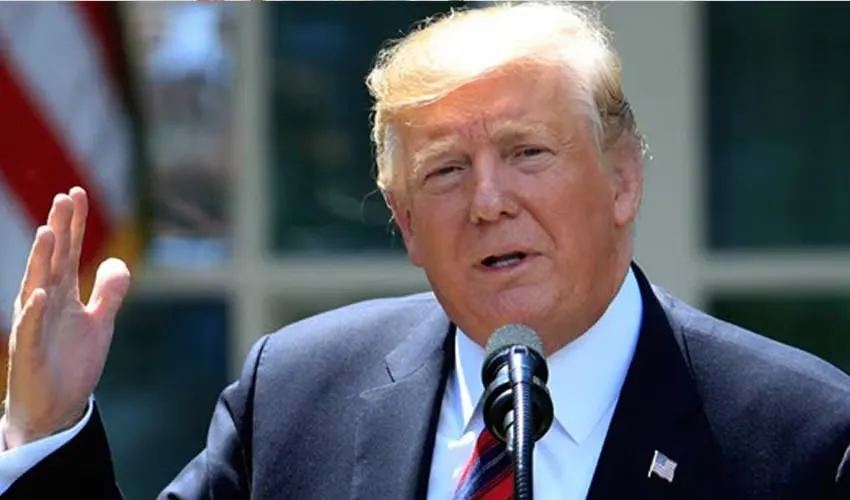
US President Donald Trump has said the US-Israel war against Iran is “effectively over” from a military standpoint, signalling a possible shift towards negotiations while maintaining pressure on Tehran through a continuing naval blockade.
Trump made the remarks on Monday, November 9, during an unexpected appearance in the White House briefing room after meeting Qatar’s Prime Minister Sheikh Mohammed bin Abdulrahman bin Jassim Al Thani.
The US president said Washington was maintaining the current situation rather than preparing for another major military offensive against Iran.
“Iran militarily is effectively over. We’re just keeping it the status quo,” Trump told reporters, adding that Iran’s military leadership had been “decapitated”.
His comments suggested that the administration currently sees little need for another major round of strikes, although he made clear that military options remain available if circumstances change.
The remarks came as Qatar and other Gulf countries continued diplomatic efforts to prevent further escalation and encourage an agreement between Washington and Tehran.
Trump Signals No Immediate Need for Further Military Strikes
Trump said there was positive momentum towards ending the conflict and expressed confidence that negotiations could produce an outcome without renewed large-scale military action.
“They’re talking to us, and they’re talking very politely, and we’ll see what happens,” he said.
He also indicated that the United States was not currently seeking to escalate the confrontation.
“The military action doesn’t seem to be a very necessary thing, but we’re locked and loaded, ready to go for any reason that changes,” Trump added.
According to Al Jazeera’s November 9 report, Trump’s comments followed discussions with Qatar’s prime minister on diplomatic efforts to end the conflict.
The remarks also represented a shift in tone from his earlier warnings that Washington could resume attacks after the US midterm elections.
However, Trump has not announced a formal end to military operations or a comprehensive peace agreement with Iran.
US Naval Blockade Against Iran Remains in Place
Despite suggesting that further military action may not be necessary, Trump gave no indication that Washington would lift its naval blockade against Iranian ports.
The blockade is intended to restrict Iran’s ability to export oil and access international trade routes, increasing economic pressure on Tehran while diplomatic discussions continue.
“We’re keeping it going. We have the greatest military blockade ever,” Trump said.
The US military also continues to maintain a significant presence in waters surrounding Iran, with American forces remaining prepared for further action if tensions escalate.
According to Associated Press reporting on Trump’s latest Iran remarks, the United States has continued limited military operations, including strikes against Iranian air defence systems and action against a commercial vessel accused of attempting to breach the blockade.
Trump also stressed that any lasting agreement must prevent Iran from developing nuclear weapons. He has repeatedly identified Tehran’s nuclear programme as a central concern in determining the future of the conflict.
Iran Sets Conditions for Nuclear Negotiations
Iran has outlined several conditions for entering nuclear negotiations with the United States, indicating that a diplomatic breakthrough remains uncertain.
Tehran wants Washington to lift its naval blockade, remove economic sanctions and release Iranian assets frozen abroad. It has also demanded compensation for damage caused by military operations and an end to hostilities across the region, including Israeli military operations in Lebanon.
These demands present significant challenges for negotiations, particularly as Washington continues to insist on restrictions that would prevent Iran from developing nuclear weapons.
Iranian officials have also rejected Trump’s suggestion that the conflict is effectively over, arguing that the continuing military and economic pressure does not amount to a genuine end to hostilities.
According to Al Jazeera’s coverage of Iran’s response and diplomatic conditions, Tehran has continued to demand broader guarantees before agreeing to further negotiations.
Qatar Leads Diplomatic Efforts to Prevent Further Escalation
Qatar has emerged as an important intermediary in efforts to reduce tensions between Washington and Tehran.
Trump’s meeting with Prime Minister Sheikh Mohammed bin Abdulrahman Al Thani focused on the regional situation and possible ways to advance negotiations.
Other Gulf countries, including Saudi Arabia, the United Arab Emirates, Bahrain and Kuwait, have also expressed concerns about renewed military confrontation.
Their diplomatic efforts reflect fears that another escalation could threaten regional security, disrupt energy supplies and increase instability across the Middle East.
In a separate interview with Reuters, Trump said Qatar and Saudi Arabia preferred a peaceful resolution, although he maintained that American forces remained ready to resume military strikes if necessary.
Trump Warns Military Action Could Resume
Although Trump expressed optimism about the possibility of ending the conflict, he stopped short of guaranteeing a permanent ceasefire.
In an interview with CNN on Sunday, he said renewed attacks would be highly unlikely if negotiations progressed and Iran agreed to a strong agreement.
However, he also warned that the United States had identified strategic infrastructure targets, including 38 bridges, that could be struck if military operations resumed.
The conflict began on February 28 with US-Israeli strikes against Iran and has continued to create instability across the Middle East.
For now, Trump’s latest remarks suggest that Washington is prioritising economic pressure and diplomatic engagement over another major military offensive.
However, the continuing blockade, unresolved nuclear dispute and absence of a comprehensive peace agreement mean that the situation remains uncertain.
Whether Qatar’s mediation efforts can produce an agreement acceptable to both Washington and Tehran will determine whether the current pause in large-scale military operations develops into a lasting end to the conflict.
