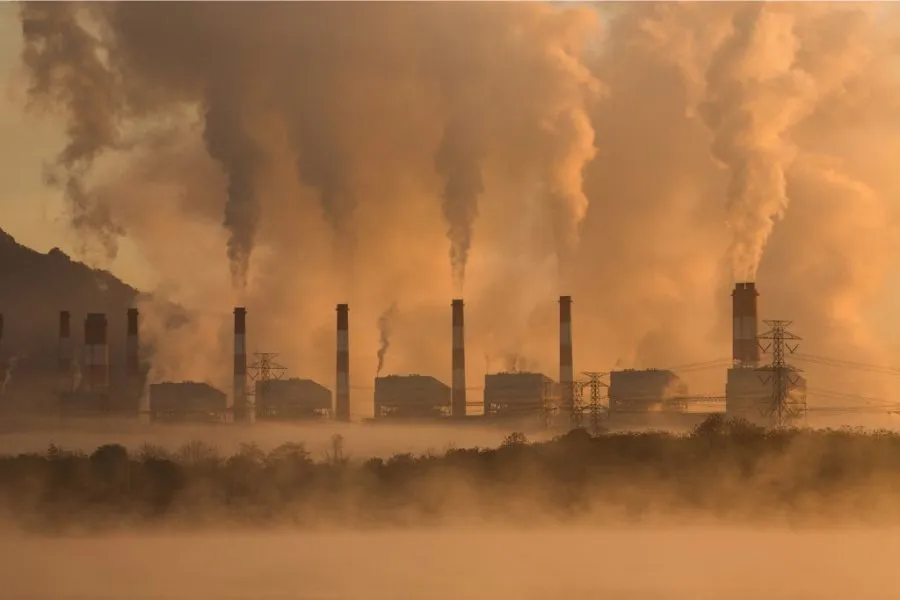
Lahore recorded a 27 percent decline in fine particulate matter (PM2.5) pollution in October 2026 compared with the same period last year.
However, favourable weather conditions accounted for most of the improvement, while the reduction attributable to other factors was considerably smaller, according to an analysis by the Pakistan Air Quality Initiative (PAQI).
Data from 26 air quality monitoring stations that reported measurements on comparable days in both years showed that the average PM2.5 concentration declined from 136.3 micrograms per cubic metre (µg/m³) in October 2025 to 100.1 µg/m³ in October 2026.
Pollution levels decreased at 24 of the 26 monitoring locations, indicating a widespread improvement across the city. However, PAQI’s assessment suggests that the decline was driven primarily by changes in atmospheric conditions rather than a substantial reduction in pollution emissions.
Weather Conditions Account for Most of the Decline
To assess the influence of weather on Lahore’s air quality, PAQI developed a computer model trained on autumn pollution data dating back to 2018.
The analysis estimated that weather conditions in October 2026 reduced PM2.5 concentrations by approximately 19 percent compared with the levels that would have occurred under October 2025 weather conditions.
After adjusting for differences in weather, the improvement between the two months narrows to approximately 4 percent.
This remaining difference reflects the combined influence of government interventions, agricultural burning and other pollution sources. However, the analysis does not establish the individual contribution of each factor.
Night-time atmospheric conditions were particularly significant. The depth of the cool air layer that traps pollutants near the ground averaged 68 metres in October 2026, compared with 43 metres during the corresponding period last year.
The deeper atmospheric layer provided greater vertical space for pollutants to disperse, reducing their concentration near the surface.
Satellite observations also recorded approximately one-third fewer agricultural fires across Pakistan’s Punjab province and India’s Punjab and Haryana states.
However, the main period of crop-residue burning began approximately one week later than in 2025. This suggests that some of the apparent reduction could reflect a shift in the timing of agricultural fires rather than a sustained decline in crop burning.
Lahore’s Air Quality Remains Above National and International Guidelines
Despite the improvement, Lahore continued to experience elevated levels of fine particulate pollution throughout October.
PAQI’s monitoring data showed that PM2.5 concentrations exceeded Pakistan’s daily permissible limit of 35 µg/m³ on all 31 days of the month.
The monthly average of approximately 100 µg/m³ was also substantially higher than the World Health Organization’s recommended 24-hour PM2.5 guideline of 15 µg/m³.
The comparison provides an indication of the severity of Lahore’s pollution, although the monthly average and WHO’s 24-hour guideline represent different measurement periods.
According to PAQI’s analysis, October 2026 was Lahore’s cleanest October since 2021. The city’s average PM2.5 concentration was approximately 18 percent below the 2020-2025 October average of 122 µg/m³.
Other major cities in Punjab also reported significant pollution levels. Multan recorded an average PM2.5 concentration of 106 µg/m³, while Gujranwala registered 105 µg/m³.
Rawalpindi had the lowest average among the six monitored cities, at approximately 50 µg/m³.
Further information on international exposure guidelines is available through the World Health Organization’s Global Air Quality Guidelines.
Lahore Faces Renewed Smog Risks in November
The improvement recorded in October may be temporary as changing seasonal conditions create less favourable circumstances for the dispersion of air pollutants.
PAQI’s Hawanama forecasting platform projected that Lahore’s PM2.5 concentration could reach 149 µg/m³ by Wednesday, November 4, 2026. This would represent an increase of approximately 49 percent compared with the October average.
The forecast places the projected pollution level in the very unhealthy category, highlighting the possibility of renewed air quality deterioration.
Lahore experienced similarly severe conditions in early November last year, when its Air Quality Index approached 500.
The Punjab government has also resumed deploying anti-smog guns across Lahore as part of its efforts to address seasonal air pollution.
However, the latest findings suggest that temporary improvements resulting from favourable weather conditions cannot substitute for sustained pollution-control measures.
Reducing Lahore’s long-term exposure to harmful particulate matter will require more effective controls on vehicle emissions, industrial pollution, construction dust and agricultural residue burning.
Although October’s figures indicate an improvement in Lahore’s air quality, the weather-adjusted findings suggest that the underlying sources of pollution remain a significant challenge for the city.
