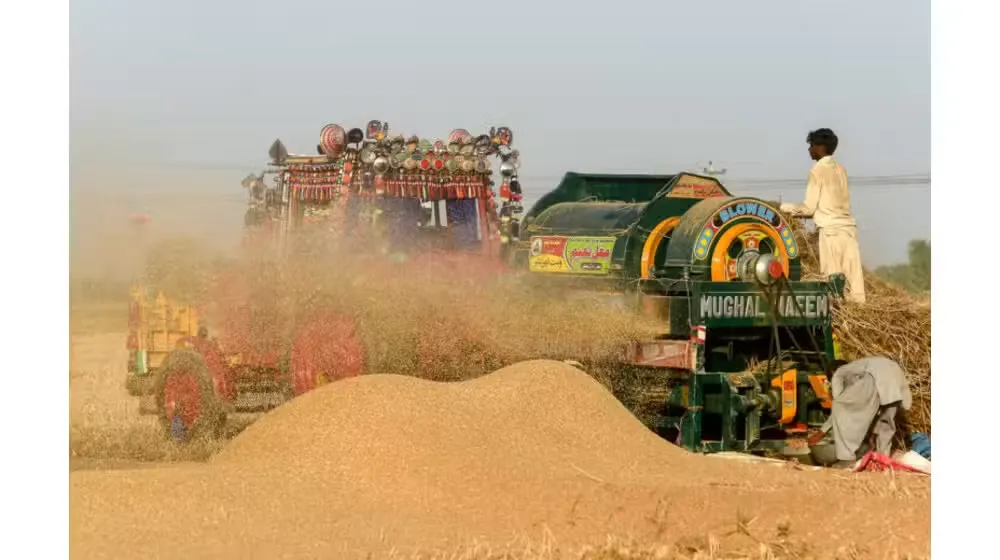
Punjab’s food safety and consumer protection department has suspended the supply of old imported wheat to flour mills over concerns about grain quality, directing millers to lift locally procured wheat until the government makes a final decision on the imported stocks.
In a directive issued on Thursday, the department instructed flour mills to stop lifting older imported wheat from government warehouses. It said a final decision regarding the remaining imported stocks was pending and would be communicated once finalised.
The decision follows months of complaints from flour millers about the condition of imported wheat released from government storage facilities. Industry representatives have questioned whether the ageing grain remains suitable for flour production and human consumption.
The suspension has also raised questions about the quality assessments previously used to justify the distribution of the imported stocks.
Flour Millers Report Insect Infestation and Deteriorating Grain
The Pakistan Flour Mills Association (PFMA) had raised concerns about imported wheat several months before the latest directive.
Millers reported discoloured and shrivelled grains, insect infestation and suspected fungal growth in some consignments. They also complained that flour produced from the wheat had a darker appearance, unpleasant smell and poor binding properties.
According to industry representatives, the imported wheat had been purchased several years ago and stored in government warehouses under different conditions, including open and covered storage facilities.
Millers further claimed that prolonged storage had affected the grain’s appearance, gluten strength and nutritional quality.
When the complaints were initially raised, the provincial department reportedly maintained that the wheat met permissible quality standards. It had indicated that the matter would be taken up with the federal government while distribution continued.
The latest suspension represents a change in the department’s approach, although the results of any fresh laboratory assessments have not yet been publicly established.
Imported Wheat Supply Halted Pending Final Decision
Under the latest directive, flour mills have been instructed to lift locally procured wheat instead of older imported stocks.
The department has not announced whether the suspended imported wheat will undergo additional testing, receive further treatment or be permanently withdrawn from distribution.
The development has renewed calls for transparency regarding government wheat inspections and the quality standards applied before grain is released to flour mills.
The Ministry of National Food Security and Research oversees federal-level food security and agricultural policy, making its role relevant to the wider management of Pakistan’s wheat supply.
Concerns Also Raised Over Locally Stored Wheat
The quality debate is not limited to imported wheat. Stakeholders have also raised concerns about locally procured grain that has reportedly remained in government storage facilities for two to three years.
According to industry representatives, some of this wheat was stored in gunny bags and on open plinths, raising questions about its exposure to moisture, pests and other environmental conditions.
They argue that locally procured stocks should undergo the same quality assessments as imported wheat before being released to flour mills.
The concerns also involve wheat stored by the Pakistan Agricultural Storage and Services Corporation (PASSCO), which has played a role in public-sector wheat procurement and storage.
Stakeholders have called for an independent assessment of both imported and locally procured stocks to establish whether the grain remains suitable for human consumption.
Food Safety Testing Needed Before Further Distribution
The suspension has highlighted the importance of consistent quality checks across Punjab’s wheat supply chain.
The Punjab Food Authority is responsible for enforcing food safety requirements in the province. Its role is particularly relevant when assessing whether stored wheat and flour meet applicable food safety standards.
The Pakistan Standards and Quality Control Authority also provides national standards relevant to food quality and testing.
Appropriate laboratory assessments should examine moisture levels, insect damage, fungal contamination and other relevant indicators before questionable stocks are released for consumption.
Until the authorities complete their assessments and communicate a final decision, flour millers will remain dependent on locally procured wheat under the department’s latest instructions.
The outcome could have implications for government wheat stocks, flour production and the wider food supply chain in Punjab.
