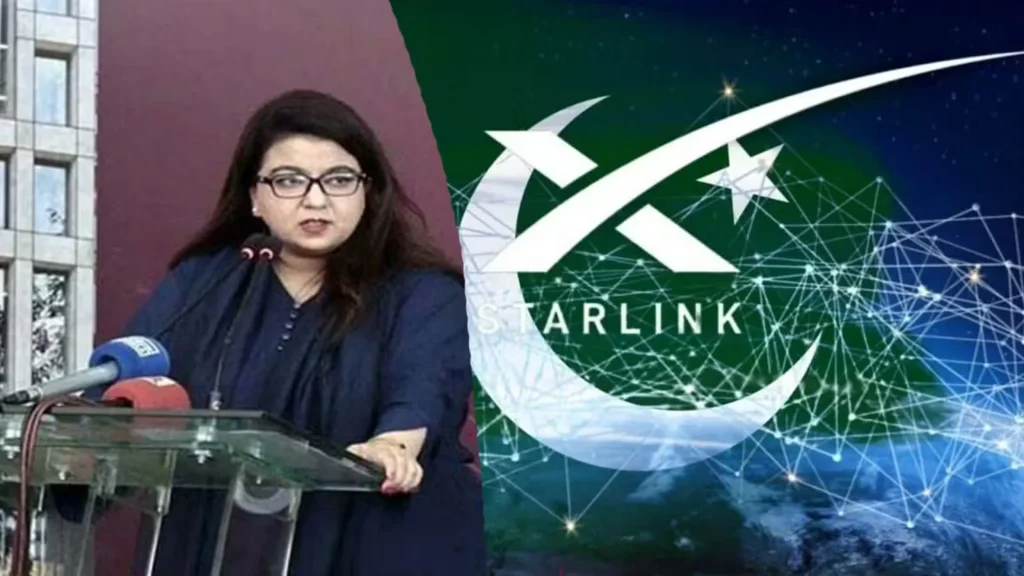
Pakistan is moving towards finalising the regulatory framework for satellite internet services, with Information Technology Minister Shaza Fatima Khawaja saying consultations with relevant institutions have been completed.
Speaking at the Asia-Pacific Telecommunity Symposium on Tuesday, the minister said the government was preparing to finalise the framework and intended to create a more business-friendly environment for companies seeking to invest in satellite-based internet services.
The move could open the way for satellite internet providers to expand their presence in Pakistan, although the timeline for commercial launches and the final licensing conditions have not been specified in the reported remarks.
Government Plans Easier Rules for Satellite Internet
Shaza Fatima said the government wanted to facilitate businesses interested in providing satellite internet services in Pakistan.
Satellite internet can connect users through satellites rather than relying entirely on terrestrial infrastructure, such as fibre-optic cables and mobile networks.
The technology can be particularly useful in remote and underserved areas where conventional broadband deployment is difficult or expensive.
However, commercial operations will depend on the final regulatory framework, including the applicable licensing requirements and other conditions set by the relevant authorities.
Pakistan Expands Fibre and International Connectivity
The minister also outlined progress in the country’s digital infrastructure.
According to her remarks, three new submarine internet cables have landed in Pakistan over the past two and a half years. These cables provide international connectivity and help carry internet traffic between Pakistan and other countries.
She said more than 17,000 kilometres of optical fibre had been laid through the Universal Service Fund, while the number of homes passed by fibre broadband had increased from fewer than three million in 2024 to more than five million.
The expansion of fibre networks can improve access to higher-capacity broadband, although the number of homes passed does not necessarily mean every household has subscribed to or activated a connection.
5G Rollout and Rural Internet Access
Shaza Fatima said Pakistan introduced 5G technology through a spectrum auction in March 2026. The government is also working on licensing arrangements and business models intended to help local companies provide internet services in rural areas.
The satellite internet framework would form part of this broader effort to expand connectivity through different technologies. Fibre, mobile broadband and satellite services can serve different needs, depending on location, infrastructure and cost.
The pace of wider adoption will also depend on the commercial terms offered by providers and the ability of consumers and businesses to afford the services.
Digital Inclusion and Technology-Based Subsidies
The minister said Pakistan had reduced the gender gap in mobile internet use from 38 per cent to 8 per cent.
She also said more than 10 million people had received fuel subsidies through a technology-based system that did not require a smartphone.
The figures were presented as part of the government’s account of progress in digital inclusion and the use of technology to deliver public services. Independent confirmation and further details about the measurement periods were not included in the reported remarks.
As Pakistan moves towards finalising its satellite internet regulations, the framework’s publication should clarify the conditions under which providers can enter the market. For consumers, the key questions will include availability, pricing, coverage and when services can begin operating commercially.
