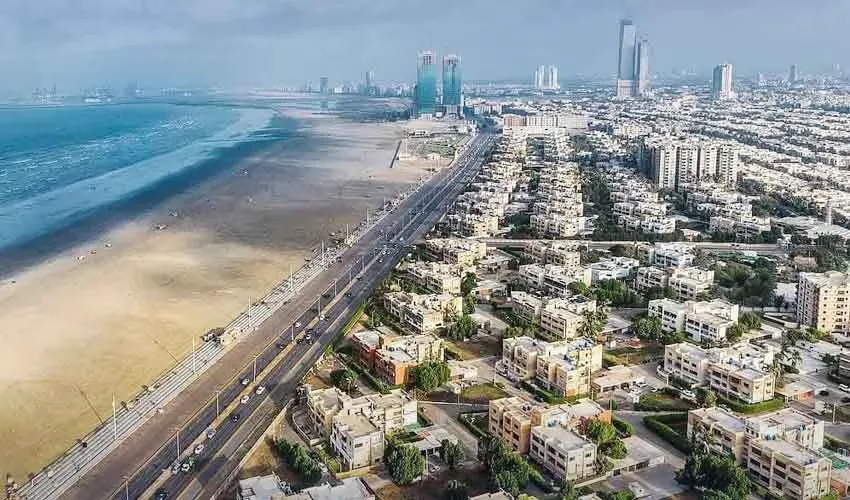
Karachi has once again been ranked among the world’s least liveable cities after placing 170th out of 173 cities in the Economist Intelligence Unit (EIU) Global Liveability Index 2026, highlighting persistent concerns over public safety, infrastructure, healthcare, and urban management.
The latest ranking places Pakistan’s largest city ahead of only Dhaka, Tripoli, and Damascus. Even cities affected by armed conflict, including Tehran and Kyiv, ranked higher than Karachi in this year’s assessment.
The annual Global Liveability Index is regarded as one of the world’s leading measures of urban living standards, evaluating cities across five key categories that influence residents’ quality of life.
Karachi Scores Poorly Across Key Indicators
Karachi received an overall score of 43 out of 100, matching Algeria’s capital, Algiers.
According to the EIU assessment, the city’s performance across major categories was as follows:
- Stability: 20/100
- Healthcare: 54/100
- Culture and Environment: 36/100
- Education: 75/100
- Infrastructure: 52/100
Among these indicators, education remained Karachi’s strongest-performing sector, while stability recorded the city’s weakest score.
Congestion and Crime Continue to Affect Ranking
The Economist Intelligence Unit noted that large metropolitan areas often struggle with issues such as traffic congestion, crime, and pressure on public services, all of which negatively affect overall liveability.
For Karachi, these long-standing challenges continue to undermine improvements in infrastructure, urban mobility, and public safety, limiting the city’s overall quality of life despite ongoing development initiatives.
Middle East Cities Also Decline
The 2026 report also recorded declines for several Middle Eastern cities following regional instability linked to the US-Iran conflict.
Among the cities that fell in the rankings were:
- Muscat
- Kuwait City
- Doha
- Manama
- Dubai
- Abu Dhabi
Muscat experienced the largest decline, dropping 14 places after security concerns linked to Iranian drone attacks. Doha also slipped seven positions, while Dubai and Abu Dhabi each fell four places compared with last year’s rankings.
Copenhagen Retains the Top Spot
At the other end of the rankings, Copenhagen remained the world’s most liveable city in 2026, reflecting consistently strong performance in governance, healthcare, education, infrastructure, and public safety.
The top ten cities included:
- Copenhagen
- Vienna
- Melbourne
Vancouver ranked ninth as the only North American city in the top ten, while Tokyo secured tenth place as the only megacity to feature among the world’s most liveable urban centres.
What the Rankings Mean
The EIU Global Liveability Index evaluates 173 cities worldwide based on factors that directly influence everyday life, including political stability, healthcare quality, education, infrastructure, culture, and environmental conditions.
Karachi’s continued position near the bottom of the rankings underscores the need for sustained improvements in public security, transport infrastructure, healthcare services, and urban governance to enhance living conditions for its residents and improve the city’s global standing.
