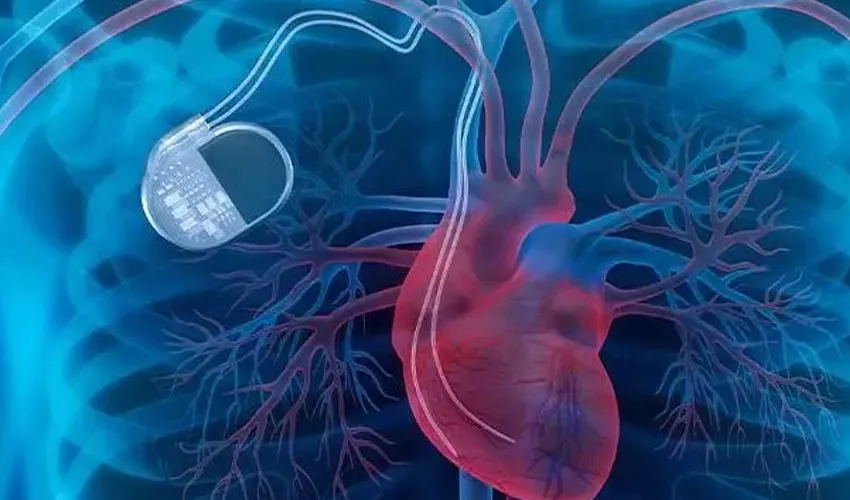
Chinese researchers have achieved a major milestone in cardiovascular science by successfully developing the world’s first laboratory-grown sino-atrial node, a breakthrough that could transform the future of heart disease research and cardiac treatment technologies.
The development involves the sino-atrial node, the small but critical cluster of cells responsible for controlling the heart’s rhythm. Often described as the heart’s natural pacemaker, the SA node generates the electrical impulses that regulate heartbeat timing and ensure coordinated contraction of the heart chambers.
According to researchers involved in the study, the lab-grown structure was created using human pluripotent stem cells and engineered into a three-dimensional model that closely replicates the behavior of the natural sino-atrial node.
The model is capable of producing rhythmic electrical signals without external stimulation, mirroring the function of a real human heart.
Scientists said the breakthrough provides a powerful new tool for understanding how the heart’s electrical system works and how rhythm disorders develop.
linked to malfunctioning SA nodes can lead to dangerously slow heart rates or complete heart failure in severe cases, often requiring medical devices or surgical intervention.
The research team explained that the new model will allow more accurate laboratory testing of cardiac drugs and therapies. Instead of relying solely on animal models or simplified cell cultures, scientists can now observe how treatments interact with a functioning human-like pacemaker system in controlled conditions.
Experts believe the innovation could significantly accelerate progress in treating cardiac arrhythmia, a group of disorders that affect millions of people worldwide and remain a leading cause of cardiovascular complications.
Beyond research applications, scientists say the breakthrough could eventually contribute to the development of biological pacemakers, an emerging field that aims to replace or complement traditional electronic devices.
Also read: China Rejects US Sanctions Over Iran Cooperation
Unlike mechanical pacemakers, biological versions would be made from living cells capable of integrating naturally with heart tissue.
If successfully developed, such technology could offer long-term solutions for patients with severe rhythm disorders and reduce dependence on electronic implants, battery replacements, and surgical interventions.
Researchers emphasized that while the findings are still in the experimental stage, the creation of a functional lab-grown sino-atrial node marks a significant step forward in cardiac tissue engineering and regenerative medicine.
The study also enhances scientific understanding of how electrical signals are generated and synchronized within the human heart, an area that has long challenged cardiovascular researchers.
Experts in biomedical science say the breakthrough represents a convergence of stem cell technology, bioengineering, and cardiovascular physiology, opening new pathways for both basic research and clinical innovation.
Further studies will be required before the technology can be tested in human therapies, but the discovery is already being recognized as a landmark achievement in modern cardiac science.
