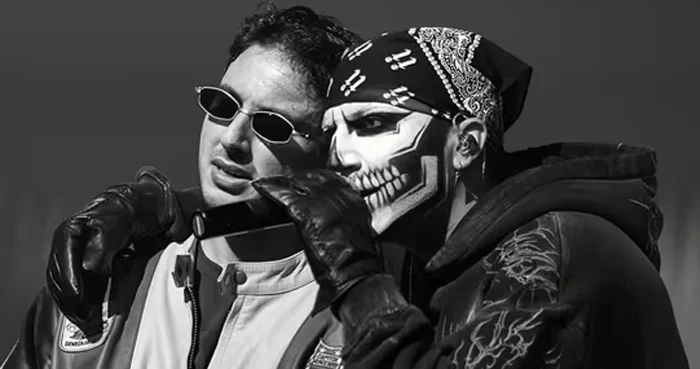
Indian singer Talwiinder has come under online criticism after appearing on stage with Pakistani artist Hasan Raheem during a concert in Toronto, triggering debate on cross-border collaborations in music and entertainment.
The moment took place during a live performance where Talwiinder joined Hasan Raheem on stage, performed alongside him, embraced him, and shared the stage energy with fans. He later posted clips and photos on Instagram, writing that “Wishes came true in Toronto.”
The collaboration quickly went viral, with audiences in the venue reacting positively. Many fans described it as a rare and refreshing crossover between two rising South Asian music talents.
But the online reaction was sharply divided soon after the videos spread across social media platforms.
Social media backlash intensifies over India Pakistan tensions
A section of users on X criticized Talwiinder for sharing the stage with a Pakistani artist, linking the collaboration to ongoing political sensitivities between India and Pakistan.
Some users accused him of sending the wrong message during a tense diplomatic climate, while others questioned whether such collaborations should continue at all.
Comments circulating online included strong criticism of the performance, with users calling it inappropriate and politically insensitive.
At the same time, supporters defended the artist and pushed back against the backlash, arguing that music should not be restricted by national borders or political disputes.
One user wrote that the performance showed how music connects people beyond nationality, while another described the moment as a rare cultural bridge that should be appreciated rather than criticized.
Cultural collaboration versus political sentiment
The incident highlights a recurring tension in South Asian entertainment, where artistic collaboration often intersects with political narratives.
Cross-border music projects between India and Pakistan have historically gained strong audience interest, especially in genres like pop, Coke Studio style fusion, and live international concerts. However, these collaborations often face criticism online during periods of political strain.
Industry observers note that social media amplifies polarised reactions, where the same performance can be celebrated as cultural unity by some audiences and condemned as inappropriate by others.
Why such collaborations still matter in music industry
Despite controversy, cross-border collaborations continue because of shared language, cultural overlap, and strong audience demand.
Experts in the entertainment industry say collaborations like this often
- expand audience reach across South Asia and diaspora markets
- increase streaming visibility on global platforms
- introduce emerging artists to new fan bases
A key insight in modern music branding is that controversy itself can increase visibility. Viral moments often push artists into wider international recognition, even when initial reactions are mixed.
Broader takeaway from the Toronto performance
The Toronto concert moment reflects a larger reality of today’s entertainment landscape. Music travels faster than politics, but public opinion still reacts strongly when the two overlap.
While some viewers focused on political context, others saw it as a straightforward artistic collaboration between two young performers sharing a stage.
The debate continues online, but the performance has already achieved what most live moments aim for in the digital age. It created conversation, engagement, and global attention around South Asian music culture.
About Hamna Ghias Sheikh

The writer has been covering politics, lifestyle and finance since 2023.
