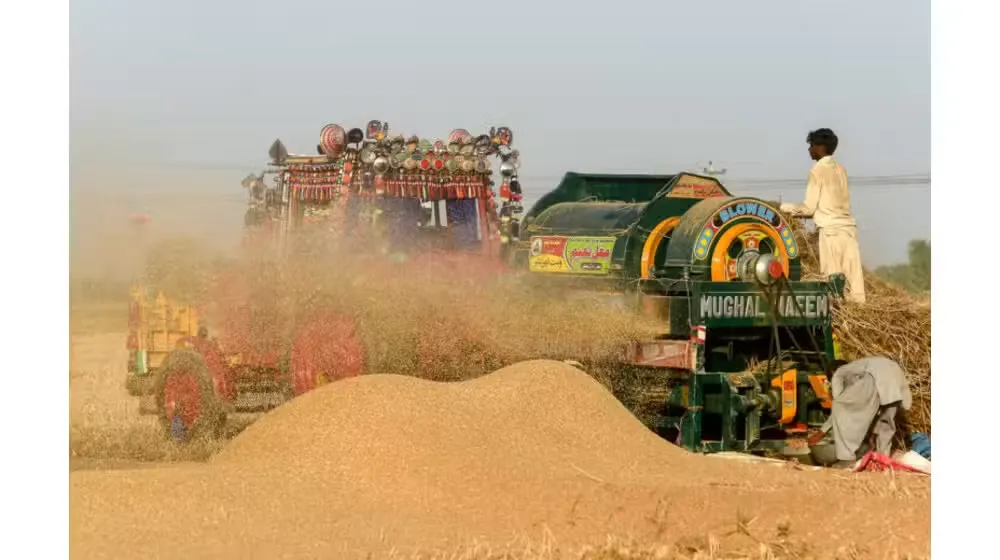
Punjab’s wheat cultivation campaign is facing difficulties in Vehari as farmers report shortages of certified seeds and fertilizers, raising concerns about delayed sowing and possible losses in crop yields during the 2026-27 Rabi season.
The provincial government has set a wheat cultivation target of 465,000 acres for the Vehari district. However, growers say the availability of essential agricultural inputs remains limited, while alleged hoarding, rising prices and inadequate market monitoring are making it harder to prepare their fields within the recommended sowing period.
According to Agriculture Department figures, Mailsi has been assigned a wheat cultivation target of 159,000 acres, followed by 156,000 acres for Vehari tehsil and 150,000 acres for Burewala. Mailsi’s target represents approximately 47% of its 338,000 acres of cultivable land.
The pressure on agricultural supplies comes as wheat cultivation targets have also increased across Multan division. The division is expected to bring 1.776 million acres under wheat cultivation during the current season, compared with 1.76 million acres last year, an increase of 16,000 acres.
Timely availability of seeds and fertilizers is particularly important because delays in wheat planting can affect crop establishment and ultimately reduce production potential. Agricultural experts identify November 1 to 20 as the most suitable sowing period, while the extended planting window continues until December 10.
Fertilizer availability is another concern for growers preparing for the new season. Agricultural estimates suggest that each acre requires at least one 50-kilogram bag of urea and 1.5 bags of diammonium phosphate (DAP) during the initial growth stage.
Based on the district’s cultivation targets, Mailsi requires approximately 7,950 tonnes of urea and 11,925 tonnes of DAP. Vehari tehsil needs another 7,800 tonnes of urea and 11,700 tonnes of DAP, while Burewala requires 7,500 tonnes of urea and 11,250 tonnes of DAP.
Together, the three tehsils have an estimated initial-stage requirement of 23,250 tonnes of urea and 34,875 tonnes of DAP.
Farmers say obtaining these supplies in the required quantities has become increasingly difficult. They have accused some agricultural input dealers of withholding stocks and charging higher prices, while questioning the effectiveness of government monitoring in local markets.
The reported shortages have raised concerns about whether farmers will be able to complete sowing across the district within the recommended timeframe. Any prolonged disruption in the supply of certified wheat seeds and fertilizers could increase cultivation costs and place additional pressure on growers.
Meeting Vehari’s 465,000-acre wheat target will therefore depend not only on farmers preparing sufficient land but also on the timely availability of quality seeds and fertilizers at affordable prices. Effective market inspections and action against illegal hoarding will remain important as the 2026-27 Rabi sowing campaign progresses.
