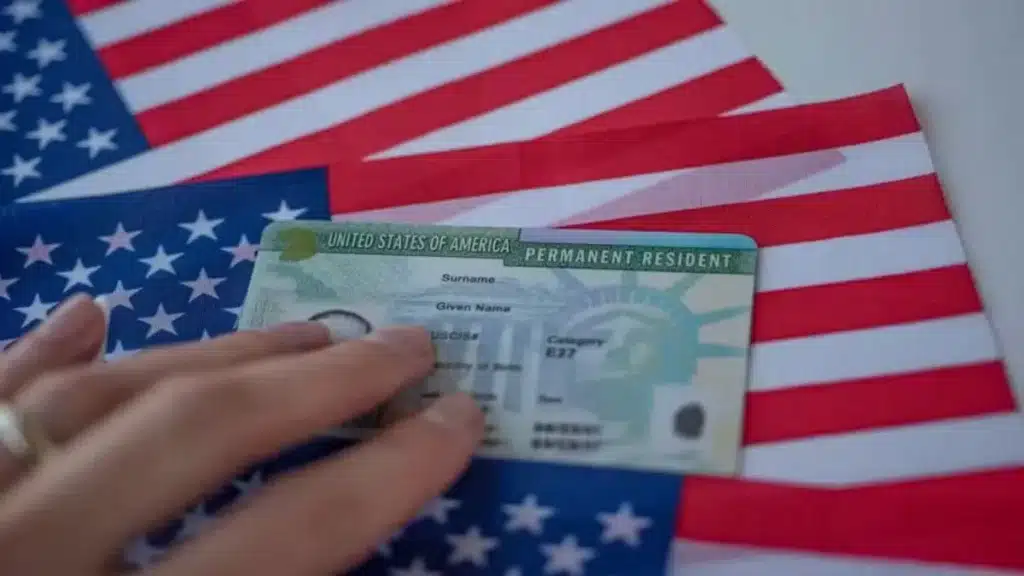
The United States is moving to tighten its employment-based green card system, proposing stricter requirements for companies sponsoring skilled foreign workers and expanding labour market checks to occupations previously exempt from certain recruitment requirements.
The US Department of Labor (DOL) published the proposed changes to the Permanent Labor Certification Program (PERM) in the Federal Register on November 17, 2026.
The proposal could make it more difficult for American employers to sponsor foreign professionals for permanent residency, particularly in industries that rely heavily on international talent.
The changes are part of President Donald Trump’s broader immigration agenda, which prioritises American workers in hiring decisions and seeks to restrict pathways for foreign nationals seeking permanent residence.
According to the Department of Labor, the proposed regulation is intended to strengthen recruitment standards, improve programme oversight and protect American workers from potential wage and employment disadvantages.
How the Proposed PERM Green Card Rules Would Change
The PERM programme is an important step in many employer-sponsored employment-based green card applications. It requires employers to demonstrate that qualified and available American workers cannot fill a particular position and that hiring a foreign national will not adversely affect the wages and working conditions of similarly employed US workers.
Under the proposed changes, employers would face more demanding recruitment and documentation requirements. They would need to demonstrate more convincingly that they had made genuine efforts to identify qualified American candidates before seeking permission to hire foreign professionals.
The proposal would also eliminate administrative exemptions under Schedule A, which currently allow certain occupations to bypass the standard labour market test.
Affected occupations include professional nurses, physical therapists and individuals with exceptional abilities in the sciences or arts. If adopted, the change would require employers recruiting for these positions to consider qualified American workers through the PERM process.
This could have implications for healthcare institutions, research organisations and businesses that depend on specialised international professionals.
Two-Year Restriction Proposed for Employers After Layoffs
One of the most significant proposed changes concerns companies that have recently dismissed American employees.
Under the proposal, employers that have laid off US workers in the same or similar occupations at the relevant work locations within the preceding two years would generally be prohibited from seeking PERM certification for foreign workers in those positions.
The Department of Labor also wants to strengthen protections for employees affected by layoffs by expanding employers’ obligations to consider qualified American workers throughout the labour certification and immigrant petition processes.
These provisions could create additional compliance responsibilities for large technology companies, outsourcing businesses and other employers that regularly sponsor international professionals.
Electronic Recruitment and Stricter Employer Requirements
The proposed regulation would modernise recruitment requirements by encouraging the use of electronic advertising and contemporary hiring methods to reach a wider pool of American candidates.
Employers would face more detailed requirements concerning recruitment procedures, job advertisements, documentation and the consideration of applicants.
The department also plans to strengthen recordkeeping and compliance standards while expanding requirements for notifying US workers about permanent labour certification applications.
According to the Department of Labor, the proposed overhaul represents the first comprehensive set of regulatory reforms to the PERM programme in nearly two decades.
The changes are intended to bring the recruitment process in line with modern employment practices while ensuring that American workers receive fair consideration for available positions.
When Could the New US Green Card Rules Take Effect?
The proposed regulation was published in the Federal Register on November 17, 2026, under document number 2026-23370.
The Department of Labor has opened a 60-day public comment period, with submissions due by January 19, 2027. Employers, immigration professionals, industry representatives and other interested parties can submit feedback before the department decides whether to finalise the changes.
Importantly, the proposal is not yet a final rule, meaning the proposed restrictions are not currently in effect.
The department has also outlined a proposed transition period to give employers and officials time to adjust to the revised requirements if the regulation is finalised.
The development follows earlier action against major technology companies, including Microsoft and Adobe, which faced restrictions on their use of the PERM programme in October.
According to Reuters, Microsoft is the largest filer of permanent labour certification applications under the programme.
If adopted, the proposed changes could reshape how American companies recruit international professionals and sponsor employment-based green cards, particularly in technology, healthcare and other specialised industries.
