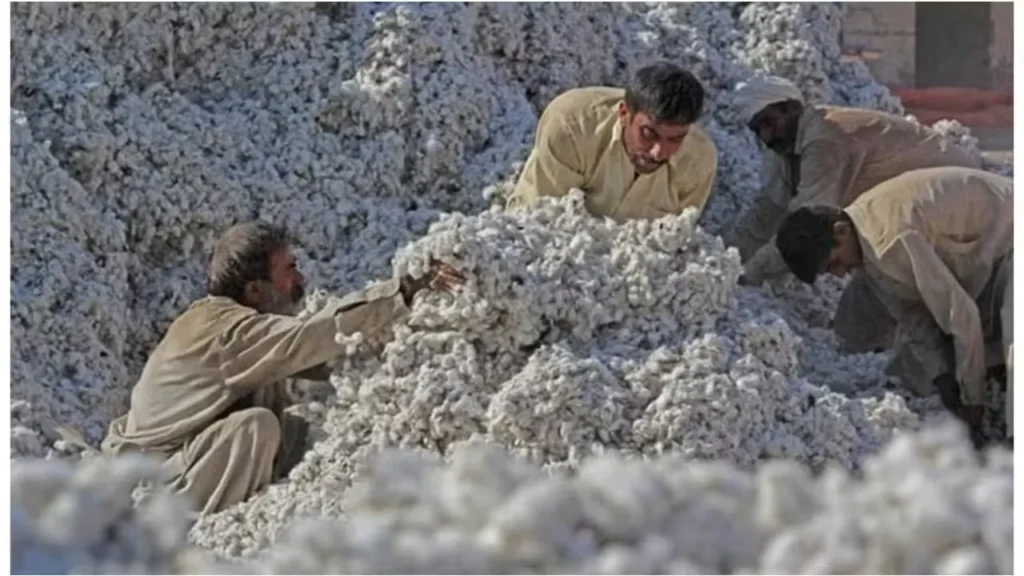
Pakistan’s cotton production is forecast to decline by 6% in the 2026-27 season, as lower output in major producing countries and rising global commodity prices add uncertainty to agricultural markets, according to the World Bank’s October 2026 Commodity Markets Outlook.
The report, published on October 28, 2026, draws on estimates from the United States Department of Agriculture (USDA). It projects global cotton production to fall by 3% in 2026-27, with China and Pakistan each expected to record a 6% decline.
Cotton output in the United States is forecast to decrease by 3%, while Brazil and India are expected to register increases of around 1% each.
The outlook points to a tighter global cotton market at a time when consumption is projected to increase. The World Bank expects global cotton use to rise by 2%, reducing the stocks-to-use ratio to 0.57 from 0.63 at the end of the previous season.
The stocks-to-use ratio compares available inventories with consumption. A lower ratio generally indicates tighter supply conditions and greater exposure to potential production or trade disruptions.
The figures are forecasts rather than confirmed production results for the 2026-27 season.
Global Cotton Prices Expected to Increase
The World Bank reported that cotton prices rose by 6% quarter-on-quarter in the third quarter of 2026 and remained around 20% higher than a year earlier.
Its outlook projects cotton prices to increase by 14% in 2026, followed by gains of 3% in 2027 and 1% in 2028. The projections reflect expectations of tighter supplies, although actual prices will depend on harvest outcomes, demand from textile manufacturers and changes in global trade.
The USDA’s October 2026 Cotton and Wool Outlook, published on October 14, also provides updated estimates for global cotton production and consumption in the 2026-27 season. The report offers an additional primary source for readers seeking detailed information about cotton supply, demand and textile trade.
What the Forecast Means for Pakistan’s Textile Industry
Cotton is an important raw material for Pakistan’s textile and apparel industry. Changes in domestic production can affect the availability of locally grown fibre and the amount of cotton that textile manufacturers may need to source from other markets.
A decline in domestic output does not automatically mean that textile production or exports will fall. The overall impact depends on existing inventories, import availability, international prices, domestic demand and the ability of manufacturers to manage higher input costs.
The World Bank’s projections nevertheless highlight the importance of monitoring both domestic crop performance and international cotton prices. If local production falls while global prices rise, textile businesses could face additional pressure on procurement costs.
The extent of that pressure will depend on how much cotton is available from domestic harvests and other supply sources. The forecast alone does not establish the likely financial impact on Pakistani farmers, ginners or textile exporters.
World Bank Projects Higher Commodity Prices in 2026
The cotton outlook forms part of a broader forecast of rising commodity prices. The World Bank expects overall commodity prices to increase by 23% in 2026, with energy prices projected to rise by 32% and food commodity prices by 10%.
According to the bank’s official October 2026 announcement, disruptions linked to the Middle East conflict, the Russia-Ukraine war and weather risks associated with El Niño are contributing to uncertainty in global markets.
The report projects overall commodity prices to decline by 7% in 2027. Food commodity prices, however, are expected to rise by a further 7%, indicating that agricultural markets may continue to face cost pressures even if energy prices ease.
These projections are based on a baseline scenario that assumes no major escalation of geopolitical conflicts and manageable weather-related crop losses. A deterioration in those conditions could result in higher prices and further disruption to international supply chains.
For Pakistan, the combination of lower projected cotton output and rising global commodity prices makes the 2026-27 season an important period to watch.
Updated crop estimates, actual production figures and international market developments will help determine how the outlook translates into costs for the country’s agricultural and textile sectors.
