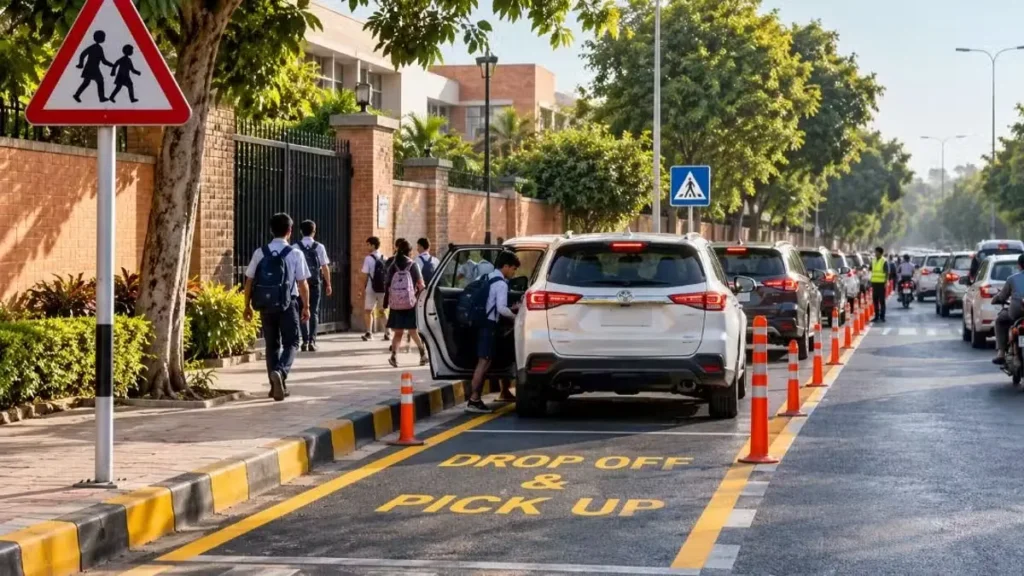
The Lahore Development Authority (LDA) plans to introduce traffic management measures outside schools and other educational institutions within its jurisdiction to reduce congestion, improve road safety and protect students during busy arrival and departure hours.
The proposed measures include designated pick-up and drop-off lanes, the removal of roadside encroachments, zebra crossings for pedestrians and additional traffic signboards to guide motorists.
The initiative is intended to address congestion caused by vehicles stopping outside school gates, particularly during peak hours when parents, school vans and other motorists compete for limited road space.
According to the plan, LDA officials will identify problem areas around educational institutions and take steps to improve traffic flow and pedestrian safety. The authority has not yet provided a detailed implementation schedule or a list of schools to be covered.
LDA Plans Dedicated Pick-Up and Drop-Off Lanes
Under the proposed arrangements, designated lanes will allow parents and school transport to collect and drop off children without obstructing moving traffic on main roads.
The measure could help reduce roadside bottlenecks, particularly where vehicles stop in traffic lanes or queue outside school entrances.
For the system to work effectively, schools and motorists will need to follow designated stopping arrangements. Clear markings, suitable access points and enforcement will also be important to prevent pick-up lanes from becoming additional parking areas.
The plan is part of a wider effort to improve traffic conditions around educational institutions within LDA’s jurisdiction.
Encroachments Outside Schools to Be Removed
The LDA Director General has directed officials to remove encroachments outside schools and academies that narrow roads and disrupt traffic movement.
Roadside obstructions can reduce the space available to vehicles and pedestrians, making busy school entrances more difficult to navigate. Their removal is intended to improve access and reduce congestion during school hours.
Officials will also be expected to identify locations where traffic problems require additional interventions.
The effectiveness of these measures will depend on consistent enforcement and coordination with the relevant local authorities and school administrations.
Zebra Crossings and Traffic Signs to Improve Student Safety
The authority also plans to install zebra crossings to provide designated crossing points for schoolchildren and other pedestrians.
Traffic signboards will be placed at relevant locations to make road instructions clearer for motorists approaching educational institutions.
The measures are intended to encourage safer driving and make it easier for children to cross roads near school entrances. Their impact will depend on the visibility and placement of crossings, compliance by drivers and whether vehicles are prevented from blocking pedestrian routes.
Parents and school administrations can also support safer school zones by encouraging children to use designated crossings and ensuring that vehicles stop only in permitted areas.
LDA’s Traffic Planning Role in Lahore
LDA has a dedicated Traffic Engineering and Transport Planning Agency (TEPA), which is responsible for traffic engineering and transport infrastructure planning.
According to the Lahore Division administration’s official profile of TEPA, the agency was established in 1987 and works on traffic-related improvements, including road geometry and traffic signal operations.
TEPA’s official website provides further information about its planning and engineering responsibilities.
These official sources establish the agency’s wider role in Lahore’s traffic management, although they do not independently confirm the details or timetable of the newly proposed school-zone measures.
Implementation Will Determine the Impact
The proposed changes could help reduce congestion and improve student safety if designated stopping areas, pedestrian crossings and road-clearance measures are implemented consistently.
Key details still to be confirmed include the first locations to be covered, the timeline for installation, responsibility for enforcement and whether schools will be required to introduce specific traffic arrangements.
Until those details are announced, the measures should be treated as a planned initiative rather than a completed citywide programme.
The initiative’s success will ultimately depend on practical road design, coordination between authorities and schools, and compliance by parents, school transport operators and other motorists.
