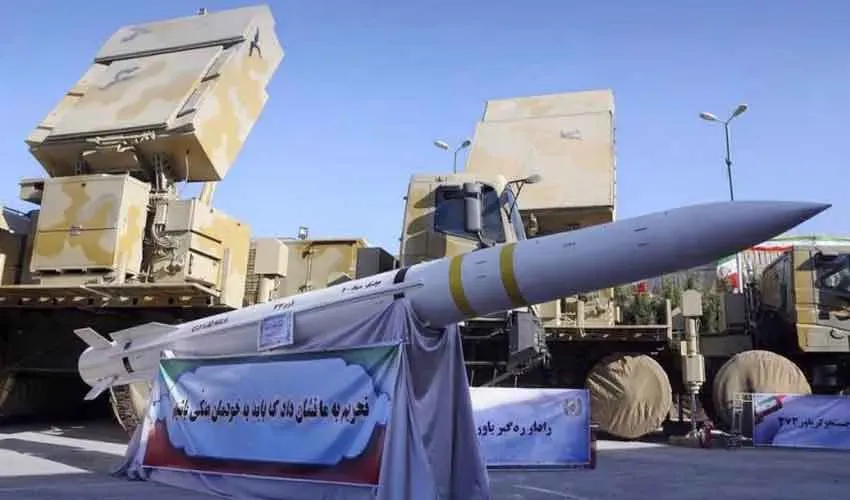
Iran has started positioning its indigenously manufactured air defense equipment at locations across the country, according to Brigadier General Alireza Elhami.
The senior commander said Iranian-made systems had shown their capabilities during the latest conflict.
Elhami said Tehran is simultaneously expanding domestic production of military equipment and improving its ability to upgrade or modify defense systems as new security challenges emerge. He stressed the importance of developing capabilities without depending entirely on external suppliers.
The commander said locally produced air defense weapons are now being integrated into deployments throughout Iran. Elhami, who heads the Khatam al-Anbiya Joint Air Defense Headquarters and the Iranian Army’s Air Defense Force, described the expansion as part of Iran’s broader effort to strengthen its homegrown defense capabilities.
He said the systems produced during what Iran describes as a 40-day US-Israeli war of aggression had successfully passed a battlefield test and were now being rapidly replicated and mass-produced.
“The equipment produced inside Iran passed a successful test during that conflict,” Elhami said, according to remarks published by Iranian media.
He said large-scale production of domestically developed weapons is continuing, with Iran increasingly relying on its own defense technology.
Indigenous medicine proved good during war
Elhami shed light on the performance of Iran’s indigenous air defense capabilities during the recent conflict, saying locally developed missiles, drones and defense systems demonstrated strong defensive capabilities.
He said the successful performance of the equipment had encouraged Iran to increase both the quantity of weapons being manufactured and the variety of ways in which they can be used.
The commander also praised the capabilities of the Army’s Air Defense Force and its efforts to refurbish and improve existing air defense systems.
Iran’s ability to upgrade systems independently
According to Elhami, one of the biggest advantages of indigenous defense equipment is Iran’s ability to upgrade and update it without depending on foreign suppliers. He said threats are constantly changing in their form, nature and tactics, making continuous improvements to military systems necessary.
With domestically developed equipment, Iran can make those changes “much faster and more easily” because both the software and hardware remain under the country’s control.
By contrast, Elhami said foreign-made equipment can require assistance from other countries for upgrades, potentially slowing the process of adapting to new threats.
Weapons developed to Iran’s geography and climate
Elhami also pointed to the design of Iran’s domestically produced weapons, saying they are developed specifically according to the country’s geography, weather conditions and operational requirements.
He said these characteristics have demonstrated the effectiveness of Iranian equipment compared with foreign counterparts on the battlefield.
The commander argued that locally developed systems offer Iran greater flexibility because they are designed around the country’s specific geographic and climatic conditions rather than being imported for a different operating environment.
Iran expands domestic defense production
Elhami said Iran is further increasing its reliance on local defense technology while working to improve both the quality and quantity of its indigenous weapons.
The country is also expanding the range of applications for its locally produced equipment and refining the tactics used to deploy those systems.
Elhami said Iran is continuing to improve and expand its domestically developed military systems, with large-scale manufacturing now focused on weapons Tehran says played an important role in the recent conflict.
The remarks show Iran’s long-running effort to build greater independence in defense technology, particularly amid restrictions that have limited its access to foreign-made military equipment and components.
According to Elhami, the recent conflict provided Iran with practical experience that highlighted the importance of locally developed systems. He said equipment that performed successfully was quickly reproduced and is now being deployed in different parts of the country.
