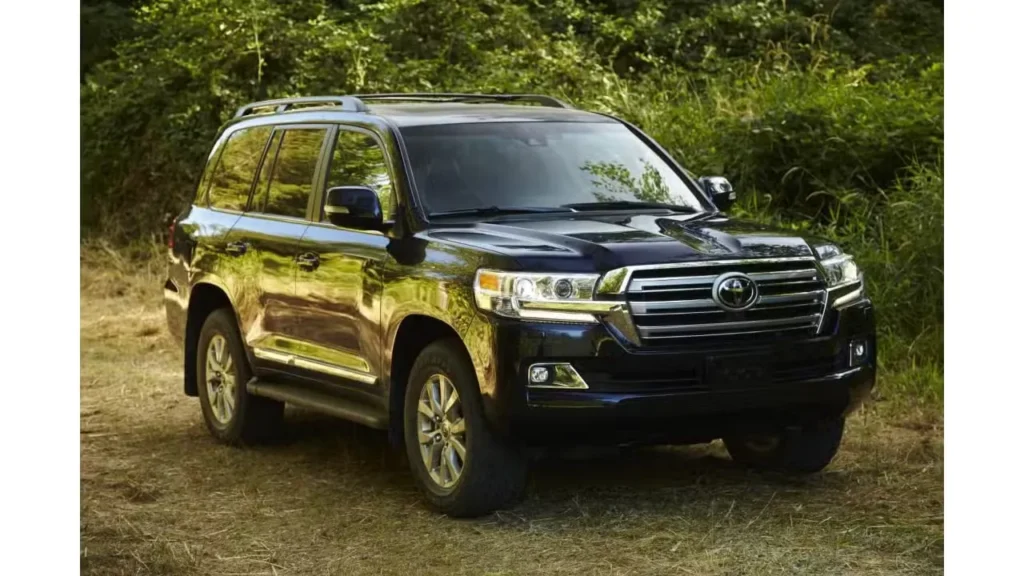
The federal government has approved the purchase of a bulletproof Toyota Land Cruiser worth Rs. 95.049 million to enhance CPEC security and strengthen protection for Chinese nationals in Pakistan and visiting delegations associated with the China-Pakistan Economic Corridor (CPEC).
The armored vehicle will be assigned to the CPEC Secretariat, with Planning Minister Ahsan Iqbal reaffirming that ensuring the safety of Chinese citizens working on CPEC projects remains one of the government’s highest priorities.
Bulletproof Vehicle to Boost Security for Chinese Delegations
According to an Express Tribune report, the newly approved bulletproof Toyota Land Cruiser will expand the government’s existing fleet of armored vehicles used for the security of Chinese engineers, diplomats, investors, and official delegations visiting Pakistan under the CPEC framework.
The vehicle will complement other security resources already deployed for CPEC, including multiple bulletproof vehicles and at least two helicopters that are either operational or in the process of being acquired to support security operations.
The move comes as Pakistan continues to enhance security measures for Chinese nationals involved in infrastructure, energy, and development projects across the country.
CPEC Secretariat Cites Shortage of Bulletproof Vehicles
Officials from the CPEC Secretariat informed the government that the Cabinet Division’s existing fleet of bulletproof vehicles is insufficient to meet operational requirements.
According to the Secretariat, the shortage has occasionally resulted in delays and disruptions during official meetings, visits by foreign delegations, and high-level government engagements.
The Secretariat also noted that hiring armored vehicles from private companies is both costly and unreliable, making the purchase of a dedicated government vehicle a more practical long-term solution.
Vehicle Purchased Under PPRA Rules
The federal government approved the purchase through direct contracting under Rule 42(c)(vii) of the Public Procurement Regulatory Authority (PPRA) Rules.
Three authorized Toyota dealerships participated in the bidding process:
- Toyota Central Motors submitted the lowest bid of Rs. 95.049 million.
- Toyota Port Qasim also submitted a proposal.
- Toyota Society participated in the bidding process.
Following the evaluation, Toyota Central Motors was selected as the successful bidder.
Planning Ministry Reallocates Development Funds
The CPEC Secretariat lacked sufficient funds to finance the purchase, prompting the Ministry of Planning, Development and Special Initiatives to reallocate Rs. 58.3 million from several ongoing development projects.
The funds were diverted from:
- Centre of Excellence for CPEC
- Federal SDGs Programme
- Monitoring and Evaluation Project
- Policy Research Grants Programme
The reallocation also included approximately Rs. 6.2 million originally allocated for the salaries of contract employees.
Purchase Delayed Until New Fiscal Year
Although the necessary funds were secured, officials were unable to issue the purchase order before the close of the previous fiscal year because all required administrative approvals were not completed in time.
The approval has now cleared the way for the procurement process to move forward, allowing the government to strengthen security arrangements for Chinese nationals and official delegations linked to CPEC projects in Pakistan.
Government Continues to Prioritize CPEC Security
The latest procurement reflects Pakistan’s continued efforts to enhance security for Chinese nationals, protect strategic infrastructure, and ensure the smooth implementation of China-Pakistan Economic Corridor (CPEC) projects.
Officials have repeatedly stated that strengthening security remains essential for maintaining investor confidence, supporting bilateral cooperation with China, and ensuring the uninterrupted execution of CPEC-related development initiatives.
