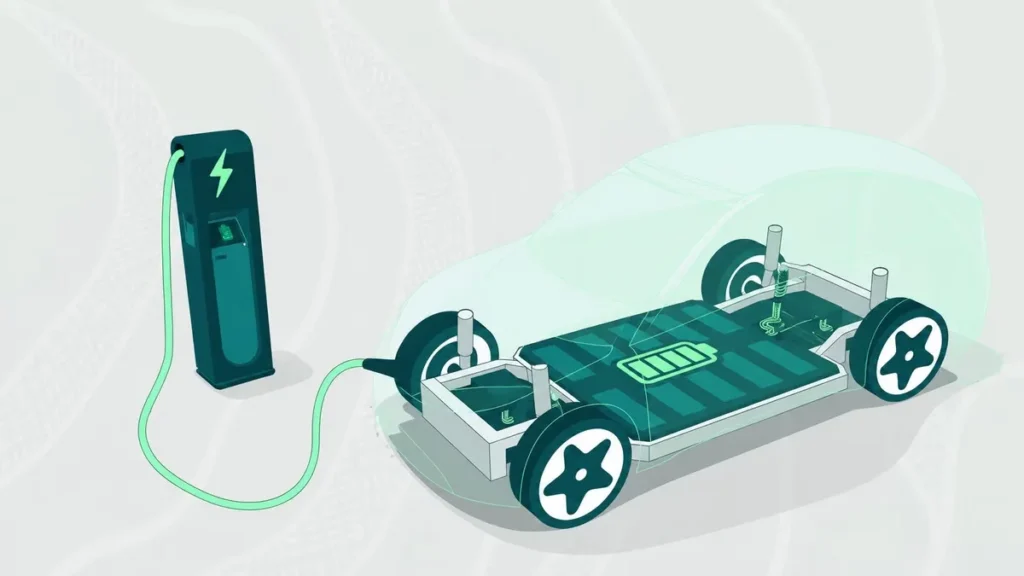
Modern electric vehicle batteries are proving far more durable than early critics expected, with new data showing they can continue performing reliably even after hundreds of thousands of miles on the road.
According to a recent report by The Wall Street Journal, a UK-based used-car dealer specialising in electric vehicles cited an EV that has travelled 247,000 miles while still maintaining dependable battery performance. The example highlights how advances in battery technology have significantly improved real-world longevity.
Industry-wide data supports this trend. Battery analytics firm Recurrent reports that the average electric vehicle retains about 95% of its original driving range after five years of use. The findings are based on nearly one billion miles of EV driving data, a result that exceeds earlier expectations across the automotive industry.
Despite these improvements, battery replacement costs remain a major psychological barrier for many consumers. A 2025 AutoPacific survey found that fear of needing an expensive new battery was the single most common reason potential buyers avoided electric vehicles.
Those concerns were more valid in the early years of EV adoption. Recurrent data shows that roughly one in 12 electric cars produced between 2011 and 2016 required a battery replacement. By contrast, only 0.3% of EVs manufactured from 2022 onwards have needed a new battery, reflecting dramatic reliability gains.
Early models such as the first-generation Nissan Leaf experienced faster battery degradation due to the absence of active cooling systems. Recurrent chief executive Scott Case has said public perception has not fully caught up with how much battery technology has improved in recent years.
Research also suggests modern EVs now last as long as petrol and diesel vehicles. Viet Nguyen-Tien, a research officer at the London School of Economics, said large-scale studies of more than 300 million vehicle test records in Great Britain show newer electric cars achieving comparable lifespans despite often being driven more intensively.
Falling battery costs have further strengthened the EV value proposition. According to BloombergNEF, lithium-ion battery pack prices have dropped by 93% since 2010, reaching an average of $108 per kilowatt-hour in 2025.
Still, replacing an EV battery outside warranty coverage can cost between $5,000 and $16,000, depending on the model. To address this, many manufacturers now design battery packs that allow technicians to repair or replace individual modules instead of the entire unit, significantly reducing costs for some owners.
Charging habits also play a key role in battery health. Data from fleet management company Geotab shows that frequent use of high-power DC fast chargers above 100 kW can double battery degradation rates. Vehicles relying mainly on slower charging typically lose around 1.5% of capacity per year, compared with up to 3% for those heavily using fast charging.
Experts also warn that regularly charging to 100% or leaving batteries fully depleted for extended periods can reduce long-term capacity. Extreme heat or cold may temporarily limit driving range, though these effects are usually reversible.
Looking ahead, EV adoption is expected to continue accelerating. Consulting firm AlixPartners forecasts electric vehicles will account for 11% of new car sales in the United States by 2030, nearly double today’s share. Globally, EVs already represent about 15% of new vehicle sales, with that figure projected to approach 25% by the end of the decade.
As battery technology matures and costs continue to fall, experts say longevity concerns are increasingly becoming a legacy issue rather than a defining drawback of electric vehicles.
About Tamoor Ahmed

Tamoor Ahmad has been covering politics since 2022.
