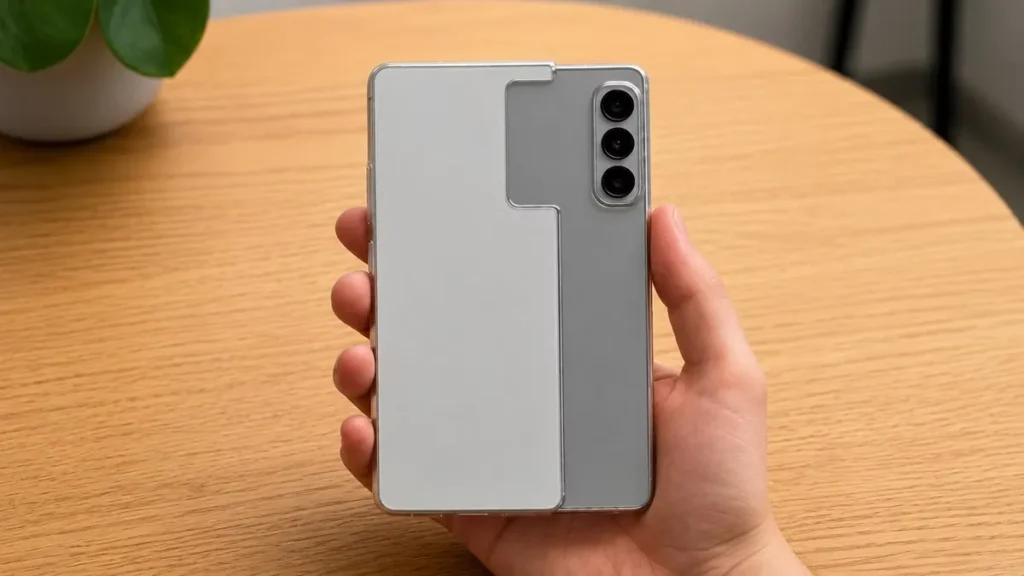
Samsung is reportedly moving faster on its plans to introduce a rollable smartphone, signaling the company’s next major step beyond foldable devices.
The upcoming handset is expected to expand from a compact phone into a near tablet-sized screen by sliding, rather than folding, offering a new approach to flexible display design.
According to reports from South Korea, Samsung Display is targeting the first half of 2028 for the commercial launch of Samsung’s first rollable Galaxy phone.
The device could debut alongside the Galaxy S28 series or be introduced as a separate addition to the company’s premium smartphone lineup.
If released as planned, the device would mark the first time a rollable smartphone becomes widely available to consumers, moving beyond concept demonstrations that have so far dominated the category.
Expected Name and Display Details
Industry sources suggest the rollable phone may carry the name Galaxy Z Slide, though Samsung has not officially confirmed the branding.
Early specifications point to a display that could expand to roughly 10 inches with a 16 by 9 aspect ratio and a pixel density of around 440 pixels per inch, placing it firmly in near-tablet territory when fully extended.
Reports also indicate that Samsung may follow up with a second rollable model around 2030, depending on market response and production feasibility.
Competitive Pressure in the Foldable Market
Samsung has long dominated the foldable smartphone segment, but recent data shows growing competition. Market research firm Omdia reports that Samsung Display’s share of foldable smartphone panel shipments dropped from 41.8 percent in the final quarter of 2025 to 27 percent in the first quarter of 2026.
This decline appears to be pushing Samsung to invest more aggressively in rollable technology, which could raise the technical barrier for rivals and redefine premium smartphone design.
Technical Challenges Remain Significant
Despite the promise of rollable displays, the technology presents major engineering hurdles. Unlike foldable screens, rollable panels must repeatedly extend and retract without developing waves, creases, or uneven surfaces.
The internal rollers, display layers, and structural components must operate with extreme precision while keeping the device thin, lightweight, and durable enough for everyday use. Maintaining consistent brightness, color accuracy, and flatness after repeated expansion remains one of the biggest challenges.
Years of Prototypes and Research
Samsung Display has been experimenting with flexible display formats for several years. At CES 2023, the company showcased the Flex Hybrid prototype, which combined folding and sliding mechanisms. Later the same year, it revealed the Rollable Flex prototype at SID Display Week, where the screen expanded more than five times its original length.
These demonstrations highlighted Samsung’s technical progress but also underscored the complexity involved in turning prototypes into mass-market products.
Potential Impact on Phone and Tablet Design
A commercial rollable phone could allow users to carry a compact device that expands into a larger screen for watching videos, multitasking, gaming, and productivity. Unlike foldable phones, a rollable design may also eliminate the visible crease that remains a common complaint among current foldable devices.
However, analysts expect the first rollable Galaxy phone to carry a premium price tag. To justify the cost, Samsung will need to deliver not only cutting-edge design but also long-term reliability of the rolling mechanism.
As of now, Samsung has not officially announced the Galaxy Z Slide or confirmed its launch schedule. Still, the accelerating development suggests that rollable smartphones may soon move from futuristic concepts to real-world products, potentially reshaping the next generation of mobile devices.
About Tamoor Ahmed

Tamoor Ahmad has been covering politics since 2022.
