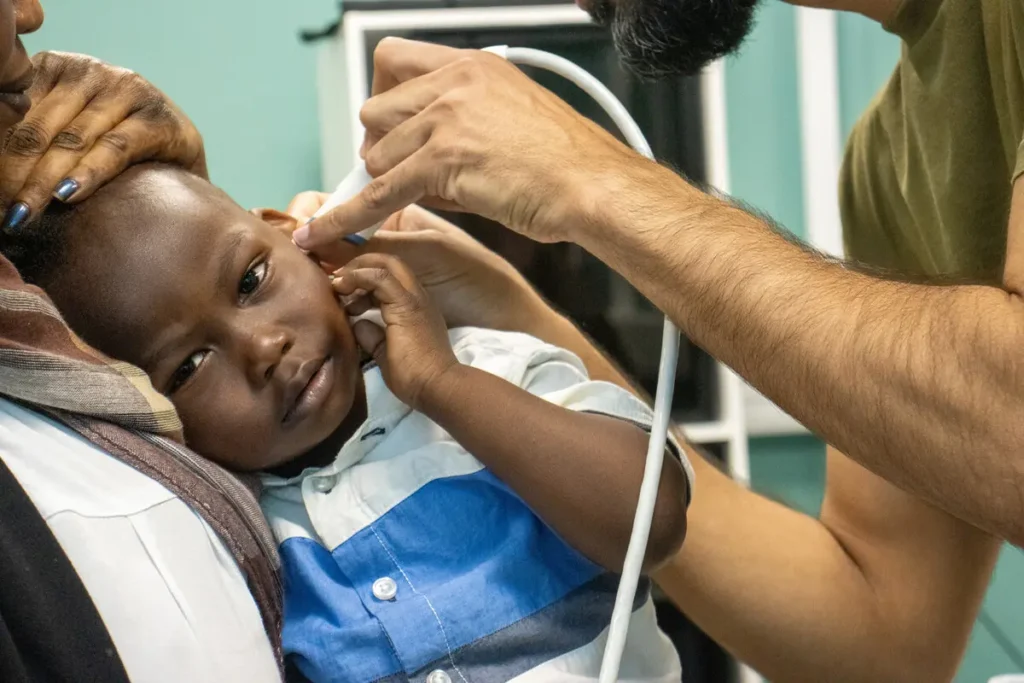
In the largest and longest clinical trial of its kind, researchers have reported that an experimental gene therapy restored meaningful hearing in nearly 90% of patients born with profound deafness, marking a major breakthrough in the treatment of genetic hearing loss.
The multi-centre study, conducted across eight hospitals in China, involved 42 participants who had complete hearing loss prior to treatment. The group included 39 children and adolescents aged between nine months and 18 years, as well as three adults, making it one of the most comprehensive trials to date in this field.
Hearing returns within weeks, stabilises after a year
Researchers observed that hearing improvements began within weeks of treatment, continued to strengthen over several months, and typically stabilised after around one year. Ten participants have now been monitored for at least two years, providing rare long-term data for a gene-based hearing therapy.
All long-term participants were able to hear normal conversational sound levels (50–60 decibels), while five could detect whispers—an outcome considered remarkable for patients who were previously completely deaf.
Children showed the strongest responses overall, but two of the three adults also experienced substantial hearing recovery, suggesting the therapy may benefit a wider age range than previously believed.
Targeting the genetic root of deafness
Congenital hearing loss affects roughly 1.5 in every 1,000 newborns worldwide, with up to 8% of cases caused by mutations in the OTOF gene. This gene produces otoferlin, a protein critical for inner-ear hair cells that translate sound vibrations into electrical signals for the brain.
The experimental therapy uses a modified, harmless virus to deliver a functional copy of the OTOF gene directly into the inner ear. By restoring otoferlin production, the treatment allows damaged hair cells to resume their role in sound transmission.
Unlike cochlear implants—which rely on electronic sound processing and lifelong device management—this approach addresses the underlying genetic defect and is designed as a one-time intervention.
Safety profile and treatment approach
Most participants received the therapy in one ear, often because they already had a cochlear implant in the other. Six patients were treated in both ears.
No serious safety concerns were reported. Some participants experienced temporary immune responses, mild dizziness, or minor inner-ear inflammation, all of which resolved without long-term complications.
Of the 38 ears that showed improvement, all demonstrated steady hearing gains. Among the 15 ears followed for two years, 100% could detect conversational speech, and 60% could hear whispers.
Speech development and quality-of-life gains
Improved hearing also translated into better speech perception. Several participants began developing spoken language, including an 11-year-old girl who had never used a cochlear implant and was able to speak simple words for the first time after treatment.
Researchers noted that younger patients tended to show better outcomes, possibly because their outer hair cells—which amplify sound—were less damaged. Long-term deafness may reduce the effectiveness of treatment if these cells deteriorate over time.
Also read: Pakistan’s first deaf author Kashaf Alvi selected as a ‘Global Shaper’
What comes next
Scientists are now investigating whether repeat dosing could further enhance results and are planning extended follow-up studies to evaluate durability and understand why a small number of patients did not respond.
Early comparisons suggest the gene therapy may outperform cochlear implants in areas such as music perception and hearing in noisy environments. However, cochlear implants are expected to remain a primary treatment option, particularly for patients whose inner ears have already undergone surgical implantation, which may limit eligibility for gene-based approaches.
Researchers say the findings represent a critical step toward curative treatments for inherited deafness, opening the door to similar therapies for other genetic hearing disorders.
