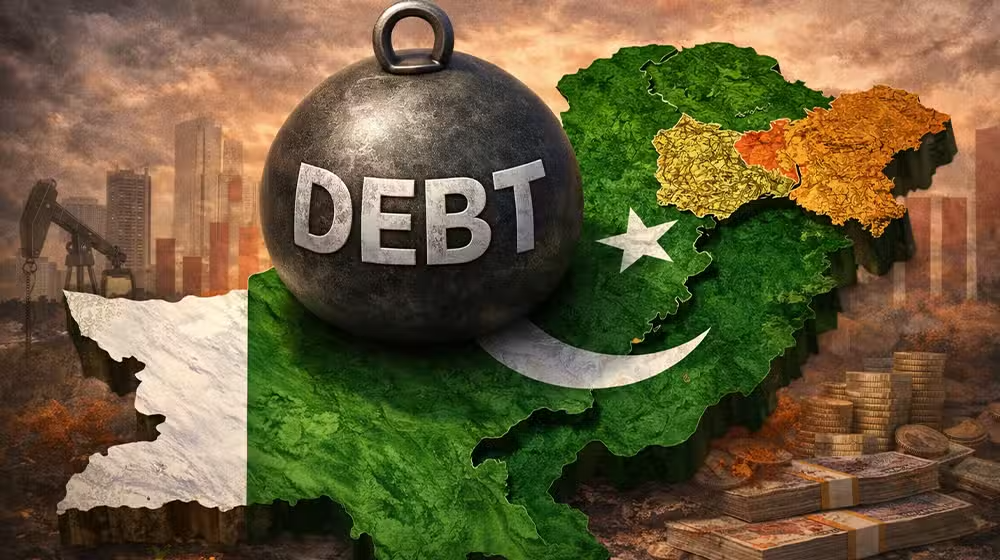
Pakistan’s federal government debt has risen sharply by over Rs. 15 trillion in just two years, reflecting sustained borrowing pressures during the current fiscal period, according to official data.
Figures released by the State Bank of Pakistan show that total government debt increased by Rs. 15,072 billion between March 2024 and February 2026, pushing the overall debt stock to approximately Rs. 79,882 billion.
Debt Rising at Nearly Rs. 21 Billion Per Day
The latest data highlights the rapid pace of borrowing, with government debt increasing by an average of around Rs. 21 billion per day during the two-year period.
A breakdown of the figures shows that domestic debt accounted for the majority of the increase, rising by approximately Rs. 14,004 billion, while external debt increased by about Rs. 1,068 billion over the same timeframe.
Sharp Rise From Previous Levels
In February 2024, total federal debt stood at around Rs. 64,810 billion, indicating a significant expansion in liabilities within a relatively short period.
By early 2026, overall debt had climbed to nearly Rs. 79 trillion, driven primarily by higher domestic borrowing to finance government expenditures and budgetary needs.
Growing Fiscal Pressures on Pakistan’s Economy
The increase in debt comes amid ongoing fiscal challenges, including high debt servicing costs, limited revenue generation, and widening budget deficits.
Pakistan continues to rely on a combination of domestic borrowing, multilateral financing, and bilateral support to meet its financial obligations and maintain macroeconomic stability.
Economic Outlook and Borrowing Trends
Economists note that sustained reliance on domestic debt markets has increased pressure on liquidity, while external borrowing remains essential for managing foreign exchange requirements.
The rising debt trajectory underscores the structural challenges facing Pakistan’s economy, particularly in balancing expenditure needs with revenue constraints.
