
Israel admits it killed Hamas political chief Ismail Haniyeh.
Political assassinations are often not admitted, especially if carried out from another country.
But Israel has surprised everyone by accepting the killing of Hamas political leader Ismail Hanieyeh.
Israel’s defence minister, Israel Katz, has confirmed that the country was behind the assassination of Ismail Haniyeh.
Addressing an event on Monday honouring Defence Ministry personnel, Katz announced that Israel had damaged the ‘axis of evil’ in the Middle East, especially targeting Hamas and its allied groups.
Katz also threatened the Houthi rebels in Yemen, pledging to target their leadership and infrastructure similarly.
“We have defeated Hamas, we have defeated Hezbollah, we have blinded Iran’s defence systems and damaged their production facilities, and we have toppled the [Bashar al-]Assad regime in Syria,” Katz said, outlining Israel’s broader military efforts in the region.
Katz directly referenced the assassination of Haniyeh on July 31, which occurred during the Hamas leader’s visit to Tehran for the inauguration of Iranian President Masoud Pezeshkian.
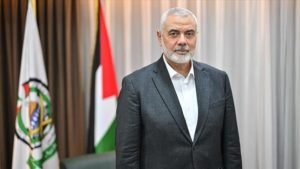
Haniyeh and his bodyguard were killed when an “airborne guided projectile” struck a military residence in northern Tehran, according to Iranian state media.
At the time, Iranian and Palestinian officials attributed the attack to Israel, but this is the first official acknowledgement from Israeli leadership.
Attack on Houthis
Turning his attention to the Yemen-based Houthis, Katz warned of severe consequences if missile attacks on Israel continued.
The Houthis, a group aligned with Iran, have launched several missile strikes on Israel in recent months, including a hypersonic ballistic missile attack on Tel Aviv on Saturday. The missile evaded Israeli defence systems and caused injuries in Jaffa.
“We will damage [Houthi] strategic infrastructure, and we will behead their leaders—just as we did to Haniyeh, Sinwar, and Nasrallah in Tehran, Gaza, and Lebanon,” Katz said, referencing the killing of Hamas’s Gaza chief Yahya Sinwar and Hezbollah leader Hassan Nasrallah.
Regional implications
Haniyeh’s assassination in Tehran has increased tensions across the region, with Iran’s Supreme Leader Ayatollah Ali Khamenei vowing “harsh punishment” in retaliation.
Following the incident, Iran launched missile attacks on several Israeli cities in October, claiming them as retaliation for the killings of its allies.
Israeli authorities reported minimal damage and no fatalities from the Iranian strikes, while Palestinian authorities confirmed one death in the West Bank due to falling debris.
Israel Hamas Ismail Haniyeh Israel Defence Minister Houthi rebels Yemen Middle East tensions Tehran assassination Gaza Yahya Sinwar Hassan Nasrallah missile attacks hypersonic missile Tel Aviv attack West Bank Iran-Israel conflict
