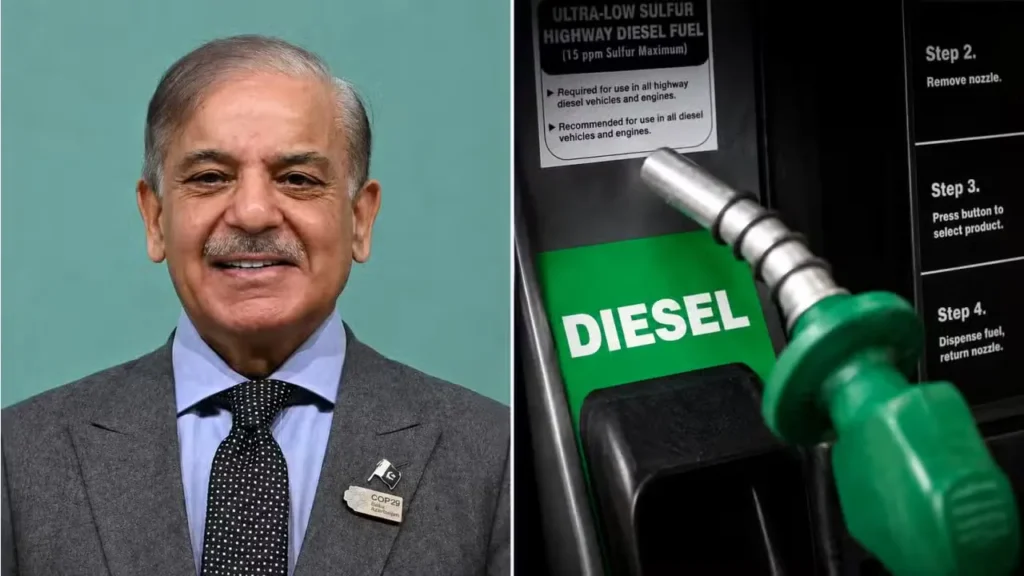
Diesel users in Pakistan have received a major price cut despite high international oil prices.
The government has capped the diesel crack spread at $41.5 per barrel, allowing it to reduce the price of high-speed diesel (HSD) by Rs32.63 per litre to Rs363.69.
At the same time, petrol became more expensive, with its price rising Rs2.97 to Rs337.51 per litre.
Why diesel prices were cut
Under the usual pricing formula, the international diesel crack spread was around $68 per barrel.
Using that figure would have pushed Pakistan’s diesel price much higher.
Instead, the government agreed with local refineries to use a capped crack spread of $41.5 per barrel, helping shield consumers from the full impact of rising global prices.
The decision followed virtual meetings between the petroleum minister, petroleum secretary and senior management of four Karachi-based refineries on the prime minister’s directions.
Refineries agree to absorb some pressure
Officials said around 70% of Pakistan’s HSD supply is produced locally by four refineries that import crude oil.
The government asked the refineries to help absorb part of the higher international costs rather than passing the entire increase on to consumers.

The refineries rejected a proposal to reduce their gross refinery margins.
Instead, they agreed to the crack spread cap.
However, they want the additional premium paid on imported crude to be recovered through the pricing mechanism, saying the extra cost must be recognized to avoid losses.
How long will the cap last?
The arrangement is expected to remain in place until conditions around the Strait of Hormuz improve and international oil markets become more stable.
Refineries have also argued that the capped crack spread should take into account both the cost of imported crude and the premium paid on those supplies.
Relief for consumers, pressure on fuel sellers
The lower diesel price is welcome news for consumers and businesses that rely heavily on HSD.
But the decision could create problems further down the fuel supply chain.
Oil marketing companies and dealers may already have diesel stocks purchased at higher prices. They could now be forced to sell that inventory at the lower government-notified rate.
That could leave some players facing losses even as diesel consumers benefit from the sharp price reduction.
