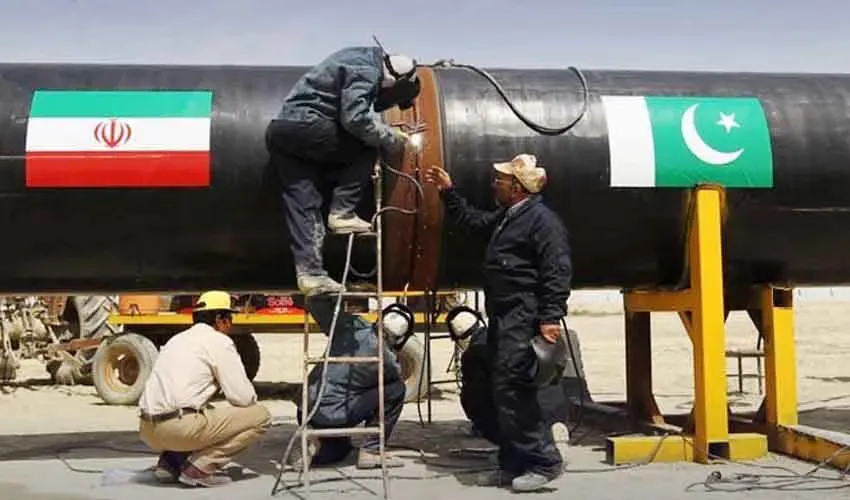
Pakistan and Iran have renewed their commitment to increase bilateral trade to $10 billion, while agreeing to speed up negotiations on a long-awaited Pakistan-Iran Free Trade Agreement (FTA).
The move matters for Pakistan because stronger trade ties with its western neighbor could boost exports, improve border commerce, attract investment, and strengthen regional connectivity at a time when the country is seeking sustainable economic growth.
The commitment was made during the 10th Pakistan-Iran Joint Trade Committee meeting held in Islamabad, where officials from both countries also agreed to deepen cooperation in investment, logistics, infrastructure, and private-sector partnerships.
Key Details
The meeting was co-chaired by Federal Commerce Minister Jam Kamal Khan and Iranian Minister for Industry, Mine and Trade Dr. Mohammad Atabak.
During the discussions, both sides reviewed the current state of bilateral trade and explored practical measures to unlock greater economic cooperation.
Key highlights
- Pakistan and Iran reaffirmed their goal of increasing bilateral trade to $10 billion.
- Both countries agreed to accelerate work on the Pakistan-Iran Free Trade Agreement (FTA).
- Officials discussed improving border logistics, customs procedures, and cargo movement.
- The two sides emphasized expanding investment, regional connectivity, and private-sector collaboration.
- Pakistan proposed strengthening trade through joint border markets and Electronic Data Interchange (EDI) systems.
Commerce Minister Jam Kamal Khan said transforming Pakistan-Iran relations into a stronger economic partnership has become increasingly important.
“We must move beyond traditional trade and build long-term economic cooperation based on mutual trust and shared opportunities,” the minister said.
He stressed that finalizing the Free Trade Agreement at the earliest would create new opportunities for businesses and investors in both countries.
The minister also highlighted the need to remove obstacles related to border logistics, customs clearance, and cargo transportation, saying smoother trade routes would reduce costs and improve efficiency.
According to officials, Pakistan also proposed expanding joint border markets and introducing modern digital customs systems to simplify cross-border trade.
Background
Pakistan and Iran have repeatedly expressed their intention to significantly increase bilateral trade over the past several years. However, actual trade volumes have remained well below potential due to banking restrictions, border infrastructure challenges, customs procedures, sanctions-related complications, and limited formal trade channels.
According to Dawn and official government statements, both countries have continued working on border markets and trade facilitation measures to improve commercial activity despite these challenges. Previous Joint Trade Committee meetings also focused on easing trade barriers and improving connectivity.
What This Means
If the Free Trade Agreement is finalized, Pakistani exporters could gain easier access to Iranian markets, while businesses on both sides would benefit from lower trade barriers and improved customs procedures.
Improved logistics and border infrastructure may also encourage formal trade, reduce transportation costs, and support economic activity in border regions such as Balochistan.
For Pakistan, expanding regional trade remains an important part of the government’s broader strategy to increase exports, attract investment, and strengthen economic integration with neighboring countries.
Public Reaction
Business groups have consistently supported closer economic cooperation between Pakistan and Iran, arguing that simplified customs procedures and better border infrastructure could unlock significant untapped trade potential.
Economists have also emphasized that expanding regional trade can help diversify Pakistan’s export markets while creating new opportunities for small and medium-sized businesses.
What’s Next
Officials from both countries are expected to continue negotiations on the Pakistan-Iran Free Trade Agreement and prepare a practical roadmap for expanding bilateral trade.
Future discussions are also expected to focus on:
- Finalizing the FTA framework.
- Expanding border markets.
- Improving customs and cargo movement.
- Increasing investment cooperation.
- Enhancing regional connectivity through ports and transport networks.
If progress continues, both governments hope the new measures will help move bilateral trade closer to the $10 billion target over the coming years.
FAQ
Why do Pakistan and Iran want a Free Trade Agreement?
The proposed FTA aims to reduce trade barriers, improve market access, encourage investment, and make cross-border trade easier for businesses in both countries.
What is the current Pakistan-Iran trade target?
Both governments have reaffirmed their goal of increasing bilateral trade to $10 billion.
How could the agreement benefit Pakistan?
A finalized FTA could boost exports, improve border trade, reduce logistics costs, encourage investment, and strengthen Pakistan’s regional economic connectivity.
