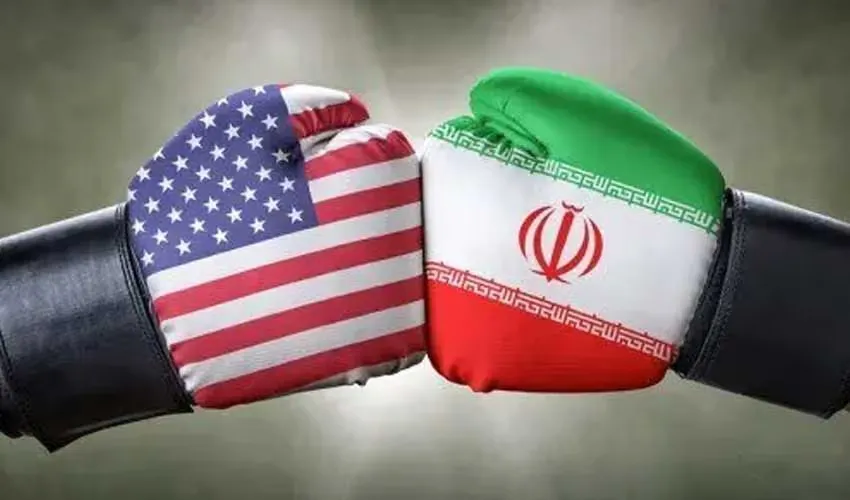
Iran Declares US MoU Invalid.
Iran has formally declared that its Memorandum of Understanding (MoU) with the United States is no longer valid, accusing Washington of breaching all of its obligations under the agreement.
The announcement comes as military tensions and diplomatic disputes between the two countries continue to escalate.
Tehran also reiterated that it would defend its territory and maintain what it described as its sovereign rights over the strategically important Strait of Hormuz, a key global energy shipping route.
Iran Says US Violated the Memorandum of Understanding
Iran’s Deputy Foreign Minister for Legal and International Affairs, Kazem Gharibabadi, said Tehran no longer considers itself bound by the agreement.
According to Gharibabadi, even a single violation would have been enough to undermine the MoU, but he argued that the United States had failed to honor all of its commitments.
“The non-implementation of one clause was enough to dismantle the entire agreement, and now the United States has violated all its commitments,” he said.
He added that Iran no longer has any obligations under the agreement because Washington had effectively rendered it invalid through repeated actions.
Iranian Parliament Calls for Agreement to Be Dissolved
The government’s announcement followed increasing political pressure within Iran.
Around 180 members of the Iranian parliament issued a joint statement urging the government to formally end the Memorandum of Understanding after the latest rise in tensions with Washington.
Gharibabadi said the agreement was originally intended to reduce hostilities and help end the conflict involving Iran and regional actors, including developments linked to Lebanon.
He accused the United States of violating those objectives through continued military operations and by reimposing restrictions affecting Iranian ports.
Iran Rejects New Negotiations
Iranian officials also ruled out the possibility of returning to negotiations under the current circumstances.
Gharibabadi said Tehran would not request fresh talks with Washington and argued that military pressure and economic sanctions would not force Iran back to the negotiating table.
The remarks signal a further deterioration in diplomatic relations between the two countries.
Iran Reaffirms Position on the Strait of Hormuz
The deputy foreign minister also reaffirmed Iran’s position on the Strait of Hormuz, describing it as a matter of national sovereignty.
According to Iranian officials, Tehran intends to maintain full control over the strategic waterway during wartime, citing national security concerns.
Iranian media reported that officials believe the country has no remaining obligations under the Memorandum of Understanding regarding navigation through the strait.
The Strait of Hormuz is one of the world’s busiest maritime routes, carrying a significant share of global oil exports.
Background to the Dispute
According to Iranian officials, the current diplomatic breakdown follows months of escalating military tensions.
Iran says the conflict intensified after joint US-Israeli military operations targeted Iranian sites earlier this year.
Officials also referred to the Memorandum of Understanding signed on June 17, which they said aimed to:
- Reduce military hostilities.
- Restore international shipping through the Strait of Hormuz.
- Create a framework for broader negotiations, including issues related to Iran’s nuclear program.
Tehran now argues that those objectives have been undermined by subsequent US actions.
President Pezeshkian Rejects Trump’s Claims
Iranian President Masoud Pezeshkian also rejected recent statements by US President Donald Trump, who claimed Washington had significantly weakened Iran’s military capabilities.
During a televised address, Pezeshkian questioned whether the United States had achieved its military objectives.
“Their rhetoric continues, but the question is—have they reached their goals on the battlefield?” he said.
He also rejected suggestions that Iran had been weakened, saying the country would continue defending its territory.
Iran Vows to Defend Its Territory
Pezeshkian said Iran would continue protecting its sovereignty despite growing international pressure.
“We will defend every inch of our homeland with our actions,” he declared.
Speaking later at a public event in Tehran, he criticized what he described as threatening language from Washington and argued that Iran remained committed to safeguarding its territorial integrity.
The president also called on Iranians to maintain national unity, saying internal cohesion was the country’s strongest response to external pressure.
Expert Insight
The latest statements from Tehran represent another setback for diplomatic engagement between Iran and the United States. However, the legal status, implementation, and international recognition of any bilateral memorandum depend on its formal terms and the positions of both governments. Independent verification of each side’s claims remains essential as the situation evolves.
