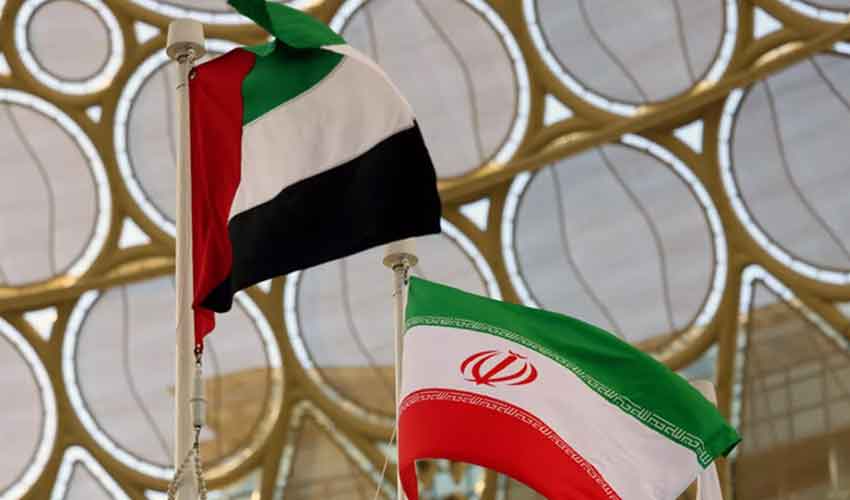
Iran’s Islamic Revolutionary Guard Corps has denied any prior plan to attack oil installations in the Emirati port city of Fujairah, claiming the incident was the result of what it described as American military adventurism in the region.
Speaking on Saturday, an IRGC spokesperson said Iran had not intended to target oil facilities but accused the United States of provoking instability in the Gulf. He alleged that Washington was attempting to open a corridor through the Strait of Hormuz to allow what he termed unlawful vessels to move freely.
The spokesperson warned that any further attacks would compel Iran to respond by striking key installations. He also accused the United Arab Emirates of being complicit in recent actions against Iran, describing any Iranian response towards the UAE as retaliatory. The statement reiterated that continued hostilities would lead to Iranian action against significant and sensitive sites.
The remarks come amid heightened regional tensions following reports of missile and drone strikes targeting the UAE. An official spokesperson for the Emirati Ministry of Defence said the country was targeted with 12 ballistic missiles, three cruise missiles, and four drones. According to the statement, most of the projectiles were intercepted, while three people sustained minor injuries.
The UAE authorities said air defence systems were activated immediately and the situation was brought under control. Officials added that damage assessments were ongoing, but there were no reports of major structural losses to civilian infrastructure.
Separately, Reuters reported that a petroleum industrial site in Fujairah caught fire following an Iranian drone strike. Emergency services were dispatched to the location, and the fire was later contained. No fatalities were reported at the site, according to initial information cited by the agency.
Arab media also reported temporary disruptions to air travel following the attacks. Flight operations at Dubai and Sharjah airports were briefly suspended as a precautionary measure before gradually resuming after authorities declared the airspace secure.
The developments have raised concerns among regional and international observers about the risk of escalation in the Gulf, a vital corridor for global energy supplies. Analysts warn that any sustained disruption near the Strait of Hormuz could have serious implications for oil markets and regional security.
Both Tehran and Abu Dhabi have yet to indicate whether diplomatic channels are being activated to de-escalate the situation. For now, military alerts remain high across the region as authorities monitor developments and brace for potential further fallout.
About Tamoor Ahmed

Tamoor Ahmad has been covering politics since 2022.
