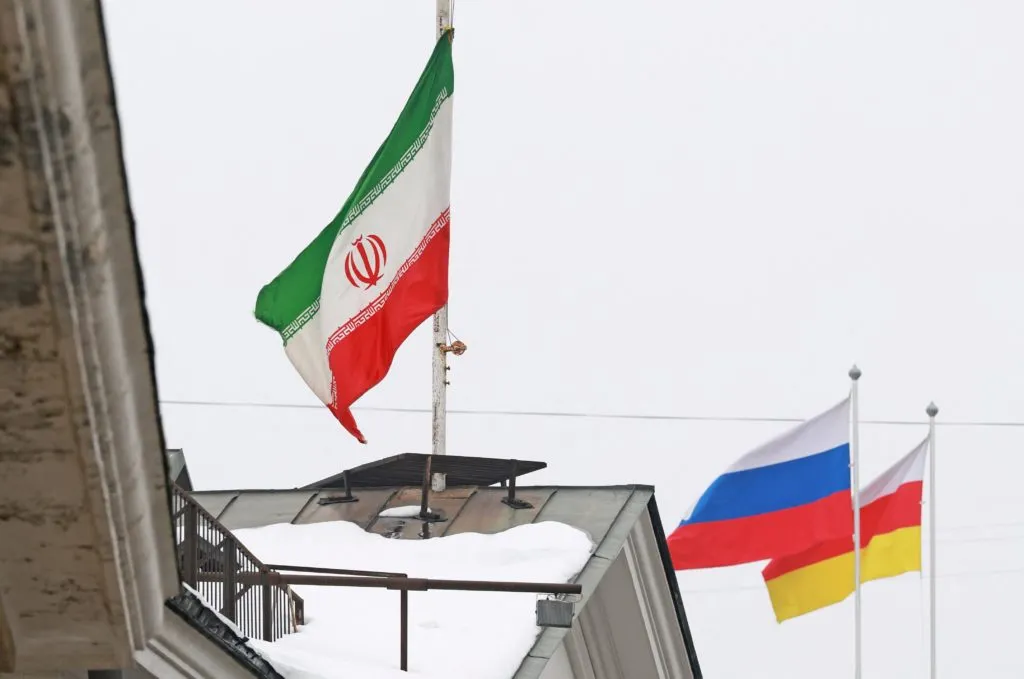
Russian officials have told the United States that Moscow is not providing intelligence to Iran during the ongoing Middle East conflict, according to Steve Witkoff, following a direct call between President Donald Trump and Russian President Vladimir Putin.
Speaking to international media, Witkoff said that during Monday’s phone call, Russian leaders categorically denied reports that they were supplying Iran with intelligence on the location of US military assets, including ships, aircraft, and other critical infrastructure.
“So, you know, we can take them at their word,” Witkoff said, adding cautiously: “Let’s hope that they’re not sharing.”
When pressed about whether Russia might be passing sensitive targeting information to Iran, Witkoff said he could not independently confirm the allegations. “Well, I’m not an intel officer, so I can’t tell you,” he explained.
However, he reaffirmed that Russian officials explicitly told Trump that no intelligence had been shared with Iran.
“I can tell you that yesterday, on the call with the president, the Russians said they have not been sharing. That’s what they said,” he said.
Witkoff also revealed that he and Trump’s son-in-law Jared Kushner spoke with Yuri Ushakov, a senior Kremlin advisor, earlier on Monday. According to Witkoff, Ushakov reiterated Russia’s position that it was not supplying Iran with any military intelligence.
The statements come amid a report by an international publication claiming that Russia had allegedly provided Iran with detailed intelligence on US military assets across the Middle East.
Citing three anonymous officials, the report claimed that Moscow began sharing targeting information after the regional conflict escalated, describing the effort as “pretty comprehensive”.
Military analysts cited in the report suggested that Iran’s recent strikes indicate access to high-level intelligence.
Dara Massicot, a senior fellow at the Carnegie Endowment for International Peace, noted that Iran appeared to target early-warning radar systems and command infrastructure, operations that typically require precise intelligence.
The Kremlin has not confirmed the allegations. Kremlin spokesperson Dmitry Peskov declined to comment, leaving questions about Moscow’s role unresolved.
The claims, if true, could mark a significant escalation in Russian involvement in the region and raise concerns about the safety of US forces. Washington, for now, appears to be relying on Moscow’s assurances while continuing diplomatic engagement.
As tensions rise, scrutiny of Russia’s relationship with Iran and its potential impact on US military strategy in the Middle East is expected to intensify. Officials in Washington are likely to monitor intelligence and operational developments closely to assess whether Moscow is truly maintaining its claimed restraint.
This latest exchange highlights the fragile balance in US–Russia relations and the ongoing uncertainties surrounding intelligence sharing and military coordination in a volatile region.
