China agrees to add third parties to the $65 billion China-Pakistan Economic Corridor (CPEC), which will improve regional connectivity.
The Pakistani Foreign Office made the announcement on Sunday, following talks between the two countries in Beijing. On Saturday, the two sides reached an agreement during the third round of Pakistan-China Bilateral Political Consultations (BPC).
China agrees to add third parties to CPEC
The Pakistan delegation was led by Foreign Secretary Dr. Asad Majeed Khan, while the Chinese delegation was led by the Chinese Vice-Minister for Foreign Affairs Sun Weidong. The BPC is a regular institution between Pakistan and China.
“Noting the completion of a decade of China-Pakistan Economic Corridor (CPEC), the two sides reaffirmed their commitment to CPEC that remains a major pillar of bilateral cooperation and a symbol of ever-deepening friendship between Pakistan and China,” the Pakistani foreign office said in a statement on Sunday.
Also read: All Chinese CPEC employees in Pakistan to travel in bulletproof vehicles
“They also agreed to remain engaged in the expansion of CPEC including on participation of third parties to enhance regional connectivity and cooperation.”
Both parties reviewed their bilateral relations and agreed to strengthen and expand political and security cooperation, bilateral trade, economic and financial cooperation, cultural exchanges, tourism, and people-to-people ties.
What is CPEC?
China–Pakistan Economic Corridor (CPEC) is a 3000 km Chinese infrastructure network project undertaken in Pakistan.
This sea-and-land-based corridor is aimed to secure and reduce the passage for China’s energy imports from the Middle Eastern countries by avoiding the existing route from the Straits of Malacca between Malaysia and Indonesia, which in case of war could be blocked and thus hampering the Chinese energy dependent economical avenues.
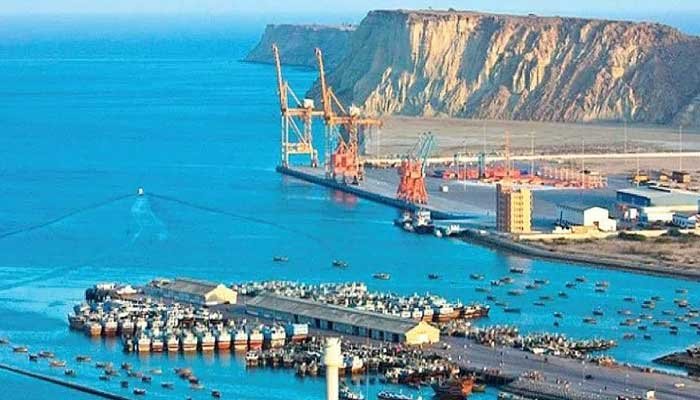
Developing a deep water port at Gwadar in Arabian Sea and a well-built road and the rail line from this port to Xinjiang Province in western China would be a shortcut for boosting the trade between Europe and China.
In Pakistan, its aim is to overcome an electricity shortfall, infrastructural development, and modernize transportation networks. Along with shifting it from an agricultural-based economic structure to an industrial based.
