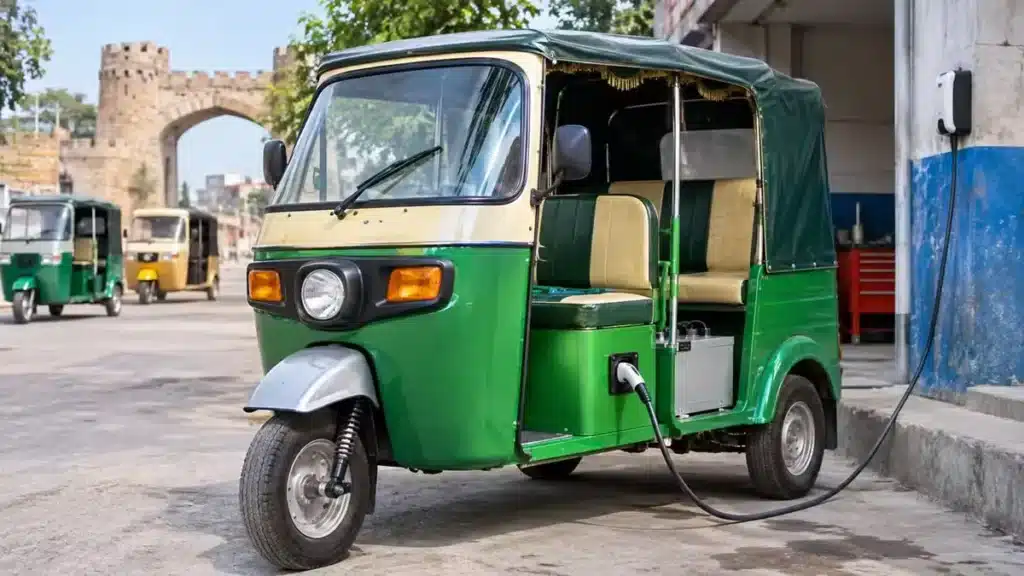
The Khyber Pakhtunkhwa government is preparing to convert existing petrol- and CNG-powered rickshaws into electric vehicles under a pilot project aimed at reducing urban pollution and lowering transport costs for drivers.
The initiative will initially be launched in Peshawar, where rising air pollution and traffic-related emissions have become growing environmental and public health concerns.
Advisor to the KP Governor Asif Rafiq said the project would focus on converting conventional rickshaws already operating on city roads rather than introducing an entirely new fleet. The shift to electric power is expected to eliminate exhaust emissions from converted vehicles and significantly reduce noise pollution.
The financial benefits could also make the initiative attractive to rickshaw operators. According to Rafiq, drivers currently spend between Rs. 30,000 and Rs. 40,000 every month on petrol and compressed natural gas (CNG).
Under the proposed electric conversion, monthly operating expenses could fall to Rs. 10,000 or less, potentially saving drivers up to Rs. 30,000 each month. Actual savings, however, will depend on electricity tariffs, battery performance, charging arrangements and maintenance costs.
Rafiq urged rickshaw drivers and transport union representatives to participate in the initiative, saying the transition could reduce their dependence on conventional fuels while improving their earnings through lower operating expenses.
Peshawar’s transport sector is a potential starting point for the programme because conventional rickshaws contribute to road emissions and urban noise. Replacing petrol and CNG engines with electric power could help reduce pollution from this segment of public transport, although the overall environmental impact will depend on the number of vehicles converted.
The government plans to extend the initiative to other parts of Khyber Pakhtunkhwa if the Peshawar pilot produces successful results.
The proposed programme also reflects a broader push towards cleaner urban mobility, as Pakistani cities face pressure to address poor air quality, rising fuel expenses and the environmental costs of road transport.
Rafiq said the initiative was part of the provincial government’s commitment to improving public transport, protecting the environment and promoting sustainable transport solutions.
However, details about the pilot’s launch date, the number of rickshaws selected, conversion costs, financial assistance for drivers and battery-charging arrangements have not yet been announced. These details will be important in determining how quickly the programme can move beyond its initial phase.
If implemented at scale, the project could offer rickshaw operators in KP a way to reduce fuel expenses while supporting the transition towards electric transport.
