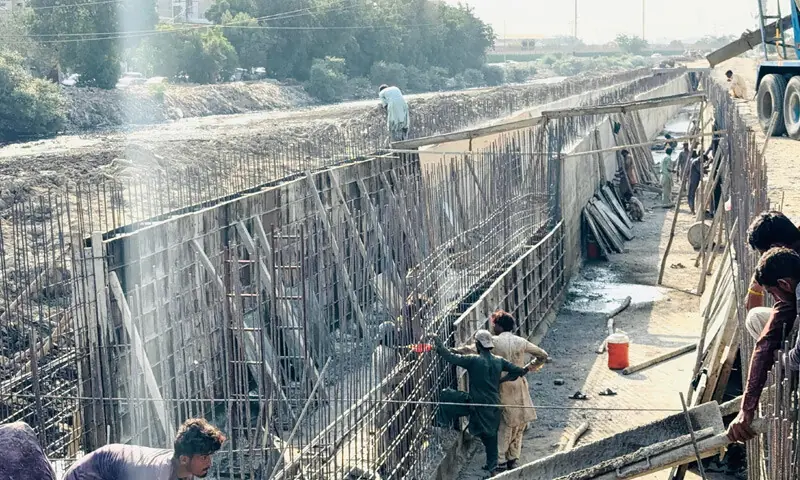
The Sindh government expects to complete the restoration of Khiyam Canal in Clifton, Karachi, and divert sewage away from the waterway within two months, Local Government Minister Syed Nasir Hussain Shah has said.
Shah announced the timeline during a site visit on October 19, following complaints from residents about construction work around the canal.
He said the project, being carried out by the Sindh Local Government Department, would address sanitation problems and improve the surrounding environment.
The plan includes covering the existing drain, diverting sewage water, developing a clean-water channel and adding greenery and trees along the banks. The minister said the work would help reduce foul odours and health risks for nearby residents.
Sewage Diversion and Canal Beautification Planned
According to Shah, the project is intended to improve drainage while restoring the canal’s appearance. The government also plans to introduce landscaping and tree plantations around the waterway.
The minister said the Sindh chief minister had taken notice of residents’ complaints. He also rejected concerns about encroachment and unauthorised commercial development, saying no commercial activities had been approved as part of the project.
However, the government’s assurances have not resolved all concerns surrounding the construction.
Residents and Environmentalists Raise Flooding Concerns
Residents and environmentalists have questioned the decision to cover sections of Nehr-i-Khayyam, warning that narrowing the waterway could affect drainage and increase the risk of urban flooding.
In a separate report published on October 19, Dawn documented an awareness walk by residents and environmentalists who called for construction to be suspended until project details and the required environmental assessment were made public. Participants also sought disclosure of the design and measures to ensure sewage is treated rather than discharged untreated into the sea.
The concerns highlight an important distinction between improving the appearance of a waterway and ensuring that the underlying drainage system continues to function effectively. The project’s impact will depend on its final design, the management of diverted sewage and the capacity of the drainage network.
Two-Month Deadline Puts Focus on Implementation
Shah has reiterated that the restoration and sewage-diversion work will be completed within two months. That is a government commitment rather than a confirmed completion date, and the project’s progress will need to be assessed against the announced timeline.
The public information reviewed for this report does not establish the full project cost, the final engineering design or the destination of the diverted sewage. Those details would help residents assess the project’s environmental and drainage implications.
For Clifton residents, the key test will be whether the work improves sanitation without compromising the waterway’s drainage function. Publishing the project design, environmental approvals and sewage-management arrangements would help address concerns as construction continues.
