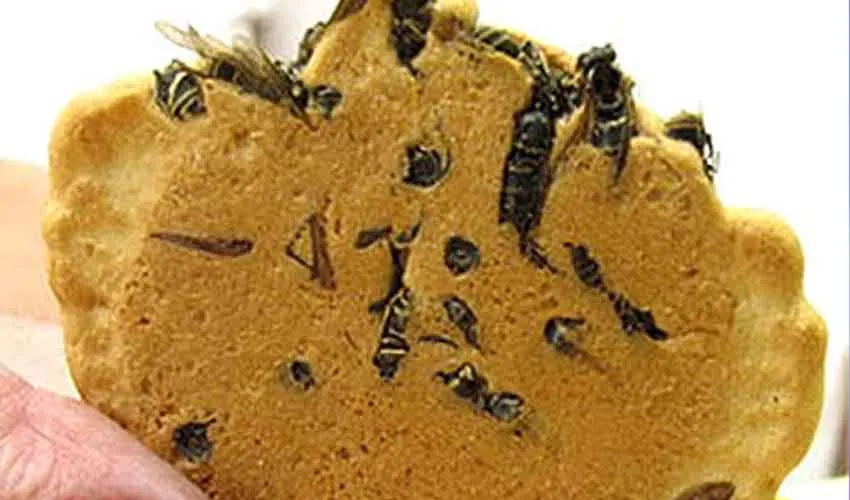
In most parts of the world, the discovery of even a single insect in food is enough to put people off eating it. In Japan, however, a rare biscuit packed with insects has turned into an unlikely delicacy that continues to draw curious locals and tourists alike.
The unusual snack is called Jibachi Senbei, a traditional-style rice biscuit made by blending large quantities of dried wasps directly into the flour before baking. Instead of hiding the insects, the recipe highlights them as a core ingredient, giving the biscuit its distinctive appearance and flavor.
Jibachi Senbei first gained wider attention in the mid-2010s when a group of insect enthusiasts known as Omachi Jibachi Aikokukai partnered with a local bakery in Omachi.
The collaboration was aimed at preserving regional food culture and promoting the use of edible insects, a practice that has historical roots in rural Japan.
The wasps used in the biscuits are carefully dried before being mixed into the dough, a process that enhances their nutty taste and crunch. Supporters of the delicacy say the biscuits offer a rich umami flavor and are also valued for their high protein content.
Today, Jibachi Senbei is sold in local markets across Omachi and in select gourmet food shops that specialize in traditional and experimental Japanese cuisine.
The biscuits have also become a talking point online, often surprising international audiences unfamiliar with Japan’s long-standing tradition of entomophagy, or insect consumption.
Many visitors travel to Omachi specifically to try the biscuits, treating them as both a culinary challenge and a cultural experience. While the idea may be unappealing to some, fans argue that Jibachi Senbei represents sustainability, tradition, and a willingness to rethink what qualifies as food in a changing world.
About Hamna Ghias Sheikh

The writer has been covering politics, lifestyle and finance since 2023.
